


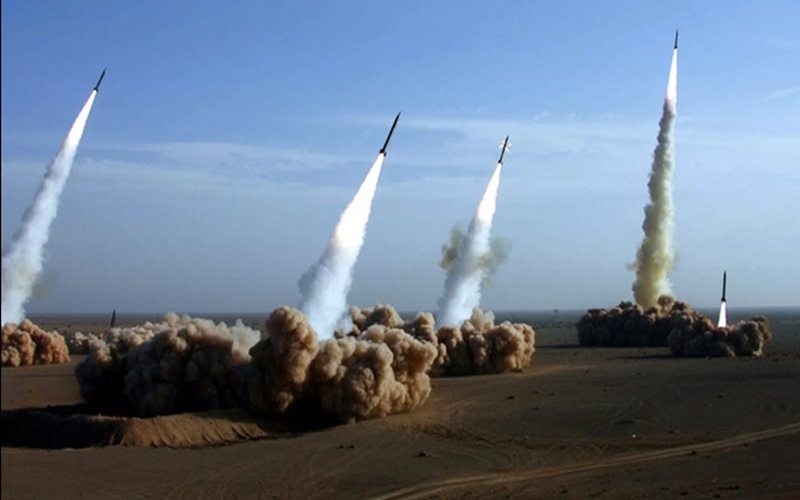

As Iran’s regime reels from the short but devastating war with Israel, it faces a dual crisis: a shattered economy and a weakened regional alliance.
The 12-day war between Iran and Israel has left a lasting mark on the Iranian regime—militarily, economically, and politically. While the physical damage from missile strikes and cyberattacks is undeniable, the deeper and more enduring wounds may lie in the erosion of Iran’s financial capacity, public trust, and regional influence.
Economic Destruction Exceeds Half a Trillion Dollars
Even before the war began, Iranian officials admitted that the country required over $500 billion in foreign investment to upgrade crumbling infrastructure—roads, power grids, ports, and telecommunications. Now, the cost of post-war reconstruction is projected to exceed that amount, with most of the country’s scarce resources redirected from development plans to damage control.
The attacks—both kinetic and digital—reportedly destroyed or disabled at least 120 residential towers, energy facilities, and nuclear enrichment sites. One massive internet blackout during the final hours of the conflict alone inflicted nearly $500 million in economic losses.
Sanctions, Inflation, and Capital Flight
The war has only worsened Iran’s already precarious economic condition. International sanctions remain tight, foreign investment has dried up, and even traditional buyers of Iranian oil, such as China, are showing reluctance. The result is a severe liquidity crisis, soaring inflation, and deepening poverty.
In the most heavily impacted provinces, unemployment is rising and the price of basic goods continues to surge. With its legitimacy in question, the regime has turned once again to repression—mass arrests and executions—to control dissent.
Regime Response: A Military-Led Reconstruction Council
To manage the crisis, President Masoud Pezeshkian has established a Supreme Reconstruction Council, composed of senior figures from the military, security, and judiciary. The council’s focus is immediate: restoring electricity to industrial hubs, reopening key transit routes, and convincing foreign insurers of the safety of Iranian maritime and pipeline infrastructure.
Yet even regime-linked economists acknowledge that reconstruction will take years, even under optimistic scenarios involving the lifting of sanctions—an unlikely outcome given the current geopolitical climate.
IRGC Capabilities Severely Damaged
The financial strain has also compromised the Islamic Revolutionary Guard Corps (IRGC). The group’s missile bases and advanced centrifuge production lines—once central to Iran’s strategic deterrence—have been severely damaged. At least 11 senior scientists and 20 IRGC commanders were reportedly killed, degrading both the technical and command capabilities of the force.
A Fragile Ceasefire and Continued Sabotage
Although hostilities formally ended over a month ago, signs point to the potential for a “second phase” of the conflict. Iranian officials have reported mysterious explosions at sensitive military and industrial facilities, which they attribute to equipment failure. However, sources cited by The New York Times suggest these incidents may be the result of ongoing foreign sabotage.
Meanwhile, the United States has made clear that any renewed nuclear or missile provocations by Tehran could trigger preemptive strikes.
Regional Isolation and the Crumbling “Axis of Resistance”
Tehran’s regional strategy has also suffered major setbacks. The deaths of senior Hezbollah and Hamas leaders, coupled with the fall of Bashar al-Assad last December, have isolated Iran diplomatically and militarily. The regime is scrambling to re-establish coordination with its remaining proxies—Hezbollah, the Houthis, Islamic Jihad, and Iraq’s Popular Mobilization Forces.
However, the interception of multiple arms shipments by U.S. and allied forces suggests that Iran’s supply routes are under increasing pressure.
A Crisis of Reconstruction and Credibility
Iran’s ruling establishment now faces two critical challenges: the enormous cost of reconstruction amid international isolation and economic crisis, and the need to maintain military deterrence in a hostile and shifting regional landscape.
Any failure in rebuilding efforts could amplify public dissatisfaction, especially as the effects of war linger and basic services remain disrupted. In this volatile environment, a leadership succession crisis, combined with mounting internal unrest, could reignite conflict, further destabilizing both Iran and the region.