



Iran regime’s foreign policy is on the brink of collapse, as both internal and external challenges threaten its sustainability. Built on hostility toward the West, particularly the U.S., and framed as a battle against “global arrogance,” this policy is rapidly losing support even within the country. At the same time, the religious authority of the regime, under the Velayat-e Faghih system, is waning, and many Iranians are now advocating for regime change. The people are distancing themselves from the regime’s policies, which have incited proxy wars across the Middle East, contributing to widespread regional instability.
Iran regime’s foreign and domestic policies are intertwined, reflecting the same underlying strategy. This approach has placed the country in a precarious position, constantly teetering on the edge of conflict, tension, and international isolation. Diplomatic efforts have failed to generate economic opportunities, leaving Iran trapped in a cycle of sanctions and economic hardship.
The Pillars of Iran’s Foreign Policy
The regime’s foreign policy is driven by ideological slogans, including:
- Hostility toward the U.S., viewed as the “Great Satan”
- Aspiring to reshape the global order through an Islamic lens
- Reviving the Islamic caliphate
- Spreading Islamic fundamentalism (with a Shia orientation)
- Seeking the destruction of Israel as a means to “liberate” Jerusalem
- Rejecting any form of dominance by non-Muslims over Muslims
- Forming and strengthening non-state actors under the banner of the “Resistance Front”
- Expanding regional influence and unifying the Islamic world through revolution
In practice, these policies have led to Iran’s deepening isolation. The country remains mired in the aftermath of an eight-year war with Iraq, coupled with four decades of sanctions, including two decades of crippling economic measures. The outcomes of Iran’s foreign policy have been disastrous for both the country and the region, exacerbating poverty, suffering, and chronic economic crises.
Militarism Over Diplomacy
Iran’s foreign policy has failed to strengthen the country’s economic standing or improve its global position. Instead, it has squandered potential opportunities, pushing the nation further into economic decline. This policy reflects the regime’s ideological roots, which are fundamentally detached from the principles of a modern nation-state and fail to align with national interests.
The regime’s focus is not on Iran’s welfare but rather on advancing Islamic fundamentalism. The name of its elite military force, the Islamic Revolutionary Guard Corps (IRGC), notably omits any reference to “Iran,” highlighting its transnational agenda. The Quds Force, a unit of the IRGC, operates outside the framework of regional governments, functioning as a multinational force with a mission beyond national borders.
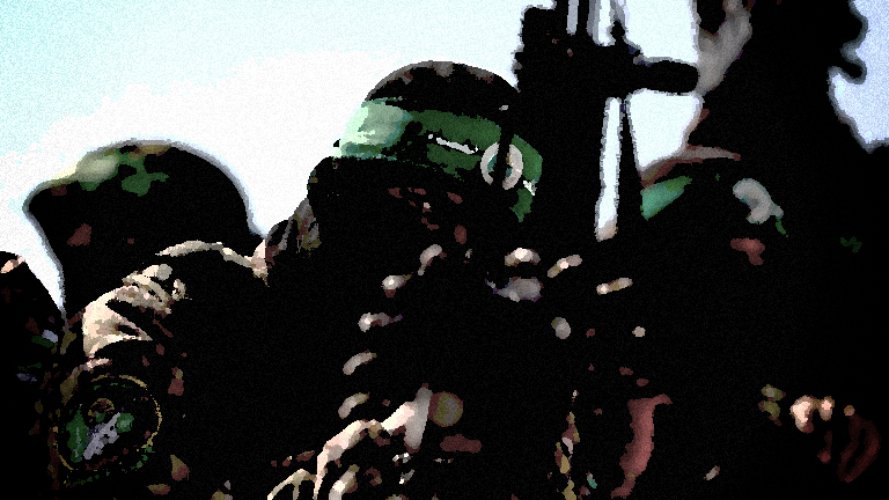
As a result, the regime prioritizes its proxy forces—such as Hezbollah in Lebanon, the Houthis in Yemen, and the Hashd al-Shaabi in Iraq—over its own people. These groups have become more important to the regime than the welfare of the Iranian populace.
Authoritarianism and Violence: The Core of Iran’s Foreign Policy
Just as the regime’s domestic policies rely on authoritarianism and repression, its foreign policy is built on militarism and organized violence. The IRGC is the primary institution shaping Iran’s foreign relations, extending the model of dictatorship across the region. The regime uses religious rhetoric and anti-Western sentiment as tools to maintain its grip on power and to justify corruption and oppression at home. Abroad, its support for Palestinian rights and opposition to Western “arrogance” serve as a façade to conceal its true intentions.
This approach has wreaked havoc not only in Iran but across the Middle East. The regime has held the people of Lebanon, Iraq, and Syria hostage to its hegemonic ambitions, establishing a “government within a government” in these countries. Western powers’ policies of appeasement have only exacerbated this situation, allowing the regime to continue its expansionist agenda unchecked.
The Sacrifice of National Interests
Iran’s national interests—such as securing its geography, protecting citizenship rights, fostering economic opportunities, and maintaining territorial integrity—have been sacrificed on the altar of the regime’s ideological ambitions. Instead of stabilizing the country and creating a prosperous future, Iran’s foreign policy has brought nothing but instability, poverty, and insecurity.
True power and influence in the region should benefit the Iranian people, not cause suffering for them or other nations. Defending the rights of Palestinians, or any other oppressed group, should be part of a rational, balanced, and humanitarian foreign policy, not one driven by ideological extremism.
The Path Forward
A foreign policy that genuinely serves Iran’s national interests must prioritize the formation of a modern, democratic state. It should focus on promoting social welfare and sustainable development, not on furthering ideological agendas. Achieving this goal will require the support of the Iranian people and a rejection of Western appeasement policies that have allowed the regime to continue its oppressive rule.
However, a foreign military intervention against the regime would not solve the underlying issues. Lasting change can only come from within, driven by the will of the Iranian people, who deserve a government that represents their interests, fosters peace, and pursues prosperity.