



As military-security institutions tighten their grip, economic decay and social unrest expose the fragility of an increasingly centralized power structure
In the aftermath of sustained war-driven policies and the broader consequences of its strategic decisions, the Iran regime is exhibiting clear signs of structural transformation. What was once presented as a hybrid political system is now increasingly diverging from conventional governance models, moving decisively toward a concentration of power within security and military institutions.
The Emergence of Praetorian Governance in the Iran Regime
Over recent years, a gradual yet unmistakable shift has taken place within the Iran regime. Formal state institutions have seen their influence diminish, while security and military bodies have expanded their authority across political and executive domains. This evolving dynamic aligns with what political theory defines as “praetorian governance.”
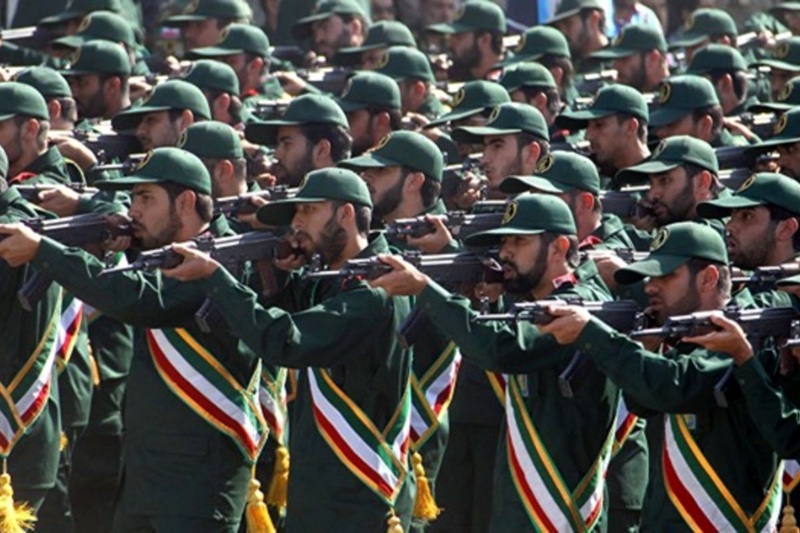
At the center of this transformation stands the Islamic Revolutionary Guard Corps (IRGC), whose role has expanded far beyond its original military mandate. Its growing influence across political, economic, and administrative spheres has blurred the boundary between formal governance and parallel power structures. Decision-making is now increasingly concentrated within opaque and restricted circles, eroding institutional transparency and accountability.
This consolidation of power is not merely political—it has deeply penetrated Iran’s economy. The IRGC’s longstanding grip on key economic sectors has contributed to systemic inefficiencies, widespread corruption, and ultimately, the expansion of poverty and livelihood crises across Iranian society.
Understanding Praetorianism in Practice
Praetorianism refers to a system in which military forces directly intervene in political, executive, and even judicial affairs. Historically rooted, this model emerges when armed institutions transcend their conventional roles and become primary actors in governance.
In such systems, decision-making frequently occurs outside formal legal frameworks, and civilian authorities operate under the shadow of military influence. Observers increasingly note that the Iran regime exhibits core features of this model.
One of the most defining characteristics of this governance pattern in Iran today is the intensification of repression—particularly through executions and systematic crackdowns. These mechanisms serve as tools for controlling internal crises and suppressing dissent. However, reliance on coercion as a stabilizing strategy carries inherent limits and is unlikely to ապահով the regime’s long-term survival.
An Economy Engineered for Survival, Not Prosperity
Macroeconomic indicators and lived realities across Iran point to a deeply strained economy. Policy priorities appear less aligned with public welfare and more oriented toward regime preservation. A significant portion of national resources is directed toward militarization, regional interventions, and the export of ideological influence.
This allocation of resources has had severe consequences for ordinary citizens. Inflation, declining purchasing power, and structural unemployment have intensified socio-economic pressures, pushing large segments of society toward poverty.
Simultaneously, reports of escalating security measures—ranging from arbitrary arrests to increasing issuance of death sentences—underscore a governance model focused on containment rather than reform. The judiciary, rather than functioning as an independent institution, increasingly operates within the broader framework of security imperatives.
Centralization of Power and Expansion of Security Control
The current architecture of the Iran regime reflects a dual process: the centralization of authority and the expansion of surveillance and control mechanisms. Decision-making has narrowed to a limited set of actors, with the IRGC playing a decisive role.
Security apparatuses have expanded their operational scope, actively preparing for and responding to perceived internal threats—particularly mass protests and social uprisings. Events such as the nationwide unrest in recent years have reinforced the regime’s acute sensitivity to what it perceives as “the street”—a reference to grassroots mobilization capable of destabilizing the system.
In foreign policy, a parallel shift is observable. Military institutions are assuming a more prominent role in managing regional dossiers, signaling a move away from traditional diplomacy toward security-driven strategies.
Mounting Challenges to the System of Velayat-e Faqih
Despite its consolidation of power, the Iran regime faces a convergence of structural challenges. Among the most significant is the widening generational divide. Younger Iranians, equipped with greater access to information and global connectivity, increasingly reject existing political and social constraints.
This generation is not merely discontent—it is actively resistant. Its inclination toward organized opposition and alignment with structured alternatives presents a substantive challenge to regime stability.
Compounding this is the persistent economic crisis. Inflationary pressures and declining living standards have amplified public dissatisfaction. These conditions create fertile ground for broader unrest, particularly when combined with organized networks that channel and mobilize dissent.
A System in Transition, A Future in Question
Recent developments suggest that the Iran regime is undergoing a profound structural shift. The consolidation of power within military-security institutions, the erosion of formal governance mechanisms, and the intensification of internal pressures together depict a system in transition.
However, this trajectory is fraught with risk. As social and economic pressures mount, and as organized opposition gains traction, the sustainability of an increasingly securitized governance model becomes uncertain. The emergence of a credible and expanding alternative further complicates the regime’s outlook.
In this context, the Iran regime’s turn toward praetorian governance may not represent a path to stability—but rather a signal of deepening vulnerability and an uncertain future.