Why sustainable political transition in Iran hinges on internal legitimacy, structured resistance, and a clear democratic alternative—not foreign intervention or recycled power models
In recent years, Iran’s political landscape has become increasingly defined by a deepening divide between two fundamentally different approaches to change. On one side are currents rooted in political illusion-making—reliant on foreign intervention, media projection, or the recycling of historically failed models, such a the reign of Pahlavi. On the other stands a trajectory grounded in organized resistance, domestic social capital, and the principles of national sovereignty and popular legitimacy.
This divide is no longer theoretical. It is now reflected in both political discourse and developments on the ground, shaping a broader contest between what can be described as “real change” and “engineered rearrangement of power.” The distinction carries significant legal and political implications, particularly concerning sovereignty, territorial integrity, and the right of nations to determine their own future.
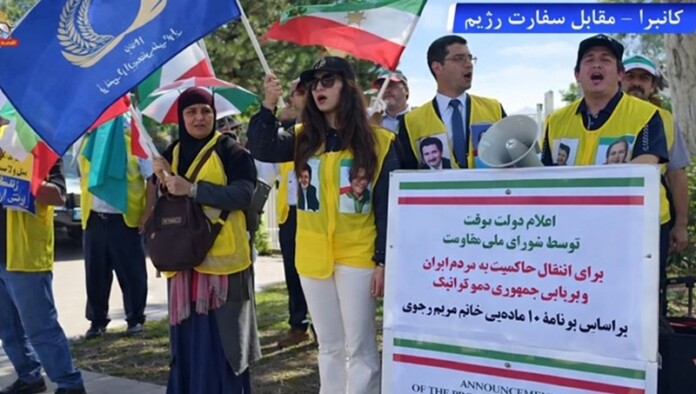
Recent messaging and political positioning from figures associated with the Iranian Resistance, including Maryam Rajavi’s Nowruz address and international conferences focused on a provisional government and a ten-point democratic framework, signal an effort to articulate a coherent political alternative. This alternative defines itself not only in opposition to the current regime but also against externally dependent projects that seek to impose change from outside.
Parallel to this, statements attributed to Massoud Rajavi have emphasized a firm rejection of externally driven political engineering and any scenario that compromises Iran’s territorial integrity. His messaging underscores a principled stance rooted in international law: that legitimacy derives from the will of the people, not from imposed solutions or geopolitical maneuvering.
From this vantage point, any project that reduces political transformation to elite substitution, foreign military pressure, or spontaneous collapse fails to engage with Iran’s social and historical realities. Durable political transitions are not accidental; they are constructed. They require three indispensable elements: an organized social force, identifiable political leadership, and a clear program for governance.
The absence of any of these components tends to produce either failure or, at best, unstable and reversible outcomes. Ideas such as externally orchestrated regime change or symbolic “leader fabrication” may generate short-term visibility, but they lack the structural depth necessary for sustainable transformation. More critically, they risk weakening internal agency while deepening political fragmentation.
At the core of this debate lies the issue of national sovereignty—particularly in an environment shaped by both external pressure and competing narratives. The insistence on political independence and the rejection of foreign intervention have thus become non-negotiable principles for those advocating an internally driven transition.
Conversely, some political currents that rely heavily on external backing or media amplification appear increasingly disconnected from the social realities inside Iran. This dynamic has contributed to a growing legitimacy gap, as political credibility cannot be indefinitely substituted by international visibility or endorsement.
In contrast, efforts to present an independent political alternative—through proposals such as a provisional government framework combined with international engagement—aim to bridge internal legitimacy with external recognition. The distinction is critical: it is not about isolation, but about avoiding one-sided dependency.
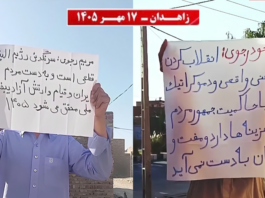
Developments on the ground further reinforce this analysis. Reports of coordinated operations in highly secured areas, accompanied by subsequent audio messages from participants, suggest a level of organization and operational capacity that challenges official narratives. Despite widespread censorship, such incidents function as attempts to reintroduce suppressed realities into the public sphere.
More broadly, the recurring role of organized networks—often referred to as resistance units—in various waves of protest highlights the existence of an embedded and adaptive structure within Iranian society. Despite sustained repression, arrests, and significant human cost, these networks have demonstrated continuity in mobilization. Their persistence points to a deeper linkage between segments of society and organized forms of resistance.
Analytically, these units should not be understood as isolated protest cells but as foundational elements of a potentially evolving resistance structure. Their expansion, consolidation, and coordination could, over time, contribute to the emergence of a more integrated political-military framework. In this sense, they represent not a temporary phenomenon but part of a longer-term process: the transition from dispersed protest to structured resistance.
This progression is crucial because it transforms political action from reactive episodes into sustained collective agency. It enables continuity, accumulation of experience, and the gradual construction of political capacity—factors that are essential for any meaningful transition.
At the theoretical level, the implications are clear. No durable political transformation can occur without the convergence of three core elements: organized social power, coherent leadership, and a defined political program. Any strategy that substitutes these with external warfare dynamics or top-down engineering is unlikely to produce a stable democratic outcome.
Ultimately, the central question facing Iran today is not merely whether change will occur, but what kind of change it will be. Will it emerge from within society—rooted in organized forces and aligned with national sovereignty—or will it be imposed from outside, shaped by external interests and detached from domestic realities?
Historical precedent strongly favors the former. Sustainable transitions are those that are internally anchored, socially legitimized, and politically structured.
This leads to a clear conclusion: the path beyond the current situation lies neither in political illusion nor in foreign intervention, nor in the reproduction of failed paradigms. It lies in the evolution of organized resistance—an endogenous force that not only challenges the status quo but also seeks to construct a viable alternative.
Within this framework, proposals such as the National Council of Resistance of Iran’s platform and its ten-point plan are positioned not merely as political statements, but as attempts to translate aspiration into actionable strategy. The concept of a provisional government, in this context, is framed as a mechanism for managing the transition of power while safeguarding national sovereignty.
The broader strategic doctrine—often summarized as “no to war, no to appeasement, yes to a third option”—encapsulates this orientation. It rejects both external military intervention and passive accommodation, instead placing emphasis on the agency of the Iranian people and the role of organized resistance.
The future of Iran, therefore, will not be determined outside its borders, nor through imposed blueprints. It will be shaped within society itself—through the interaction of social will, political organization, and strategic clarity. Any durable solution must pass through this axis: unity among pro-change forces, recognition of political pluralism, and adherence to foundational principles such as popular sovereignty, territorial integrity, secular governance, and equal rights.
In the final analysis, the choice is stark but clarifying: between illusion and reality. And reality, increasingly, points toward a transition driven not by external actors or symbolic constructs, but by the organized and evolving forces inside Iran itself.