


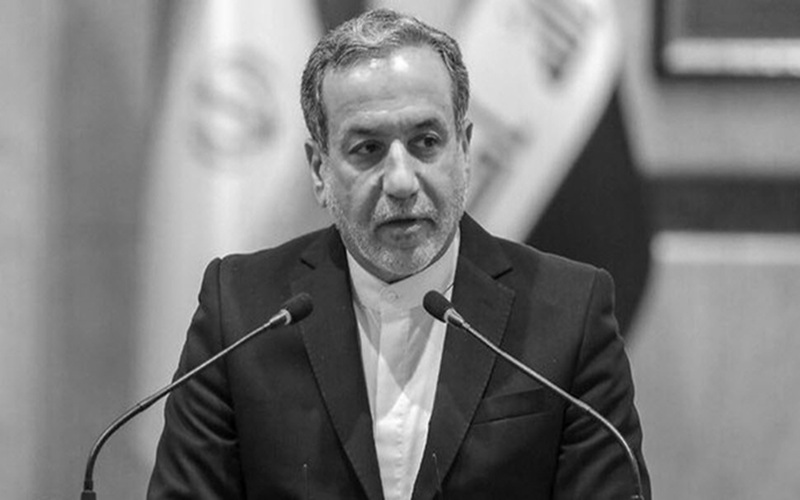

Iranian Foreign Minister Abbas Araqchi admits the looming threat of UN “snapback” sanctions and the risk of renewed Chapter VII measures, exposing the regime’s isolation and insecurity.
In a recent interview with state television, Iranian Foreign Minister Abbas Araqchi inadvertently revealed the regime’s deep insecurity and fragile standing in the international arena. While attempting to reassure viewers, Araqchi instead admitted that Tehran faces the very real threat of renewed sanctions, international isolation, and even war.
Snapback Sanctions and Chapter VII Threat
Araqchi conceded that if the UN Security Council’s “snapback” mechanism is activated, Iran would once again fall under Chapter VII of the UN Charter — a designation branding the regime as a threat to global peace and security. “This is a loss,” Araqchi admitted, acknowledging the heavy legal, political, and strategic consequences such a move would bring.
Although he attempted to minimize the economic impact by arguing that U.S. sanctions already outweigh UN restrictions, he acknowledged that renewed arms embargoes and international stigma would be severe setbacks for Tehran. His comments underscore the regime’s fear of diplomatic defeat and renewed isolation.
Fear of War
Araqchi also admitted that before the recent 12-day conflict, he himself believed war was imminent. While he now insists that a new war is not immediately likely, he urged continued military readiness and acknowledged that fears of conflict have spread widely among Iranians.
By framing the talk of war as “psychological warfare” by foreign adversaries, Araqchi revealed the regime’s growing anxiety over both external threats and domestic unrest. The very fact that the foreign minister addressed this issue so defensively reflects how fragile the regime’s position has become.
Confrontation with the IAEA
In his remarks, Araqchi confirmed that Iran’s nuclear program has suffered damage from recent attacks and made clear that cooperation with the International Atomic Energy Agency (IAEA) will now be limited. Future access, he declared, will depend on approval by the regime’s Supreme National Security Council, signaling Tehran’s defiance and unwillingness to abide by international norms.
This hardening stance places Iran in direct confrontation with the IAEA and is likely to intensify scrutiny and pressure on the regime.
Regional Struggles
Araqchi also referred to National Security Council chief Ali Larijani’s recent visits to Iraq and Lebanon, describing them as “necessary” at a sensitive moment. His vague and defensive tone, however, suggested that Iran is scrambling to preserve influence in the region amid growing setbacks for its proxies and allies.
A Regime Exposed
Instead of projecting confidence, Araqchi’s interview painted a picture of a regime trapped between external isolation and internal fear. His acknowledgement of snapback sanctions, the risk of Chapter VII measures, war anxiety, and damaged nuclear facilities reveals a leadership on the defensive.
As Iran’s foreign minister, Araqchi intended to reassure. Instead, he exposed the regime’s desperation.