


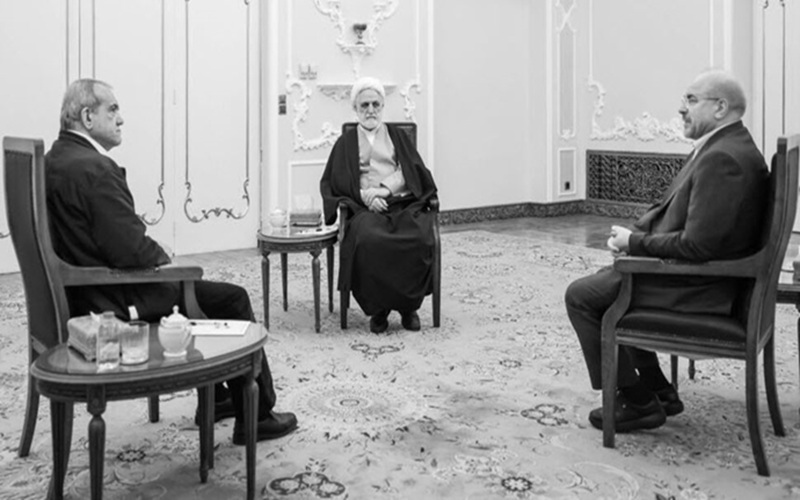

In a significant development reflecting growing concern over Iran regime’s wartime readiness, the Iranian regime’s Supreme National Security Council (SNSC) has announced the creation of a new Defense Council to enhance decision-making during future military conflicts. The move, revealed on August 3, follows harsh internal assessments of Iran regime’s performance during the recent Israel-Iran War and underscores Tehran’s efforts to centralize and streamline its wartime command structure.
The new Defense Council will operate under the authority of the SNSC but with a more operational focus. Iranian state media described the purpose of the council as ensuring “rapid, balanced, and coordinated” responses to national security threats. Officials cited “fragmentation in decision-making” and “lack of sufficient coordination between different institutions” as key reasons for the overhaul.
Khatam al-Anbiya Given Prominent Role
One of the most notable shifts in this new structure is the inclusion of the commander of the Khatam al-Anbiya Central Headquarters—responsible for joint and wartime operations—within the Defense Council. This inclusion signals a more direct integration of battlefield operations into national strategic planning. Unlike the SNSC, the Defense Council excludes the regime’s foreign affairs and interior ministers, reflecting its more military-oriented mission.
However, observers argue that without fundamental changes to the decision-making authority of Iran’s military commanders, the council may remain limited in its effectiveness.
Regime supreme Leader Ali Khamenei retains ultimate control over security policy, and unless he delegates greater autonomy to senior commanders, the council’s ability to act swiftly in a crisis will remain constrained.
The formation of the Defense Council also marks a political shift in who is guiding Iran’s national security strategy. Regime president Masoud Pezeshkian, will chair the Defense Council by virtue of his role as SNSC head. He is also responsible for appointing the council’s secretary.
Iranian regime media outlets close to hardliner factions have indicated that Pezeshkian may select Parliament Speaker Mohammad Bagher Ghalibaf as the council’s secretary. Ghalibaf is reportedly playing a central role in the new council’s formation, with analysts suggesting he was a key architect behind the restructuring. This comes amid speculation that other prominent political figures, including former SNSC Secretary Ali Larijani, may return to senior roles in national security policymaking.
A Mirror of the “Strategic Command Center”
The newly announced Defense Council closely resembles a proposal floated just days earlier by an outlet affiliated with former SNSC Secretary Ali Shamkhani. That proposal called for the establishment of a “Strategic Command Center” with cross-sectoral authority to respond swiftly to evolving threats. While not officially adopted under that name, the Defense Council appears to fulfill a similar function.
Iranian regime leaders have consistently issued warnings about future conflict scenarios in the wake of the Israel-Iran War. On the same day the Defense Council was announced, Iranian Army Commander Major General Amir Hatami cautioned, “We should not underestimate the enemy and consider its threats over.”
Parliament’s Expanding Role
The formation of the Defense Council also reflects the growing influence of the Iranian regime Parliament in shaping security and defense policy. Since the conclusion of the Israel-Iran War, Parliament has approved an unusual number of security-related bills—many aimed at cracking down on domestic dissent and bolstering internal control mechanisms.
The intertwining of legislative, executive, and military actors in the new Defense Council highlights a broader attempt by the Iranian regime to unify its fractured decision-making systems in anticipation of future regional or internal crises. Whether these reforms will translate into real operational efficiency remains to be seen, particularly in a system where ultimate authority continues to rest with the Supreme Leader.