


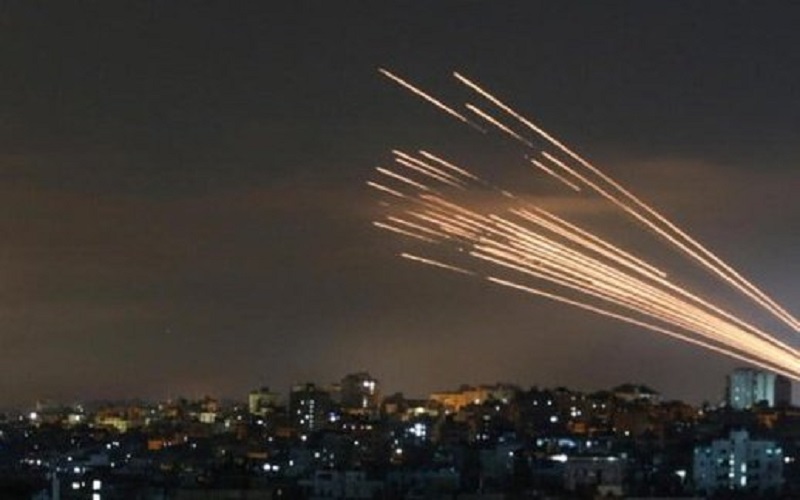

How Four Decades of Ideological Ambition and Strategic Miscalculation Led Iran into an Unnecessary and Devastating War with Israel.
The recent war between Iran and Israel was not an unavoidable tragedy. Rather, it was the direct result of a long chain of miscalculations made by Iran’s Supreme Leader Ali Khamenei and the commanders of the Islamic Revolutionary Guard Corps (IRGC)—decisions that have proven catastrophic for the country and its 87 million citizens.
Delusion of Power, Failure of Judgment
This conflict could have been entirely avoided had the regime not been driven by ideological delusion and a dangerous overestimation of its own strength. The belief that no foreign power would dare strike Iran was not just naive—it was reckless. The assumption that Iran’s military capabilities alone could deter any foreign intervention was completely unfounded. These fatal misjudgments are now defining the fate of an entire nation.
What we are witnessing is not an isolated leadership failure. It is a national crisis, the result of a political and strategic doctrine that has dictated Iran’s domestic and foreign policies for nearly half a century. This recent war is not the beginning—it is the climax of a series of deeply flawed decisions that have repeatedly sacrificed national interest for ideological dogma.
An Ideological War, Not a Defensive One
Since the 1979 revolution, the Iranian regime has pursued a confrontational foreign policy, rooted in hostility toward the United States and Israel. The IRGC’s decision to deploy forces to Lebanon in 1982—while Iran was still embroiled in the devastating Iran-Iraq War—marked the beginning of a decades-long campaign to export the revolution through proxy groups and militias. From the establishment of Hezbollah, to arming and funding Hamas, Islamic Jihad, Iraq’s Popular Mobilization Forces, the Houthis in Yemen, and others, the regime has continuously invested in what it calls the “Axis of Resistance.”
But this axis has served no national interest. Instead, it has imposed immense economic, political, and security costs on the Iranian people. Billions have been funneled abroad to sustain foreign militants while Iranians at home endure economic collapse, rampant inflation, and widespread unemployment.
Khamenei and other senior officials have openly declared their goal to destroy Israel and arm militant groups in Gaza and the West Bank. But Israel, unsurprisingly, has not remained passive in the face of these threats. A military response was not only predictable—it was inevitable.
Whose Interests Were These Wars Meant to Serve?
The fundamental question must be asked: What purpose do four decades of militarizing Iran’s presence near Israel’s borders serve? What have these policies achieved for the average Iranian? Why has the regime dragged the nation into endless conflict with world powers without ever seeking the public’s consent?
Iran’s hostility toward the United States follows a similar logic. It has brought nothing but sanctions, isolation, and economic hardship. It is a costly and fruitless path—one that the Iranian people neither asked for nor supported, but have been forced to endure.
The regime’s secretive and aggressive nuclear ambitions have only deepened the crisis. While countries like Turkey and the United Arab Emirates have developed nuclear energy for peaceful purposes, Iran’s opaque and provocative rhetoric—such as its threats to develop a bomb—has united even once-sympathetic European nations against it, leading to multilateral demands for curbs on both its nuclear and missile programs.
The Road Not Taken
Iran had other choices. It could have chosen diplomacy, development, and regional cooperation. With its vast resources, rich culture, and educated population, Iran had all the prerequisites to become a leader in the Middle East. But instead, the regime chose confrontation over cooperation, control over freedom, and ideology over national interest.
The consequences are visible everywhere: economic stagnation, widespread poverty, systemic repression, and the mass exodus of the country’s brightest minds. Iran has become a country where hope is in short supply, and where the future appears increasingly uncertain.
Khamenei’s Absolute Rule: The Core of the Crisis
These failures are not limited to foreign policy. From mandatory hijab laws, internet censorship, suppression of protests, and bans on life-saving vaccines during the COVID-19 crisis, the decisions of one man—Ali Khamenei—have dictated the lives of millions.
Worse still, no institution dares to challenge him. Even expert bodies and technocrats reverse their positions immediately after he speaks, retroactively justifying his every word. This culture of obedience has turned Iran’s policymaking process into a one-man show, where flawed decisions are not corrected but reinforced.
A Country Bombed by Its Own Rulers
Over the past 46 years, Iran’s rulers have systematically destroyed the nation’s infrastructure, economy, and social fabric—not through war from outside, but through relentless internal mismanagement. It is as if the country has been bombed from within for nearly half a century.
The recent war is just the latest manifestation of these cumulative failures. It is a symbol of a regime that sees itself as the owner of the nation and has repeatedly chosen confrontation over compromise, ideology over reality, and power over people. And when those decisions backfire, it does not retreat. It doubles down.
Unless this cycle of misjudgment and repression is broken, Iran will continue to spiral deeper into crisis—dragging its people further away from the peace, dignity, and prosperity they deserve.