



Following the February 28 airstrike that killed Iran regime’s supreme leader, regime officials struggle to boost morale while internal despair grows among loyalist forces.
In the aftermath of the February 28 airstrike that killed Iran regime’s supreme leader Ali Khamenei, officials within the ruling establishment are increasingly attempting to reshape his image while trying to prevent demoralization within the regime’s ranks. Recent remarks by an adviser to the Islamic Revolutionary Guard Corps (IRGC) reveal both the leadership’s propaganda efforts and the deep anxiety spreading among loyalist forces.
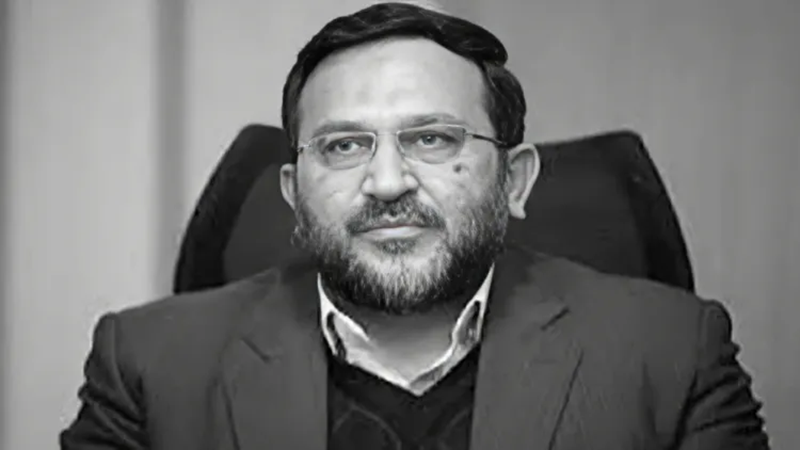
Speaking on March 2 on the state-run Channel Three television network, IRGC adviser Hamidreza Moghadamfar attempted to frame Khamenei’s death as the fulfillment of a supposed long-held desire for martyrdom. In comments later published by the regime-affiliated Tasnim News Agency, he claimed that “Khamenei had always wished for martyrdom.”
The remarks appear aimed at portraying the former supreme leader’s violent death as heroic rather than a devastating blow to the regime’s stability. Critics argue that such statements are part of a broader effort by regime loyalists to sanitize the legacy of a leader widely blamed for decades of repression and bloodshed.
During his rule, Khamenei presided over severe crackdowns on dissent and repeatedly ordered the violent suppression of popular uprisings. Protest movements in Iran over the years were met with mass arrests, executions, and lethal force against demonstrators. His government was also deeply involved in regional conflicts, backing armed groups and military interventions that contributed to bloodshed in countries such as Syria, Yemen, Lebanon, and Gaza.
Despite these realities, Moghadamfar sought to reassure regime supporters that the system would survive the loss of its long-time leader. “Certainly a bright future awaits the nation,” he said during the broadcast. “A leader will be chosen who will continue his path.”
The television host acknowledged the severity of the current crisis, noting that the situation appeared “much more difficult” than previous transitions. Moghadamfar agreed, drawing a comparison to the death of Ruhollah Khomeini in 1989, when the regime’s founding leader died shortly after accepting a ceasefire in the Iran-Iraq war.
“At that time we could hardly imagine what would happen after the Imam,” Moghadamfar said. “Some even felt that after him the system might end. But today the situation is even harder—his martyrdom came suddenly, there is war, and international conditions are very complicated.”
His comments inadvertently underscored the sense of uncertainty gripping the ruling establishment. While the regime seeks to project confidence, many insiders appear deeply concerned about its future in the absence of the figure who dominated Iran’s political system for more than three decades.
Moghadamfar also urged loyalists not to lose hope, describing the current turmoil as a “test.” “Some people must not allow despair to enter their hearts,” he said. “We are being tested, and we have always been tested during different crises.”
Observers say such appeals reveal growing fear of internal fragmentation. The sudden loss of the regime’s central authority has intensified concerns about power struggles among factions within the IRGC and the clerical establishment.
At the same time, widespread public anger continues to simmer inside Iran. Many Iranians blame Khamenei directly for ordering the brutal suppression of nationwide protests, including the bloody crackdown on the January 2026 uprising. The memory of those killed in the demonstrations has fueled ongoing calls for justice and political change.
Opposition groups argue that the regime’s attempts to glorify Khamenei cannot erase the record of repression under his rule. They contend that the leadership crisis following his death has further weakened the system and accelerated the possibility of fundamental political transformation.
The National Council of Resistance of Iran (NCRI) has already announced plans for a transitional government intended to guide the country toward a democratic republic after the collapse of the current system. Supporters of the proposal say it outlines a framework for political pluralism, civil liberties, and the separation of religion and state.
Whether the regime can maintain internal cohesion in the coming months remains uncertain. What is increasingly clear, however, is that the death of Iran’s long-time supreme leader has opened one of the most volatile chapters in the history of the Iranian regime.