


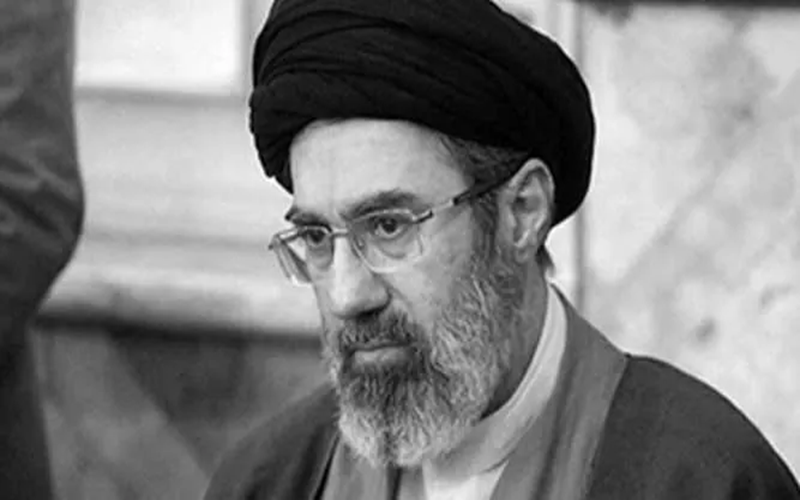

The transfer of power following Ali Khamenei’s death marks one of the most consequential moments in the history of the Mullahs’ regime. Yet rather than securing the future of the regime, the succession has exposed the structural weaknesses, legitimacy deficit, and mounting political challenges confronting the doctrine of Velayat-e Faqih.
Leadership transitions in authoritarian systems are often presented as demonstrations of continuity and stability. In reality, they frequently reveal the very fractures such systems spend decades attempting to conceal. The succession of Mojtaba Khamenei following the death of his father appears to fall squarely into the latter category.
Although the regime has projected an image of institutional unity, reports emerging from political circles close to the establishment suggest that Mojtaba Khamenei’s elevation was far from uncontested. Even within the regime’s own constitutional framework, questions have been raised about both the process and the level of support he received.
According to accounts attributed to members of the Assembly of Experts, only 59 of the body’s 84 members participated in the decisive vote, while 15 of those present reportedly withheld their support. If those figures are accurate, Mojtaba Khamenei secured the leadership with the backing of barely half of the Assembly’s total membership—hardly the overwhelming consensus the regime has sought to project.
The subsequent response from hardline figures proved equally revealing. Rather than emphasizing institutional legitimacy, some regime loyalists argued that Mojtaba’s authority derives from divine selection rather than from the Assembly of Experts itself. Such arguments illustrate a deeper problem. When legal legitimacy becomes difficult to establish, political systems often resort to ideological or religious claims to compensate for institutional weakness.
Ironically, the regional crisis and wartime atmosphere may have helped smooth what would otherwise have been a far more contentious succession. Under normal political circumstances, the prospect of hereditary leadership within a republic founded on revolutionary slogans would likely have generated far more visible resistance inside the ruling establishment. Instead, external threats and heightened security conditions appear to have temporarily suppressed internal rivalries that remain unresolved beneath the surface.
The contrast with Ali Khamenei’s own accession in 1989 is striking.
Ali Khamenei inherited power after many of the regime’s most destabilizing internal conflicts had already been settled—often through repression. Ayatollah Hossein Ali Montazeri, the principal rival to succeed Ruhollah Khomeini, had already been removed from the succession process.
The Iran-Iraq War had ended, eliminating the regime’s largest external crisis. The 1988 mass execution of more than 30,000 political prisoners had devastated organized opposition inside the country and created an atmosphere of fear that strengthened the state’s grip over society. At the same time, Ali Khamenei enjoyed the decisive political backing of Akbar Hashemi Rafsanjani and influential factions within the ruling elite.
Mojtaba Khamenei inherits none of those advantages.
Instead, he assumes leadership while fundamental crises remain unresolved. His political legitimacy continues to be questioned, factional competition persists beneath the surface, and the strategic dilemmas facing the regime have only become more complicated. Reports circulating within media affiliated with different factions—including claims of censorship and internal disputes—suggest that the succession debate has not ended but merely entered a less visible phase.
Perhaps the most immediate challenge confronting the new Supreme Leader concerns Iran’s relationship with the United States and the broader regional confrontation.
Unlike his father, who began his leadership after the Iran-Iraq War had concluded, Mojtaba assumes power while Iran remains entangled in unresolved regional conflicts and strategic confrontation with Washington. Every available option carries significant risks. Continuing the current course threatens further economic deterioration, diplomatic isolation, and security pressures. Yet meaningful compromise could provoke resistance from powerful ideological factions that view any retreat as an existential threat to the regime’s identity.
Managing this dilemma may become the defining test of his leadership.
At the same time, Iran itself is no longer the country it was in 1989.
The regime now governs a society profoundly transformed by decades of economic decline, technological change, and repeated cycles of nationwide protest. Inflation, declining purchasing power, water shortages, unemployment, and widening social inequality have generated levels of public dissatisfaction that differ fundamentally from those confronting Ali Khamenei at the beginning of his rule.
Equally important, successive nationwide uprisings have demonstrated that growing segments of Iranian society no longer view reform within the existing political framework as a viable solution. The political landscape has shifted from demands for gradual change toward increasingly explicit calls for fundamental transformation.
This new social reality significantly constrains the regime’s traditional mechanisms of control. While repression remains a powerful instrument, it no longer guarantees political stability in a society that is more connected, more politically experienced, and more willing to challenge state authority than at any previous point in the Islamic Republic’s history.
Against this backdrop, Mojtaba Khamenei faces three interrelated challenges.
The first is navigating Iran’s unresolved confrontation with the United States and the region while preserving internal cohesion.
The second is maintaining unity among increasingly competing factions within the ruling establishment. His repeated appeals for officials to avoid factional conflict suggest that the leadership itself recognizes internal fragmentation as a growing threat. Calls for unity are rarely necessary when unity genuinely exists.
The third—and perhaps most dangerous—is Iran’s deepening socioeconomic crisis. Chronic inflation, declining living standards, unemployment, environmental degradation, and widespread public frustration continue to create fertile conditions for renewed nationwide unrest. These structural pressures cannot be permanently contained through security measures alone.
None of this necessarily means that the regime is on the verge of imminent collapse. Authoritarian systems often prove more resilient than their critics expect, particularly when they retain effective coercive institutions. Yet neither can the succession be interpreted as a successful resolution of the regime’s leadership crisis.
Instead, the transition has exposed the limits of the Supreme Leader’s ability to command unquestioned authority across competing centers of power. The succession has not eliminated the regime’s internal contradictions; it has concentrated them in the person of its new leader.
For Iran’s democratic opposition, this distinction is significant. The regime’s internal divisions do not automatically produce political change. But they do weaken its capacity to maintain strategic coherence at a moment when economic deterioration, social discontent, and organized resistance continue to erode its foundations.
Mojtaba Khamenei has inherited power. Whether he has inherited authority is an entirely different question. The answer to that question may shape the future of the regime more profoundly than the succession itself.