Military setbacks, economic decline, and international isolation expose a weakened Iranian regime, struggling to maintain control.
Three months after the 12-Day conflict shook the region, the regime in Tehran is facing unprecedented weakness on multiple fronts. Despite its attempts to portray survival as a victory, the outcome has laid bare the system’s fragility and declining ability to project power.
The recent war highlighted the regime’s limited military capacity. While Tehran retaliated, it failed to achieve any meaningful deterrence. Its armed forces proved incapable of sustaining prolonged confrontation, forcing the leadership to act cautiously to avoid escalation it could not control.
Beyond the battlefield, the regime’s geopolitical standing has deteriorated sharply. Once heavily reliant on regional proxies, it now finds itself increasingly isolated. Several of its traditional allies, including key players in Lebanon, Syria, and elsewhere, are no longer reliable. This shift leaves the regime more vulnerable and exposed than at any time in recent decades.
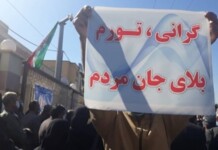
At home, growing unrest underscores its fragile hold on power. Shortages of water and electricity have triggered repeated protests, adding to simmering anger over years of economic hardship and repression. The leadership fears that renewed conflict would unleash domestic unrest that it could not contain.
Economically, the pressures are mounting. With sanctions tightening, Tehran is facing a looming reinstatement of United Nations restrictions, set in motion after the regime curtailed cooperation with the International Atomic Energy Agency. If reimposed, these measures will sharply reduce oil revenues, already weakened by falling exports and declining global demand.
The situation is compounded by U.S. and European sanctions targeting oil, minerals, and financial transactions, while the regime’s support for Russia’s war in Ukraine has triggered additional penalties. Even China, one of its few remaining outlets, buys its oil at discounted prices, leaving Iran with growing stockpiles of unsold crude. Floating storage has surged from 5 million barrels in early 2025 to 30 million barrels, forcing Tehran to sell at a loss and shrinking vital revenues.
Diplomatic options appear limited. While officials signal willingness to negotiate, Washington insists on major concessions on uranium enrichment before any talks begin—conditions Tehran is unlikely to accept. The result is a regime cornered by both external and internal pressures.
Although the ruling system has survived repeated crises since 1979, its current challenges are especially acute. Military vulnerability, economic decline, international isolation, and social unrest have converged, leaving the regime weaker than at any point in recent history.