



In recent weeks, the Iranian regime has been grappling with the consequences of the Gaza war, a conflict that stems in part from its long-standing policies of war-mongering and international terrorism. These policies, which serve as crucial pillars for both domestic repression and economic exploitation of the Iranian people, have now created a volatile situation within Iran, heightening the risk of societal unrest—a prospect the regime views as a nightmare.
At the core of the Iranian regime’s foreign policy lie two principles: international terrorism and regional conflict, paired with leveraging the West’s appeasement policies. However, the strategic impacts of the Gaza war are placing unprecedented pressure on the regime, revealing the cost of these long-held policies.
The High Cost of Strategic Failure
In the world of politics, a shift in strategy or a strategic failure often carries a heavy price. This is especially true for the Iranian regime, which now finds itself unable to reverse the consequences of its approach. The failure of its foreign policy has not only impacted its political structure but is also stoking social tensions within the country. Iranian society, long under the strain of repression, seems to be nearing a breaking point, with the potential for widespread upheaval growing each day.
Over the years, the regime has attempted to alleviate some of this pressure by cycling through reformist governments, but this tactic has consistently failed to alter the fundamental nature of its foreign policy. The reason is clear: the regime’s foreign agenda, built on exporting terrorism and promoting regional conflict, is fundamentally incompatible with any meaningful reform. A genuine shift toward reform would necessitate internal changes that would loosen the regime’s grip on power—something it is unwilling to risk.
This sentiment is increasingly reflected in the regime’s own media. On October 10, the state-run daily Ham Mihan captured the regime’s predicament, stating, “After four decades, Iran is now in a fragile and sensitive situation.” This admission underscores the depth of the challenges the regime faces, both domestically and regionally.
Regional and Domestic Turbulence
The strategic failure in Gaza is not an isolated event; it has the potential to reshape the entire geopolitical landscape of the Middle East. As Ham Mihan noted, “The domino of developments in Lebanon may lead to extensive changes in the geopolitical landscape in the Middle East. If this happens, Iran will also face problems in its regional strategy. Not only will Iran face issues in the region, but also internally.”
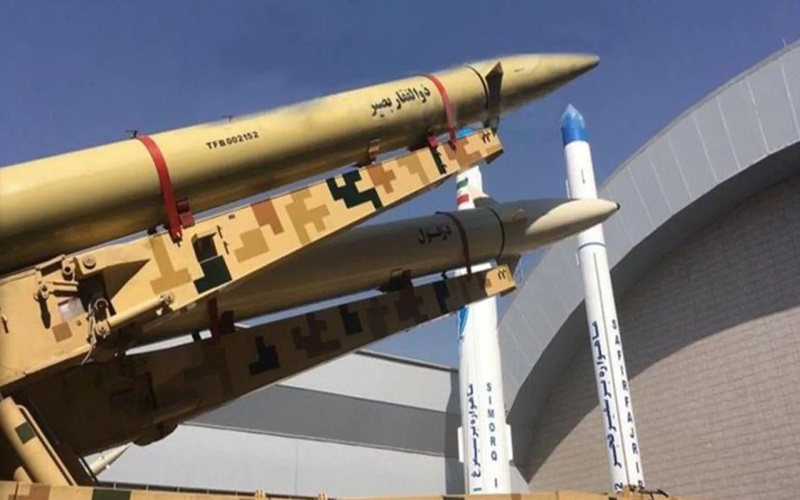
Following the regime’s missile attack on Israel on October 1, and Israel’s strong insistence on retaliating, fear is mounting among Iranian officials about the repercussions. Regime supreme leader Ali Khamenei is trying to reassure his loyalists that nothing will happen. Despite these reassurances, the regime’s internal discontent continues to grow, with some factions fearing a broader conflict that could draw in the U.S. and Europe.
The War’s Recurring Impact
The Gaza war is poised to have a cascading, detrimental effect on the Iranian regime, both regionally and domestically. A recent article in the state-run Arman Daily titled 365 Nightmare Days in the Middle East argued that if the metrics for determining winners and losers are based on conventional measures of casualties and damage, “the Israeli side is undoubtedly the winner of this war, inflicting unprecedented losses and damage on the Palestinian side, the destruction of the Gaza Strip and its infrastructure, and the massacre of 42,000 Palestinians.”
As the war drags on, the regime finds itself increasingly trapped in a cycle of strategic miscalculations. The fallout from these policies may not only redefine the Middle East’s geopolitical balance but also force the regime to confront internal unrest on an unprecedented scale. With societal tensions nearing a boiling point and regional alliances under strain, the Iranian regime may soon face the true cost of its foreign policy failures.