


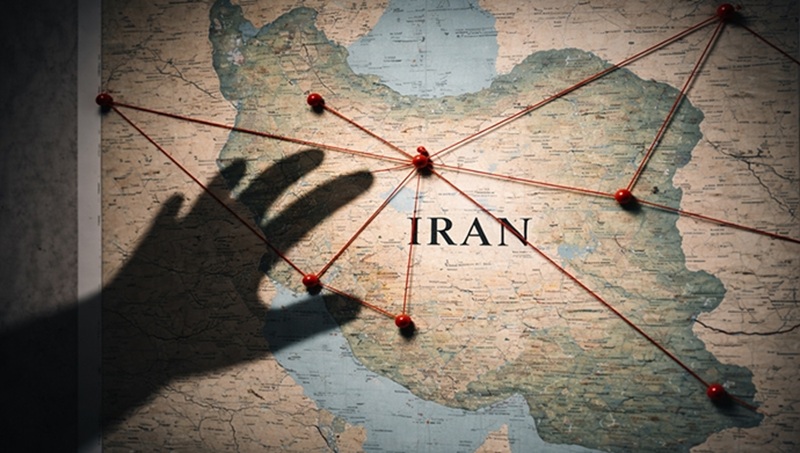

Why foreign-backed alternatives risk repeating Iraq’s destabilizing trajectory in Iran.
The term “Chalabi Syndrome” is not a rhetorical invention or a passing political label. It is a warning—about the widening gap between a nation’s internal democratic will and externally engineered political projects.
The reference is to the post-2003 experience of Ahmed Chalabi, whose lobbying efforts in Washington helped shape U.S. intervention in Iraq. The aftermath is well documented: prolonged instability, sectarian fragmentation, repression, and insecurity.
The lesson is not merely historical—it is structural. When an alternative is packaged abroad, marketed through foreign lobbying networks, and presented as a ready-made solution, the outcome often diverges sharply from the aspirations of the people on the ground.
Within this framework, several seasoned Western policymakers have issued cautionary notes regarding Iran.
Retired U.S. General Charles Wald, former Deputy Commander of U.S. European Command, authored an opinion piece explicitly invoking the “Chalabi Syndrome.” In that article, he characterized the former crown prince’s intensive lobbying in Washington for potential U.S. military involvement in Iran as deeply troubling.
Wald argued, in substance, that rather than building domestic legitimacy through the arduous and dangerous work of organizing under repression, reliance on external military force reflects a fundamentally different—and risky—strategy.
Drawing parallels to Iraq, he suggested that pursuing power through foreign intervention echoes the path taken by Chalabi, with consequences that could ultimately serve the interests of Tehran’s hardliners rather than Iran’s democratic movement.
Wald further warned that public appeals for foreign airstrikes risk reinforcing the Iranian regime’s propaganda narrative. When exile figures openly call for military action, he implied, authorities in Tehran are handed a pretext to intensify crackdowns—while ordinary Iranian protesters bear the cost.
A similar concern has been voiced in Europe. Charles Michel, former President of the European Council, remarked in a televised interview in France that Iran’s future must not once again be taken out of the hands of its people.
Reflecting on a recent demonstration in Berlin alongside Iranians advocating freedom and democracy, he cautioned against self-appointed political claims detached from democratic principles.
He also alluded to the historical record of monarchical dictatorship in Iran and the suffering associated with it—underscoring that durable legitimacy cannot be reconstructed through nostalgia or external sponsorship.
The concept of the “Chalabi Syndrome,” therefore, is not a casual historical analogy. It is a strategic warning. Sustainable democratic transition cannot be engineered in foreign capitals or secured through external military leverage. It must emerge from internal agency, pluralistic organization, and the freely expressed will of the people.
For Iran, the decisive arena is not the lobbying circuit abroad but the lived political struggle within its borders—among citizens who reject both entrenched religious absolutism and any return to hereditary rule.