


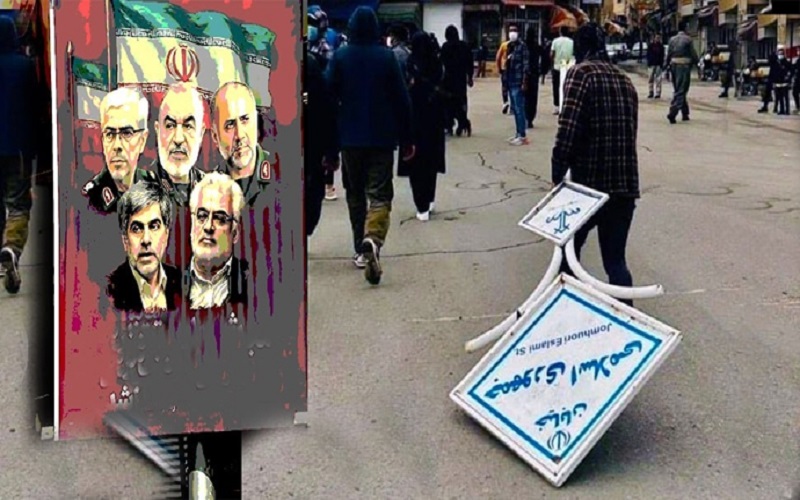

The aftermath of any war inevitably leaves deep strategic and societal scars on the countries involved. The 12-day conflict between Iran and Israel is no exception. While the fighting has paused under a fragile ceasefire, its consequences are beginning to reshape not only the Iranian regime’s political foundations but also the lives and psyche of its citizens.
The Iranian regime, long defined by 46 years of warmongering, terrorism, and repression, now finds itself at a critical juncture. The war has laid bare the fragility of its core policies and exposed the hollowness of its ideological claims. More than a military confrontation, it has served as a litmus test for the sustainability of a system increasingly out of step with both regional dynamics and domestic demands.
State-affiliated media outlets—typically instruments of propaganda—have begun acknowledging the socio-political tremors rippling through the country. Even within regime circles, anxiety is mounting over the war’s long-term fallout. Social discontent is on the rise, and warnings about escalating repression and instability are surfacing in official discourse.
In the wake of the ceasefire, the regime has intensified political crackdowns, both in public spaces and inside the prison system. This escalation signals that the regime has failed to learn from its decades-old reliance on suppression—a strategy that helped ignite the recent conflict in the first place.
The war has now pushed the regime into a profound dilemma. Any meaningful reform—whether in domestic governance or foreign policy—would require a fundamental shift in power structures. Yet Iran’s deeply centralized and ideological system, centered around the absolute authority of the Supreme Leader under the doctrine of Velayat-e Faqih, resists such transformation. Even moderate voices within the establishment are expressing alarm.
Prominent regime figure Abbas Abdi, in an interview with the state-run Etemad newspaper, warned, “If evidence of tangible changes in internal and media politics is not seen, the fallout will be serious.”
This internal critique is echoed by other state media. The newspaper Siasat-e Rooz acknowledged that “some of the system’s previous ideals, such as the ideology of confrontation with Israel, have been shaken. This situation can affect the psychological foundations of society.”
Historically, strategic miscalculations in war have cascading, long-term effects. They do not remain confined to battlefields; they infiltrate political, social, economic, and international domains like shrapnel from an exploded bomb. Iran is now contending with exactly such a scenario. One more strategic mistake, similar to those that have defined the past four decades, could bring the regime to the brink.
In a particularly stark warning, the state-run Jahan-e Sanat website wrote:
“With the ceasefire of the 12-day war, we are witnessing an atmosphere of anxiety and concern in society. Iran no longer has the capacity for another strategic mistake. We are talking about confrontation and resistance at a time when our economic infrastructure is unable to meet the needs of the people even under normal circumstances. The country’s foreign exchange reserves have been depleted, rampant inflation has eroded people’s livelihoods, industrial production has declined, and unemployment is on the rise. In such circumstances, another security or military crisis could bring this entire structure to the point of collapse.”
The warning signs are clear. The war may be over for now, but its consequences are only beginning to unfold. For a regime already weakened by years of economic failure, political repression, and international isolation, the 12-day war may prove to be less a turning point and more a point of no return.