



Diplomatic engagement may ease external tensions, but it cannot repair the structural legitimacy crisis, factional infighting, and public rejection that increasingly threaten the Iranian regime from within.
The possibility of renewed negotiations between Tehran and Washington has once again fueled speculation that another diplomatic breakthrough could stabilize the Iranian regime. History, however, suggests otherwise. Even if the two sides reach a temporary or even long-term agreement, the regime’s greatest threat no longer comes from international isolation. It comes from within.
For decades, Western policymakers have viewed Iran’s crises primarily through the lens of sanctions, nuclear negotiations, and regional security. Yet the events of 2026 have exposed a different reality. The regime now faces a profound domestic crisis rooted in declining legitimacy, intensifying factional conflict, economic deterioration, and an increasingly organized society that no longer accepts the status quo.
A diplomatic agreement may postpone confrontation abroad, but it cannot reverse the political dynamics unfolding inside Iran.
The Real Crisis Is Domestic, Not Diplomatic
The assumption that sanctions relief or normalized relations with the United States could guarantee regime stability misunderstands the nature of today’s crisis.
Iran’s leadership is confronting challenges that no foreign agreement can resolve simultaneously.
The country emerges from the recent war significantly weaker than it was only months earlier. Beyond the enormous military and economic costs, the regime has lost senior commanders, seen much of its regional deterrence erode, and faces mounting social and financial pressures at home.
Most significantly, the death of Ali Khamenei removed the central figure who, for decades, served as the regime’s ultimate source of ideological authority and institutional cohesion. Regardless of who has succeeded him, replacing that role is considerably more difficult than replacing a political office.
The leadership transition has exposed fractures that had long existed beneath the surface.
Internal Divisions Are Becoming Impossible to Hide
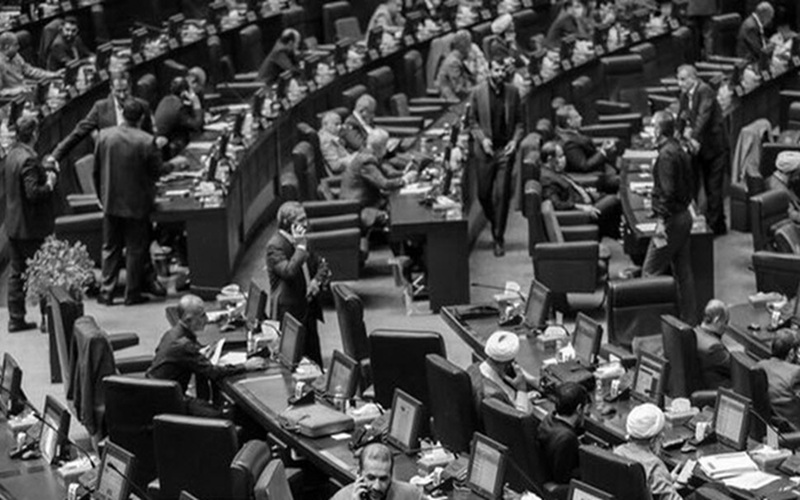
Perhaps the most important consequence of the post-war environment is the increasingly visible struggle inside the ruling establishment.
Broadly speaking, competing camps now advocate sharply different strategies.
One faction argues that some degree of accommodation with the West has become necessary to reduce economic pressure and preserve the system. Another views any meaningful concession as an existential threat, fearing that compromise abroad will inevitably encourage demands for reform—or even fundamental political change—at home.
This is more than a policy disagreement. It reflects competing visions of how the regime can survive.
Ironically, the more comprehensive a future agreement becomes, the more likely it is to deepen these divisions.
Peace Could Create New Political Instability
Diplomatic success is often assumed to produce political stability. In Iran’s case, the opposite may prove true.
The regime has spent decades defining itself through resistance to the United States, regional military influence, its missile program, and support for proxy networks. These policies are not merely strategic choices; they have become central pillars of the Islamic Republic’s political identity.
Meaningful concessions on any of these issues would therefore carry costs extending far beyond foreign policy.
Every compromise risks alienating influential elements within the security establishment and ideological hardliners whose political legitimacy depends on maintaining confrontation rather than resolving it.
For that reason, diplomacy itself may become another catalyst for domestic instability.
Money Has Never Solved the Regime’s Political Problems
Supporters of renewed negotiations frequently argue that sanctions relief or the release of frozen assets would provide Tehran with sufficient economic breathing room to stabilize the country.
Iran’s recent history offers little evidence for this conclusion.
During periods of exceptionally high oil revenues—and even after the 2015 nuclear agreement—the regime enjoyed substantially greater financial resources than it does today. Yet those years did not produce lasting political stability. Instead, they were followed by some of the country’s largest nationwide protests, driven by corruption, inequality, repression, and widespread public frustration.
The lesson is straightforward.
Iran’s crisis is structural rather than financial.
Economic resources may delay certain pressures, but they cannot restore public trust in institutions that many Iranians increasingly view as unaccountable and repressive.
The Leadership Question Remains Unresolved
The succession process itself introduces another layer of uncertainty.
Although Mojtaba Khamenei has succeeded his father, a leadership transition alone would not eliminate the underlying conflicts within the ruling elite.
The disagreements now emerging are not merely personal rivalries. They concern competing strategic visions about Iran’s future, relations with the outside world, and the balance between ideological rigidity and political pragmatism.
Replacing one leader cannot resolve these deeper institutional contradictions.
The Opposition Question Will Not Disappear
The recent war has also reshaped debates surrounding Iran’s future.
Military confrontation failed to produce regime change. Likewise, decades of sanctions and diplomatic engagement have not fundamentally altered the regime’s domestic behavior. This has renewed discussion among many observers and opposition groups about whether sustainable political change can come only through the Iranian people themselves.
Among these opposition forces, the Iranian Resistance has consistently argued that neither war nor appeasement offers a durable solution. Instead, it maintains that the international community should recognize the Iranian people’s right to resist dictatorship while conditioning any diplomatic engagement on measurable improvements in human rights, including an end to executions, political repression, and the rebuilding of the regime’s machinery of suppression.
Whether one agrees with this prescription or not, the underlying point deserves attention: any diplomatic framework that ignores Iran’s internal human rights crisis risks addressing symptoms while leaving the central conflict untouched.
Negotiations Cannot Resolve a Crisis of Legitimacy
The future of U.S.-Iran negotiations remains uncertain. Deep disagreements over the nuclear program, ballistic missiles, regional influence, proxy groups, and broader security issues continue to complicate the path toward any comprehensive agreement.
But even if negotiators overcome those obstacles, the regime’s principal challenge will remain unchanged.
The defining struggle in Iran today is not between Tehran and Washington. It is between a political system struggling to preserve its authority and a society that has repeatedly demonstrated its willingness to challenge it.
Diplomacy may reduce external tensions. It may postpone economic pressure. It may even produce temporary stability in the region.
What it cannot do is restore legitimacy, heal factional fragmentation, or repair the widening rupture between the Iranian regime and its own people. That is a political crisis no negotiating table can solve.