As Iran commemorates the fallen, Ali Khamenei’s attempt to erase the word “protester” only deepens the regime’s moral isolation
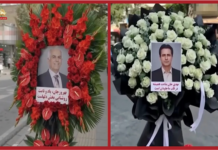
The fortieth day after the martyrdom of those killed in the January 2026 demonstrations is not merely a moment of mourning. In Iranian culture, the fortieth day — chehelom — marks a profound social and moral reckoning. It is a collective return to memory, a renewed confrontation with injustice, and a reaffirmation that blood shed in the struggle for dignity cannot be erased by decree.
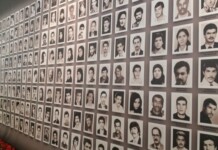
This year’s commemoration unfolds against an open wound. Iranian society is still searching for freedom, democracy, equality, justice, and human dignity. The memory of those who took to the streets in January remains vivid — not as an abstract political episode, but as lived experience, recorded in countless videos, testimonies, and graves.
Yet instead of acknowledgment, the regime has chosen distortion.
The Politics of Erasure
In his remarks about the events of January 8 and 9, Iran regime’s Supreme Leader Ali Khamenei divided the dead into four categories: “mercenary coup plotters,” “security defenders,” “neutral bystanders,” and “the deceived.”
This classification is not an analytical framework; it is a political maneuver. It is an attempt to dissolve a mass uprising into administrative labels and to deny the existence of millions who protested in the streets.
One question stands glaringly unanswered: among the thousands who came out and lost their lives, was there not even a single “protester”?
Can a movement of such scale and diversity be reduced to prefabricated categories designed by the very authority being challenged? This is not only a political question. It is a moral and national one.
The deliberate omission of the word “protester” from official narratives is telling. Language shapes legitimacy. To remove the term is to deny the agency of citizens who exercised what they saw as their right to social existence in the face of systemic human rights violations.
Denial in the Face of Evidence
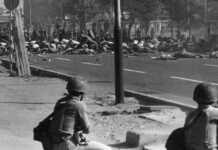
The regime’s narrative contradicts what millions witnessed. The heavy weaponry deployed — including DShK and PKM machine guns — was not in the hands of “neutral bystanders.” It was state security forces that fired sustained bursts into crowds and onto sidewalks.
To label victims as “neutral passersby” while refusing to identify those responsible for their deaths is not merely evasive; it is an inversion of accountability.
The effort to frame a nationwide uprising as either foreign conspiracy or misguided confusion underestimates the collective memory of a connected society. In the digital age, state propaganda cannot fully overwrite recorded reality.
Every attempt to manipulate the narrative only amplifies public anger. The more the regime insists that a mass protest did not exist, the more visible its fear of acknowledging it.
A Nation’s Response
If the regime’s strategy is denial, the public’s response has been commemoration.
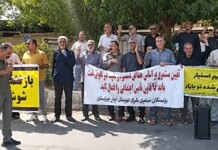
Across Iran, cemeteries have become spaces of collective affirmation. Chants echo nationwide:
“By the blood of our comrades, we stand until the end.”
“I will kill the one who killed my brother.”
These slogans, replicated by millions across social media platforms, have transformed mourning into civic declaration. The fortieth day has become not a ritual of closure, but a renewal of commitment.
The regime may attempt to dictate terminology within official halls and state-controlled broadcasts. But beyond those walls, society operates on a different register — one shaped by shared loss and shared resolve.
The fortieth day is not simply a cultural tradition. In moments of national trauma, it becomes a referendum on truth.
And in January 2026, that truth is clear: a people rose to assert their rights, and no semantic maneuver can erase their presence.