


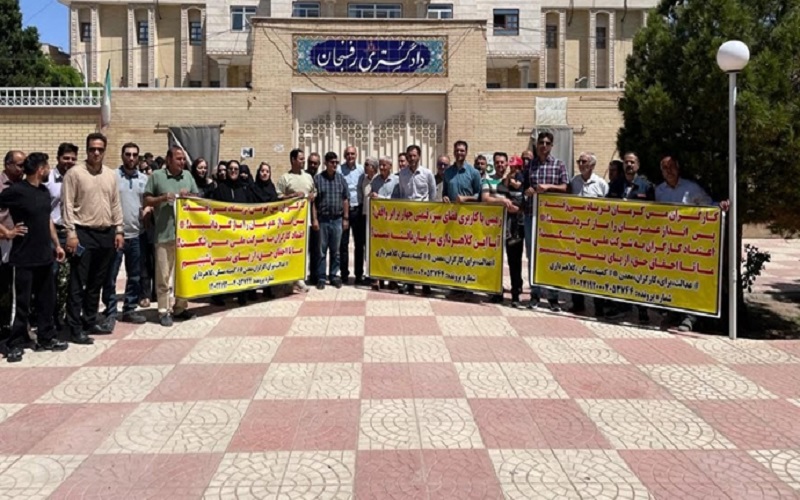

As the Iranian regime grapples with suffocating internal and external crises, public unrest has reached new heights. Nearly a year after Masoud Pezeshkian assumed the presidency, it has become evident that his government remains paralyzed—unable to offer solutions to the mounting political, economic, and social challenges facing the country.
Ongoing nuclear negotiations with the United States, once a focal point of the regime’s strategy, have failed to address or ease these problems. In this climate of stagnation and uncertainty, protests across various sectors of Iranian society have surged.
A Surge of Discontent: May 2025 in Numbers
In May 2025 alone, Iran witnessed at least 493 protests spanning cities and towns across the country. These demonstrations reflect widespread frustration across different segments of society—truck drivers, retirees, bakers, workers, educators, farmers, and more.
Breakdown of protest activity by group:
- Truck drivers: 174 cases
- Retirees: 97 cases
- Bakers: 57 cases
- Workers: 47 cases
- Educators: 22 cases
- Farmers: 9 cases
- Merchants: 5 cases
- Students: 2 cases
- Doctors: 1 case
- Taxi drivers: 1 case
- Other groups: 76 cases
Truck Drivers Lead a Nationwide Strike
Truck drivers were at the forefront of the May protests, launching an 11-day nationwide strike across 163 cities. Their grievances were wide-ranging and urgent:
- Low freight rates
- Increased insurance premiums (reaching 5 million tomans)
- Unpaid wages by transport companies
- Low fuel quotas and rising fuel prices
- Poor road conditions and high tolls
- Lack of standardization in freight calculations
Strikes and gatherings were reported in Kashan, Bandar Abbas, and Qazvin cargo terminals, with drivers also decrying the absence of a representative union, high vehicle maintenance costs, and severe shortages in parts and services.
Retirees Demand Justice
Retirees from the social security, steel, telecommunications, and government sectors held dozens of protests. Their demands centered around:
- Unpaid pensions and retirement bonuses
- Lack of proper insurance coverage
- Low and unequal wages
- Rampant inflation
- Mismanagement and state interference in pension funds
- Bakers Protest Across the Country
Bakers in over 30 cities—including Tehran, Isfahan, Sanandaj, Mashhad, Ahvaz, and Shiraz—staged strikes and protests. They raised alarms about:
- The malfunctioning of the government’s Nanino system
- The delay or absence of subsidy payments
- High operating costs, low wages, and union dysfunction
Workers Push Back Against Economic Pressure
Workers from a wide range of industries protested against:
- Job insecurity and arbitrary dismissals
- Lack of wage increases in line with inflation
- Failure to implement job classification plans
- Discrimination against local workers
- Poor working conditions and lack of benefits
- Frequent power cuts and excessive taxes
- Rising fuel and material costs
Educators Call for Accountability
Working and retired teachers and education workers rallied in multiple cities—including Tehran, Shiraz, Gorgan, and Yazd—demanding accountability over the mismanagement of the Educators’ Reserve Fund and the fulfillment of delayed financial obligations.
Farmers Demand Support
Farmers in Shiraz, Ahvaz, Rafsanjan, and Yazd protested against:
- Chronic and prolonged power outages
- Disruption to water wells essential for agriculture
- Delayed payments from the government for wheat purchases
Merchants and Small Business Owners Voice Their Anger
Shopkeepers and merchants in Tehran, Shiraz, Sanandaj, and other cities protested:
- Unscheduled electricity blackouts
- Rising operating costs
- Increases in insurance and property charges
Students and Academics Join the Protests
University students and graduates in Tehran rallied against:
- Water and power cuts in campus facilities
- Delays in issuing essential laboratory credentials for research
Healthcare Professionals Speak Out
Doctors and pharmacists in Shiraz protested the increasing involvement of private platforms in pharmaceutical distribution—an issue they say threatens transparency and professional standards.
Taxi Drivers Strike for Reform
In Kish, taxi and public transport drivers went on strike, demanding modernization of the outdated public transportation fleet.
Conclusion
The protests of May 2025 paint a stark picture of a country in turmoil. From the industrial worker to the university student, and from the baker to the retired civil servant, Iranians are united in their growing dissatisfaction with a regime that appears incapable of addressing their needs. The rising wave of protest signals not only deepening economic distress but also a widening crisis of legitimacy for the Islamic Republic—one that no nuclear deal or foreign negotiation seems poised to resolve.