



Workers, students, farmers, and defrauded citizens mobilize across the country as livelihoods deteriorate and authorities remain unresponsive
As Iran’s economic crisis deepens and living conditions continue to deteriorate, a fresh wave of nationwide strikes and protest gatherings has spread across multiple provinces, reflecting a broad-based eruption of social anger. Workers, students, livestock farmers, and defrauded investors have taken to streets, workplaces, and dormitories—each voicing sector-specific grievances that converge on shared demands for basic economic security, dignity, and accountability.
The scope and simultaneity of these actions underscore a growing disconnect between society and the ruling structure, which has shown persistent incapacity—or unwillingness—to address even the most fundamental rights of citizens.
Livestock Farmers Protest Feed Shortages
On Wednesday, December 24, livestock farmers in Joveyn County, Razavi Khorasan Province, staged a protest against the authorities’ failure to distribute animal feed concentrate. Demonstrators warned that the continuation of this policy would devastate both producers and consumers, directly linking the collapse of agricultural production to worsening food insecurity.
As farmers chanted, “Today the livestock farmer is destroyed; tomorrow the people’s table will be empty,” the protest highlighted the structural connection between production crises and the broader cost-of-living emergency.
Gold Mine Workers Remain on Strike
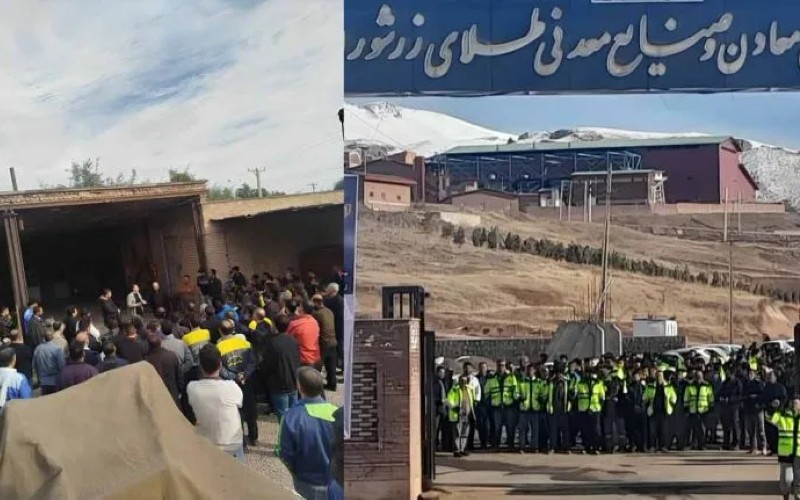
The strike by workers at the Zarshouran gold mine in Takab—Iran’s largest gold mine—has now exceeded ten days. Approximately 400 workers, most of them heads of households, report living in poverty despite being employed at a site generating vast wealth.
Workers say their repeated appeals have gone unanswered and that no responsible institution has intervened. The prolonged strike has become a stark symbol of the widening gap between wealth generation and its unequal distribution under Iran’s current economic system.
Sugar Factory Workers Face Retaliation
In Shush, workers at the Middle East Sugar Company continued their strike for a third consecutive day on December 24. Their demands include payment of food allowances, proper calculation of Friday work, reform of the job classification system, and relief from exhausting shift schedules.
Despite earlier promises, management not only failed to fulfill its commitments but reportedly dismissed three workers, including a workers’ representative. The silence of the Labor Department and other state bodies has further inflamed tensions.
CryptoLand Victims Demand Accountability in Tehran
In Tehran, users and victims of the CryptoLand investment platform held a protest, chanting, “Prosecutor! Prosecutor! Give us back our money!” Nearly five years after their assets were frozen, protesters say they have received no clear answers or restitution.
Participants emphasized that this case is not an isolated incident, noting that thousands of families remain trapped in similar unresolved financial scandals.
Railway Maintenance Workers Protest Wage Discrimination
Maintenance workers in the Zagros regional railway administration entered the fourth day of their strike on Tuesday, December 23. They cite blatant discrimination in wages and benefits, alongside entrenched corruption and rent-seeking within the railway system.
According to workers, supplementary insurance premiums are fully deducted from their wages but are not transferred to the insurance provider. They have called on colleagues nationwide to join the strike until “the end of injustice and inequality and the recovery of our rights.”
By Wednesday, December 24, strikes by workers in Lorestan and the Zagros region had entered their fifth day. Workers report that the only response from management has been threats of dismissal.
One worker stated that managers “who sit in their positions through bribery and connections have no understanding of a worker’s life,” adding, “If they have the courage, let them live for just two months on our wages—paying installments, rent, and supporting children.”
Living on the Edge of Hunger
Workers described conditions of severe deprivation. After paying rent and loan installments, they say nothing remains for even basic food. “Last month we could only afford two chickens,” one worker recounted. “My wife divided them so the children could eat, and we drank water to fill our stomachs.”
They added that they avoid hosting guests out of shame, as wages remain pegged to prices from the beginning of the year while living costs have multiplied, rendering nominal wage increases meaningless. “Seeing a child go to school in patched shoes breaks you,” one worker said. “This is not the result of workers’ negligence; it is the product of structural injustice.”
Student Hunger Strikes Expand
On Tuesday evening, December 23, students at Imam Ali Dormitory of Shahid Beheshti University of Medical Sciences launched a hunger strike. Food trays placed on the ground became a symbol of exhaustion and humiliation. Students said that after their complaints were ignored, they chose hunger as a form of protest.
“This is disrespect for the future of the country,” students declared. The hunger strike continued on Wednesday, demonstrating that the wave of protests extends well beyond labor environments.
Similar actions were reported at Chamran University in Ahvaz, where dormitory students protested poor food quality, including reports of hair found in meals. Laying trays on the ground, students stated, “These trays on the floor represent not only the food, but the dignity and honesty of dormitory management.” The repetition of such scenes across universities signals the expansion of student unrest.
Public Anger Reflected in the Streets
In the city of Bukan, protest graffiti captured the prevailing public mood, noting soaring prices, official blame-shifting, and even admissions of incapacity by state officials themselves. The message offered a concise reflection of society’s frustration amid the ongoing nationwide strikes.
From Sectoral Grievances to Social Uprising
The simultaneous spread of strikes and protests across labor, education, agriculture, and finance indicates that Iran’s crisis has moved beyond isolated sectoral demands. What is unfolding is a broad social protest rooted in poverty, inequality, and systemic unaccountability.
Today’s nationwide strikes echo the collective cry of a population abandoned between economic collapse and institutional silence—a cry that continues to grow louder by the day.