


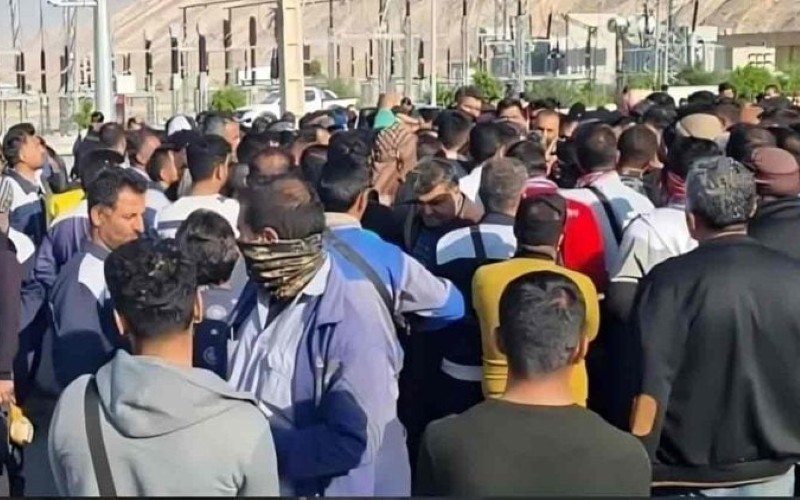

As economic collapse deepens and social despair spreads, protests across Iran surge, reflecting a society increasingly unwilling to tolerate the regime’s failures.
Amid an escalating political crisis at the top of the Iranian regime and the total paralysis of its governing structures, public protests have entered a new phase of intensity. As the regime’s president Masoud Pezeshkian begins the second year of his presidency, the pillars of Iran’s economy have nearly ground to a halt.
Poverty, unemployment, and hunger continue to rise, eroding the social fabric and fueling a nationwide movement of defiance. The regime, aware of the depth of the crisis, is visibly preparing for what it fears will be an inevitable confrontation with the public. Against this backdrop, the streets of Iran saw a remarkable surge in collective action throughout November.
A Month of Escalation
In November 2025, at least 263 protest were recorded across the country — a sharp reflection of the growing anger and desperation among Iran’s social groups. Workers, retirees, nurses, farmers, truck drivers, students, teachers, doctors, merchants, poultry farmers, and dozens of other sectors took to the streets. Their grievances differ, but they are united by a common theme: an unresponsive and collapsing regime.
Workers at the Center of the Storm
Workers formed the backbone of the November protests, driven by unpaid wages, inadequate salaries, lack of benefits, unsafe conditions, contract irregularities, and the disastrous merger of pension funds. Their actions spanned Iran’s industrial landscape — from oil and gas fields to refineries, petrochemical complexes, steel facilities, mines, municipalities, and manufacturing plants.
In the oil and gas sector alone, employees from South Pars refineries, Fajr Jam gas refinery, petrochemical companies in Mahshahr and Chabahar, security staff at national terminals, and offshore workers from Lavan, Bahregan, Kharg, Siri, and other fields staged protests, often alongside their families.
Mines and steel factories witnessed similar turmoil, with workers in Kahnuj’s titanium complex, the Janjeh copper mine, Zarin Shoran gold mine, the Kaveh steel factory, and other sites expressing anger over layoffs, unpaid dues, and exploitative contracting. Municipal workers in Ilam and Nourabad Mamasani protested poor conditions and unpaid salaries, while employees from agricultural, industrial, and maritime complexes — from Sistan and Baluchestan to Tehran — condemned widespread corruption and mismanagement.
Retirees Demand Dignity Amid Rising Hardship
Retirees across Iran — from social security, telecommunications, steel, mining, education, and the oil industry — rallied to protest inadequate pensions, lack of harmonization, failing insurance systems, unpaid benefits, and deepening poverty. Telecommunications retirees held coordinated nationwide rallies on November 8, marking the anniversary of the company’s controversial privatization, which they say triggered years of mismanagement and exploitation.
Nurses and Medical Staff Confront a Collapsing Healthcare System
Nurses and healthcare workers protested in Kermanshah, Ahvaz, Mashhad, Yasuj, and other cities, citing unpaid overtime, delayed bonuses, low tariffs, extreme burnout, and violations of laws protecting workers in hazardous professions. Their rallies highlighted a healthcare system stretched to its limits by chronic underfunding and the regime’s diversion of resources to security and military expenses.
Farmers and Truck Drivers Highlight Rural Collapse
Farmers in Sari, Gorgan, Shahr-e Kord, Moghān, and southern Kerman protested crippling electricity cuts that disabled water pumps, non-payment for their crops, lack of fuel, and unpaid government debts totaling 200 billion tomans.
Truck drivers staged demonstrations in Asaluyeh, Jiroft, Marvast, and Tehran, objecting to halted shipments, lack of basic facilities, new taxation schemes, and uncertain employment status.
Students and Teachers Resist Deteriorating Living Conditions
Students in Izeh, Sanandaj, Tehran, and Tehran National University protested repeated water cuts, overcrowded and unsafe dormitories, transportation failures, and inedible food — a clear indicator of collapsing educational infrastructure.
Teachers in Rask and Sarbaz, some waiting more than eleven years for job stabilization and unpaid salaries, protested lack of insurance, ignored parliamentary resolutions, and systematic discrimination.
A Broadening Spectrum of Social Resistance
Doctors in Iranshahr and Shiraz protested managerial corruption and the failures of the social security system. Merchants in Hendijan and Bushehr rallied against new trade regulations and forced evictions. Poultry farmers in Tehran condemned severe shortages of feed and rising production costs.
A growing number of protests came from groups facing acute social or humanitarian crises:
Residents of Ahvaz gathered after a man set himself on fire in protest of economic despair. Firefighters in Sanandaj protested unpaid wages just days before another firefighter self-immolated. Welfare Organization staff across multiple provinces rallied against discriminatory pay and stalled professional upgrades.
Citizens in Kohgiluyeh and Boyer-Ahmad protested destructive dam projects, while farmers in Chaharmahal and Bakhtiari demanded their rightful water allocations.
Housing and banking grievances also escalated, with hundreds of homebuyers, cooperative members, landowners, and bank employees protesting in Tehran, Isfahan, Kermanshah, Birjand, Tabriz, and other cities. Cryptocurrency and financial fraud victims also rallied in the capital, demanding accountability for massive losses incurred under the regime’s permissive corruption.
Meanwhile, protests erupted in Abadan’s ports, Iran’s power ministry offices, Chabahar’s Kombe district, public hospitals in Hamedan, and dozens of other locations — covering virtually every layer of society.
A Regime Cornered by Its Own Failures
Taken together, these protests paint a stark and unmistakable picture: every week, every month, Iran’s political and economic crises deepen, and the regime becomes more paralyzed, more fragmented, and increasingly unable to offer solutions. Its institutions, riddled with corruption and mismanagement, are unable to respond to the most basic needs of its population.
The rising frequency and diversity of these protests reflect a society where frustration has turned into defiance, and where the regime’s authority grows weaker with each passing month. The Iranian people are signaling that they have reached a breaking point — and the ruling elite, aware of the storm approaching, is showing signs of fear, confusion, and lack of direction.