


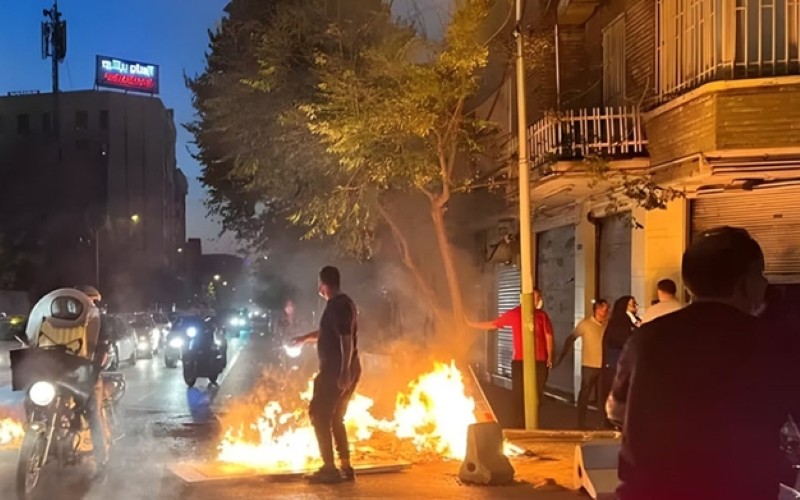

Why Iran’s latest nationwide protests are not a temporary economic revolt, but a decisive confrontation with clerical dictatorship.
The January 2026 uprising in Iran is the outcome of two forces colliding at full intensity: class-based outrage and a nationwide struggle for freedom against clerical dictatorship. What is unfolding is not merely unrest—it is a historic rupture.
Iran today is experiencing not just an economic crisis, but what many Iranians describe as the death of economic life itself. Since World War II, the country has not witnessed such a deep, comprehensive, and seemingly irreversible collapse of livelihoods. Inflation, currency devaluation, unemployment, and the erosion of basic living standards have pushed society to a breaking point.
This uprising sends a clear message: everything has reached its end. Governance and policy have hit a total deadlock, and the ruling system has lost legitimacy in the eyes of the majority of the population. Decades of corruption, monopolized power, and religious authoritarianism have exhausted public tolerance. From a historical perspective, many Iranians believe a decisive chapter must now close—because, as a widely shared phrase puts it, “the wheel of history has started to turn.”
More Than an Economic Protest
Reducing the January 2026 uprising to an emotional or short-term reaction to economic hardship fundamentally misreads its nature. This movement is the result of decades of accumulated repression, structural poverty, systematic discrimination, and the continuous stripping away of human dignity. These pressures have finally reached an explosive threshold.
A deep class divide, the collapse of the middle class, mass youth unemployment, and a future deliberately denied to an entire generation have produced a society with nothing left to lose. The current uprising is therefore not a request for reform, but a root-level demand to end the existing political order.
The Strategic Fear of the Regime
One defining feature of this uprising is the organic link between bread and freedom. Economic survival is no longer separated from political change. Demands for livelihood have become inseparable from calls for the overthrow of clerical rule.
This fusion is precisely what has triggered strategic fear within the ruling establishment. A society that has reached historical awareness can no longer be controlled through empty promises, humiliating subsidies, or naked repression. The old tools of containment no longer work.
A Voice That Explains the Uprising
Perhaps the clearest testimony to why this uprising was inevitable comes from a short exchange involving an angry young protester, widely shared on social media and repeatedly cited by Iranians explaining their rage against the system.
Someone walking alongside him pleads:
“Don’t go. What if something happens to you?”
The young man responds:
“Brother, why shouldn’t I go? My income doesn’t match my expenses. I work from morning to night—it doesn’t add up. What do I have to lose?
My parents are withering away right in front of my eyes, and I can’t do anything. My mother dreams of seeing me in a groom’s suit.
Me? I dream that tomorrow they wrap me in a shroud and bury me. Why shouldn’t I go?
Let me go so I don’t sleep every night with guilt. Let me go so tomorrow, if my child asks what you did, I won’t say we did nothing.
Every night the thought that it’s getting too late tortures me until morning. Why shouldn’t I go? It’s very late. We endured too much.
It’s reached here,”* he says, pointing to his throat. “I can’t anymore. I’m going. If you come too, welcome. If not—don’t forget me.”
The Voice of a Generation
Multiply this heart-rending confession by millions, and the nature of the January 2026 uprising becomes unmistakable. This is not the voice of one individual; it is the voice of an entire generation whose future has been stolen.
Faced with a choice between slow death in silence and the risk of standing in the streets, this generation has chosen the latter. In the face of this young man, bread and freedom merge into a single call for uprising.
A movement born from this fusion cannot be silenced or postponed. When people believe that history itself has begun to move, they also believe that the long-awaited moment of irreversible change has arrived.