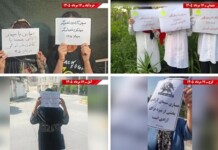
Protesters in Lordegan set regime institutions ablaze as armed clashes, mass funerals, and internet blackouts marked a violent escalation of the January 2026 uprising.
Lordegan | January 2026
Reports received from inside the city of Lordegan, during the nationwide January 2026 uprising, reveal the depth of public anger and the scale of confrontation between protesters and the Iranian regime’s security forces.
Over several days, demonstrations escalated into armed clashes, regime buildings were set on fire, dozens of young protesters were killed, and senior security officials were reportedly eliminated as the regime struggled to contain the revolt.
January 1, 2026 – Regime Institutions Set Ablaze
On Thursday, January 1, anti-regime protests erupted across Lordegan, quickly escalating into direct attacks on key regime institutions.
Amid rising anti-government slogans, protesters and uprising youth set fire to:
- The Imam Khomeini Relief Committee
- The so-called Martyrs Foundation, described by locals as an apparatus of systematic plunder
- The regime’s Department of Industry and Mining
During the clashes, regime forces opened fire on protesters using Kalashnikov and Winchester rifles, killing four young protesters.
According to field reports, protesters responded by directly confronting regime forces, resulting in the death of two security personnel.
January 2–3, 2026 – City in Turmoil, Funerals Under Repression
On Friday and Saturday, January 2–3, Lordegan remained in a state of extreme tension.
The regime dispatched large numbers of reinforcements from surrounding cities in an attempt to prevent further demonstrations. At the same time, residents prepared for the funerals of those killed in the January 1 clashes.
On Saturday, despite the heavy security presence, families and residents proceeded with the burial of the slain protesters, turning funerals into silent acts of defiance under repression.
January 7, 2026 – Massive Protests and Deadly Clashes
On Wednesday, January 7, Lordegan witnessed one of the most intense days of confrontation.
A general market strike shut down all shops across the city. Protests began along the main boulevard, where enraged crowds and uprising youth confronted special guard units deployed to suppress the demonstrations.
Security forces again used live ammunition. Protesters reportedly engaged in armed resistance. According to multiple accounts:
- At least four regime forces were killed
- Numerous others were wounded
Witnesses stated that during these clashes, both the commander of the regime’s special guard unit and the head of the Lordegan police station were killed.
Governor’s Office Torched, Heavy Casualties Reported
As clashes continued on January 7, protesters set fire to the Lordegan Governor’s Office, a symbolic escalation targeting the regime’s local authority.
Street battles spread to the outskirts of the city. Regime forces fired directly at crowds, killing eight more protesters and wounding approximately 100 people.
“Death to Khamenei” Echoes as Regime Loses Control
Throughout the city, chants of “Death to Khamenei” echoed repeatedly.
In response, the regime mobilized all available forces:
- IRGC and Basij minibuses were stationed at major intersections
- Plainclothes agents flooded the streets
- The road between Izeh and Lordegan was sealed off
Despite these measures, reports indicated that the regime was increasingly unable to regain control.
January 8, 2026 – Internet Blackout Imposed
On Thursday, January 8, the regime cut internet access across Lordegan in an attempt to block the flow of information and conceal the scale of the uprising and casualties.
The blackout underscored the regime’s desperation and fear of further exposure as resistance in the city continued to inspire unrest elsewhere.
A City in Open Revolt
The events in Lordegan reflect a broader national pattern: escalating resistance, direct targeting of regime institutions, and the collapse of fear as a tool of control.
From the burning of symbolic regime foundations to the elimination of senior security officials, Lordegan has emerged as one of the most explosive flashpoints of Iran’s January 2026 uprising—revealing a regime increasingly unable to rule through force alone.