From Rasht to Ahvaz and Tehran to Kut Abdullah, Iran’s economic crisis and systemic theft have pushed broad swathes of society into the streets — a multi-sector uprising framed by demands for wages, dignity and justice.
A single day of revolt across many fronts
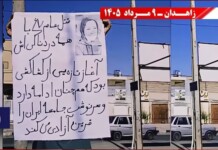
On Sunday, September 28, Iran witnessed a sprawling wave of protests as retirees, industrial and municipal workers, healthcare staff, farmers, drivers and bakers took to the streets in dozens of cities. Demonstrations were reported from Rasht and Tehran to Ahvaz, Kut Abdullah and smaller towns where communities gathered outside government and company buildings to demand overdue pay, subsidies, insurance coverage and the protection of local resources.
Retirees: a generation pushed to the brink
Pensioners — a perennial backbone of recent social mobilization — once again led major demonstrations. In Rasht retirees of the Social Security Organization protested at provincial offices and called for the release of political and labor prisoners. In Ahvaz, retirees denounced discrimination, skyrocketing prices and the collapse of purchasing power with chants that expressed both anger and humiliation. In Tehran, retired steelworkers and social-security beneficiaries gathered in front of the Labour Ministry, shouting that they would “take our rights to the streets” after years of unpaid benefits and failing insurance.
Workers: oil, industry and municipal employees stand firm
Workers across sectors intensified their actions. Employees at Phase 14 of the South Pars refinery blocked the facility’s entrance in protest over four months of unpaid wages and threats of dismissal, rejecting official promises of imminent payment as insufficient. Municipal staff in Kut Abdullah said they had not been paid for two months and described turning to second jobs — from masonry to scrap collection — after decades on the payroll. Ceramic factory workers in Gonabad held multi-day demonstrations over unpaid salaries that pushed entire families into crisis.
Health workers, farmers and local communities add their voices
Healthcare employees — including staff from Razi psychiatric hospital and nurses in Rafsanjan — rallied to demand arrears that in some cases had persisted since the previous year. Farmers in Ghizaniyeh protested meagre insurance payouts, calling the scheme a form of “official theft.” In Isfahan’s Tarqrud, residents mobilized to defend a vital qanat (traditional water channel) threatened by mining operations, warning that destruction of water resources would ruin local agriculture and communities.
Transport and food sectors: logistical and daily-life pressure points
Truck drivers, who have previously organized nationwide stoppages this year, again converged on government buildings in Tehran to denounce customs blockages and bureaucratic obstacles that prevent truck clearance and earnings. Bakers in Ahvaz closed shutters in protest over non-payment of subsidies, and locomotive drivers staged demonstrations outside the Ministry of Roads demanding long-overdue wages. These sectors — crucial to supply chains and everyday life — have become recurring pressure points capable of broad disruption.
What the protests reveal about regime legitimacy
The breadth and frequency of these mobilizations point to a deep structural crisis: a state that channels resources to security, patronage and regional adventurism while ordinary livelihoods crumble. The protesters’ demands are often framed as basic economic rights — pay the wages, honor pensions, deliver subsidies, protect water and farmland — yet their cumulative effect is political: eroding the regime’s claim to govern effectively and fairly. Independent reporting and opposition-aligned monitors have documented these patterns repeatedly throughout 2025.
From economic grievances to broader political stakes
Although many protesters call for immediate economic remedies, the protests frequently carry political overtones — slogans and chants that point to accountability, justice and systemic change. For a society battered by inflation, unemployment and cuts to services, economic collapse and political repression feed into one another; what begins as a labor or pension dispute can quickly intersect with broader calls for dignity and political reform.
What comes next
The regime faces a difficult calculus: meet demands and risk opening political space that could accelerate further unrest, or rely on repression and concessions that have repeatedly failed to stabilize the situation. For many Iranians, these protests show that patience is exhausted and that streets remain the one venue where grievances are heard. As protests continue to ripple through cities and regions, both national stability and the prospects for meaningful reform hang in the balance.