


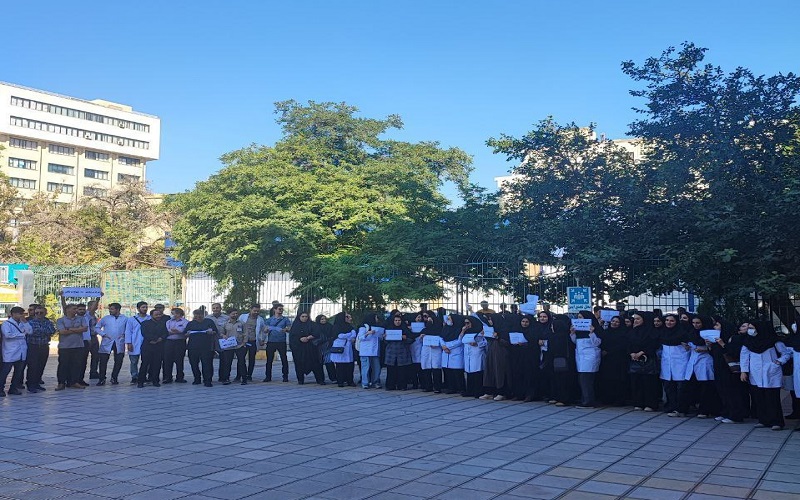

On August 24, protests and strikes by nurses and medical staff in Iran intensified, spreading to more cities and medical centers. Several nurses were summoned and arrested for their participation in these demonstrations.
Despite promises made by Mohammad Reza Zafarghandi, the regime’s new Minister of Health, Treatment and Medical Education, to address the protesters’ concerns “as soon as possible and to the best of the country’s ability,” nurses continued their protests. They declared they were “tired of hearing empty promises” and could no longer tolerate the current conditions, citing low salaries and difficult working conditions.
According to sources close to nurses’ trade unions, on Saturday, nurses in Babol, Qaem Shahr, Sabzevar, Khorramabad, Isfahan, Shahrekord, and Khomeinishahr joined their colleagues in other Iranian cities. They staged sit-ins, refused to attend work shifts, and demanded improved living conditions through slogans and protest placards.
The protesters’ demands include:
- Revision of nursing salaries
- Proper implementation of the Nursing Tariff Law
- Fair workers’ compensation and housing rights
- Elimination of forced overtime
- Correct implementation of the Hard Work Law
- Retirement eligibility after 20 years of service
- Settlement of previous salary arrears
Despite the growing protests, authorities have responded with arrests. The Coordinating Council of Nurses’ Protests reported the arrest of Firouzeh Mojrian Sharq, a nurse from Ghaem Hospital in Mashhad, by the regime’s security agencies. Zahra Tamadon, another protesting nurse in Tehran, was arrested last Wednesday for participating in a rally in front of the Ministry of Health. Additionally, two nurses were arrested in Arak following a protest rally last Tuesday.
However, these security measures have not deterred the protests. Videos circulating online show nurses in Khorramabad chanting slogans such as “No nurses, the system will fall apart” and “Promises are enough, our pockets are empty.” In Babol, protesters marched, shouting “Nurse, shout for your rights,” while in Khomeinishahr, Isfahan province, demonstrators called for unity and criticized embezzlement.
The protests have now spread to 36 cities and more than 60 hospitals since August 1. Emergency medical and nursing experts in Isfahan have also joined the movement, demanding salary increases, overtime pay, implementation of tariffs, renovation of the emergency vehicle fleet, and hiring of new personnel.
The Coordinating Council of Nurses’ Protests has issued a statement urging nurses nationwide to demand the release of detained colleagues and an end to security and judicial prosecution. The council has also called on artists, athletes, lawyers, and other influential figures to support and amplify the nurses’ cause.
As the protests continue to grow, the Iranian healthcare system faces increasing pressure to address the longstanding grievances of its nursing workforce. The coming days will be crucial in determining whether the regime will take concrete steps to meet the protesters’ demands, or if the standoff will escalate further.