


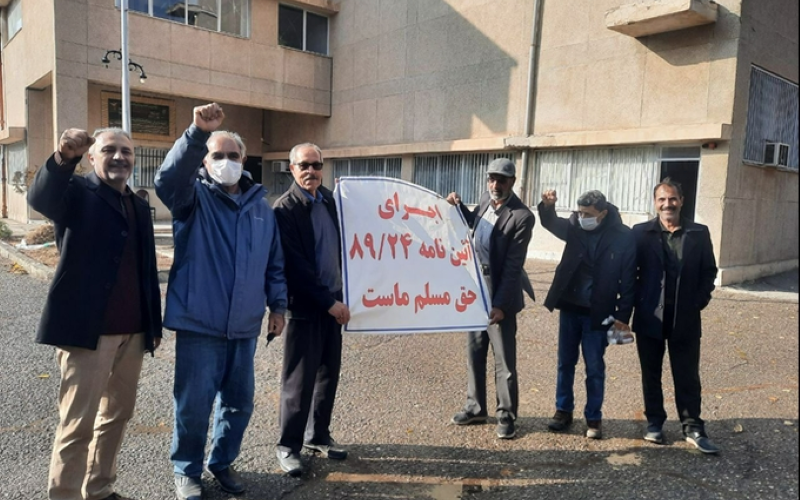

Retirees in dozens of Iranian cities confront IRGC-linked institutions over stolen benefits and years of systematic plunder.
A new wave of nationwide protests by Iran’s telecommunications retirees has once again exposed the entrenched corruption and systemic theft at the heart of the ruling establishment. On Monday, December 1, dozens of cities witnessed coordinated demonstrations as retirees demanded the return of stolen benefits, the implementation of long-ignored regulations, and an end to the blatant interference of regime-controlled institutions linked to the IRGC and the Execution of Imam Khomeini’s Order.
December 1—Kermanshah, western Iran
Retirees of the Telecommunications Company of Iran (TCI) rallied against EIKO, the IRGC, and TCI shareholders, demanding restoration of their stolen rights. Protesters decried months of injustice, chanting that regime-linked institutions have… pic.twitter.com/7GWQ1M0uuE— People's Mojahedin Organization of Iran (PMOI/MEK) (@Mojahedineng) December 1, 2025
Retirees from Tehran, Isfahan, Kermanshah, Sanandaj, Marivan, Rasht, Zanjan, Hamedan, Khorramabad, Bijar, Shiraz, Kerman, Ahvaz, Mashhad, Ilam and many others took to the streets under the banner of the “Protest Mondays” movement. Their message was unmistakable: the regime has looted their rights, violated its own commitments, and used the telecommunications sector as yet another tool for patronage networks tied to the Supreme Leader.
Retired telecommunications workers in Hamedan joined the nationwide protests on Monday, Dec. 1, rallying against regime institutions for looting their rights and failing to deliver promised welfare benefits.#FreeIran2025 #IranProtests #IranRevolution pic.twitter.com/XlLlvKzUKG
— Iran News Update (@IranNewsUpdate1) December 1, 2025
Many retirees held signs demanding the full implementation of Bylaw 24/89—a regulation the authorities have dodged for years while diverting pension funds and benefits into entities controlled by the IRGC’s Cooperative Foundation and the Executive Headquarters. Protesters denounced the repeated broken promises of Telecom’s legal managers, whom they accused of acting under pressure from the Supreme Leader’s financial empire.
At the heart of the retirees’ demands lies a long list of withheld rights: updated food and welfare allowances, frozen benefits, and long-delayed harmonization of pension rulings affecting nearly 20,000 workers. Their allowances are still calculated based on 2021 rates, while deductions for supplemental insurance are charged at current prices—a formula that retirees describe as “legalized theft.”
Retired telecommunications workers in Marivan held a protest on Monday, Dec. 1, joining the nationwide movement against regime institutions for looting retirees’ rights.#FreeIran2025 #IranProtests #IranRevolution pic.twitter.com/lHvzHpuFm4
— Iran News Update (@IranNewsUpdate1) December 1, 2025
Across the protests, anger took the form of sharp chants: “The Executive Headquarters has seized Telecom and stolen our rights,” “The IRGC Cooperative has seized Telecom and stolen our rights,” and “This level of injustice no nation has ever seen.” Many also highlighted the fragmentation of Telecom into multiple entities, a process they say was engineered to facilitate looting under the guise of privatization.
Retirees repeatedly pointed to the role of regime-linked institutions in orchestrating this systematic exploitation. With the IRGC and Executive Headquarters holding major stakes in Telecom, protesters argued that their benefits were siphoned off to finance military and political projects while millions of Iranians fall deeper into poverty. Chants such as “We built Telecom; the IRGC stole it” and “Neither Parliament nor the government cares about the people” captured their growing fury.
Retired telecom workers in Fars gathered outside authorities’ offices to protest systemic theft and broken promises by regime institutions.#FreeIran2025 #IranProtests #IranRevolution pic.twitter.com/wMysVTC6jh
— Iran News Update (@IranNewsUpdate1) December 1, 2025
Even harsh winter pollution in Tehran failed to deter the gatherings. In Bijar, a photo of an ailing retiree attending the protest from a hospital bed underscored the level of desperation—and determination—driving the movement.
These demonstrations form part of a broader nationwide surge in anti-regime sentiment. Telecom retirees, long seen as a disciplined and organized group, have emerged as a powerful symbol of civilian resistance to a system that prioritizes repression and foreign proxy warfare over the welfare of its own people. Their weekly protests continue to inspire other sectors facing similar exploitation.
Retired telecommunications workers in Gilan rallied outside the central Telecom office, chanting against the Execution of Imam Khomeini's Order and the IRGC Cooperative Foundation.#FreeIran2025 #IranProtests #IranRevolution pic.twitter.com/yfx9IiLcpb
— Iran News Update (@IranNewsUpdate1) December 1, 2025
For many, Monday’s gatherings served as a reminder that the struggle for justice in Iran increasingly unfolds in the streets. As retirees repeatedly emphasized, they expect no redress from state institutions—they are demanding their rights directly, confronting a ruling structure that they say has “dragged society into poverty through corruption and plunder.”
With protests escalating across the country, the retirees’ movement highlights a simple truth echoed throughout the demonstrations: ordinary Iranians are refusing to remain silent in the face of systemic theft and decades of broken promises.