British lawmakers endorse a transitional government proposal, urging decisive action against Tehran and support for a democratic republic led by the Iranian people
At a critical juncture for Iran’s future, a conference in the UK Parliament brought renewed attention to what many lawmakers now view as the most viable path forward: a democratic transition led by the Iranian people and their organized opposition. The event, titled “Iran: Toward a Democratic Republic,” signaled a growing shift in Western political discourse—from cautious observation to active consideration of alternatives to the current regime.
Central to the discussion was the recent announcement by the National Council of Resistance of Iran of a provisional government framework designed to transfer sovereignty to the Iranian people. For many British parliamentarians, this initiative represents not just a symbolic gesture, but a structured and actionable roadmap for political change.
Bob Blackman, a senior member of Parliament and co-chair of a cross-party initiative supporting a democratic Iran, framed the moment as one of urgency. He argued that the continuation of religious authoritarian rule—maintained through executions, repression, and censorship—cannot be addressed through passive diplomacy. Instead, he pointed to the opposition’s transition plan as a credible alternative capable of establishing a legitimate, elected government.
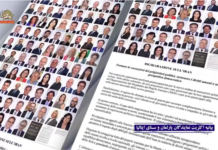
He underscored that this proposal is not emerging in isolation. According to him, it has already secured the backing of thousands of lawmakers worldwide, including hundreds within the United Kingdom. The momentum, he suggested, is no longer theoretical—it is political, measurable, and accelerating.
Equally significant was his rejection of narratives promoting a return to monarchy. He dismissed such proposals as disconnected from the realities inside Iran, emphasizing that the Iranian people have already experienced both royal and religious authoritarianism—and are seeking neither. The choice, he argued, is not between chaos and the current regime, but between dictatorship and democracy.
The democratic blueprint in question is closely associated with Maryam Rajavi and her widely discussed ten-point plan. This framework outlines core principles such as free elections, separation of religion and state, gender equality, abolition of the death penalty, judicial independence, minority rights, and a non-nuclear foreign policy. For supporters, its significance lies not only in its ideals but in its operational clarity.
Baroness Verma brought a complementary perspective, focusing on the role of women in Iran’s resistance movement. She highlighted that women are not merely participants but leaders in the ongoing struggle for political change. In her view, any sustainable democratic alternative must institutionalize gender equality—not as an aspiration, but as a governing principle embedded across political, social, and economic structures.
She described the proposed transitional framework as a rare source of cautious optimism, particularly because it aligns with a broader social transformation already underway inside Iran. Women, she noted, have consistently stood at the forefront of protests and resistance networks, challenging not only political repression but systemic gender discrimination.
Her message to policymakers was clear: rhetorical support is no longer sufficient. She called for concrete measures, including the designation of the Islamic Revolutionary Guard Corps as a terrorist organization, coordinated international accountability mechanisms for human rights violations, and the closure of the Iranian regime’s diplomatic presence in London.
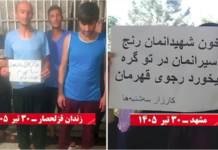
Jim Shannon echoed these sentiments, describing the transitional government proposal as a pragmatic and forward-looking step toward a peaceful transfer of power. He emphasized that the Iranian people have repeatedly demonstrated their rejection of authoritarian rule through sustained protests, particularly during the unrest spanning late 2025 and early 2026.
For Shannon, the sacrifices made by protesters—many of whom paid with their lives—have shifted the political equation. What was once seen as a distant aspiration is now, in his assessment, an achievable outcome. However, he also issued a warning: political vacuums can invite regressive alternatives. Attempts by former royalist factions to reassert themselves, he argued, risk undermining the democratic aspirations of the population.
The broader implication of the conference is difficult to ignore. For decades, Western policy toward Iran has oscillated between containment and engagement, often failing to produce meaningful change. What emerged in London is a different proposition altogether: that stability in Iran—and by extension, the region—may depend on recognizing and supporting a democratic alternative rather than managing the status quo.
This shift carries both moral and strategic weight. Supporting a structured transition plan aligns with democratic values, but it also addresses long-standing security concerns tied to Iran’s regional activities. A government rooted in popular sovereignty, committed to peaceful coexistence, would fundamentally alter the geopolitical landscape.
The message from the conference was unambiguous. The future of Iran should not be dictated by authoritarian continuity or nostalgic restoration, but by the will of its people. The question now is whether Western governments are prepared to move beyond statements of support and take the political steps necessary to match their rhetoric.
Because in the end, the debate is no longer about whether change is possible. It is about whether the international community is willing to recognize—and act upon—the alternative already taking shape.