


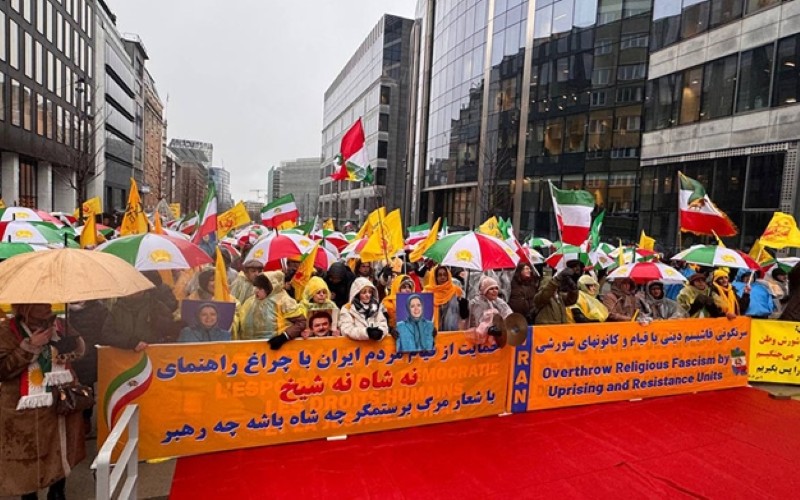

As protests surge inside Iran, coordinated demonstrations across Europe and Australia signal the emergence of a unified global movement against religious and monarchical authoritarianism.
A Global Echo of a Domestic Uprising
As Iran itself is shaken by a nationwide uprising that is redefining the country’s relationship with religious authoritarianism, parallel demonstrations across Stockholm, Oslo, Berlin, Aarhus, and Sydney reveal something larger taking shape: a cohesive global front against all forms of dictatorship.
These rallies are not symbolic gestures or emotional displays from abroad. They represent a direct connection between the struggle inside Iran and what can be described as street-level diplomacy outside the country. Through coordinated slogans and shared political messages, protesters are outlining the identity and values of a future Iran—directly in the public spaces of major democratic capitals.
Rejecting False Choices: “Neither Shah nor Supreme Leader”
One of the most prominent messages voiced in cities such as Oslo and Stockholm was a clear rejection of any return to past forms of authoritarian rule. Protesters drew firm boundaries against both Iran’s current religious dictatorship and the former monarchy.
Slogans such as “Death to the oppressor, whether Shah or Supreme Leader” and “The return of the Shah is an illusion” reflect a conscious historical awareness. For many Iranians, dictatorship is not tied to a single ideology or figure—it is a repeated trauma that must be permanently rejected.
This position is not reactive or emotional. It reflects a deliberate political choice: the rejection of both the crown and the turban in favor of a republican system based on popular sovereignty. Chants like “We want neither the clerical house nor the royal court” directly target the two historical centers of repression and privilege in modern Iranian history.
Organization, Not Chaos: The Role of Grassroots Resistance
In Stockholm and Aarhus, protesters emphasized the role of organized grassroots networks—often referred to as resistance units—to counter international narratives portraying the uprising as chaotic or leaderless unrest.
The message was clear: the movement inside Iran is structured, strategic, and deliberate. The recurring slogan “The only path to freedom is uprising and overthrow” reflects a widely shared conclusion—that Iran’s current system, built on absolute religious authority, is structurally incapable of reform.
Within this framework, the demand for regime change is not ideological extremism. It is presented as a historical necessity, rooted in the system’s total rejection of accountability, pluralism, and democratic norms.
Berlin’s Warning: “This Revolution Cannot Be Stolen”
In Berlin, a key slogan captured another critical concern: “The revolution is awake; it cannot be stolen.” This message directly addressed attempts by foreign powers or external actors to reshape or appropriate the Iranian people’s struggle for their own geopolitical interests.
Iranian protesters abroad are drawing a firm line not only against religious authoritarianism, but also against manufactured alternatives and externally imposed political projects. Their stance reflects a determination to protect the democratic content of the uprising and ensure that sacrifices made inside Iran are not traded away in diplomatic backrooms.
This vigilance represents a form of revolutionary awareness—a recognition that freedom cannot be outsourced, negotiated, or imposed from above.
From Scandinavia to Oceania: Isolation of the Regime
Demonstrations in Sydney and other distant cities underscore the Iranian regime’s growing isolation in global public opinion. When Iranians gather in freezing temperatures or far from home chanting messages of unity and resistance, they are actively challenging the regime’s claim to international legitimacy.
Such global visibility creates pressure on Western governments, forcing a choice between engagement with authoritarianism and solidarity with democratic aspirations. These protests transform the Iranian struggle from a domestic crisis into an international moral question.
A Movement Beyond Borders and Illusions
Taken together, these demonstrations validate an alternative rooted in popular sovereignty, not nostalgia or foreign intervention. Slogans like “With the flames of the uprising, spring will come to Iran” express confidence in a movement that has demonstrated both resilience and organization on the ground.
From Stockholm to Sydney, one conclusion stands out: Iran has moved beyond hesitation. The anticipated end of clerical rule is no longer confined to slogans—it is reflected in the practical formation of a global unity that rejects dictatorship in all its forms.
This movement belongs neither to the past nor to geopolitical fantasies of external rescue. It rests on the determination of a people willing to pay the highest price for freedom—and united in the belief that only the overthrow of authoritarian rule can open the path to a democratic future.