Resistance Units escalate anti-regime activity in response to executions of PMOI members Behrouz Ehsani and Mehdi Hassani
In a grim display of state repression, the Iranian regime executed two political prisoners—Behrouz Ehsani, 69, and Mehdi Hassani, 48—on July 27, 2025. Both were long-time members of the People’s Mojahedin Organization of Iran (PMOI/MEK) and had been imprisoned since 2022. Subjected to brutal torture and convicted through a sham trial overseen by the notorious Judge Iman Afshari, the men were charged with “baghi” (armed rebellion) and “membership in the Mojahedin.” Their only real crime: opposition to the ruling dictatorship.
This calculated act of violence, ordered by Supreme Leader Ali Khamenei, was meant to serve as a warning to Iran’s restive population and the growing network of Resistance Units. Instead, it has triggered a powerful backlash—one that is rapidly growing.
"Behrouz Ehsani said: I will not bargain over my life with anyone and am ready to sacrifice my humble life for the path of the Iranian people's liberation." pic.twitter.com/qSJM4nS9rt
— People's Mojahedin Organization of Iran (PMOI/MEK) (@Mojahedineng) August 2, 2025
A Flame Rekindled, Not Extinguished
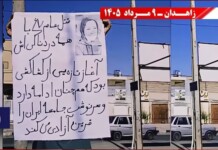
Rather than silencing dissent, the executions have ignited a new wave of defiance across the country. In the days following the killings, Resistance Units affiliated with the PMOI/MEK sprang into action. On August 1, they launched a coordinated campaign of anti-regime activities in multiple cities, including Zahedan, turning mourning into mobilization.
Activists flooded the streets with banners, placards, and graffiti messages honoring the fallen and rejecting the regime’s narrative of fear. One banner read:
“Khamenei has resorted to widespread arrests and executions to escape the explosion of public rage.”
Another declared:
“The response to the murder and execution of political prisoners is the uprising of the Resistance Units.”
"We are stronger than death and executions and massacres. Every time they kill us, we rise again." pic.twitter.com/72rHgK6lT7
— People's Mojahedin Organization of Iran (PMOI/MEK) (@Mojahedineng) August 2, 2025
These actions served not only as memorials, but as bold political statements: for every life the regime extinguishes, many more rise in its place, determined to see through the fight for a democratic Iran.
A Defiant Pledge to Carry the Torch
The Resistance Units emphasized their commitment to the legacy of Ehsani and Hassani. Their messages were unequivocal:
“We will continue the path of the martyred PMOI members until Iran’s freedom and the overthrow of the mullahs’ regime.”
They affirmed their resistance with unwavering resolve:
“We are stronger than death and executions and massacres. Every time they kill us, we rise again.”
This sentiment reflects the growing conviction within Iranian society that change must come from within, and that the sacrifices of political prisoners are not in vain but foundational to the country’s liberation.
"The Third Option for freedom (no to appeasement, no to war, yes to regime change by the people and their organized Resistance) draws the line against the mullahs and the shah regimes" pic.twitter.com/XwhvkddX9I
— People's Mojahedin Organization of Iran (PMOI/MEK) (@Mojahedineng) August 2, 2025
Rejecting All Forms of Dictatorship
Beyond opposing the ruling theocracy, Resistance Units made clear their rejection of all autocratic rule, including remnants of the monarchy. Their slogans, such as “Death to the oppressor — be it the Shah or the mullahs,” encapsulate a growing consensus among Iranians: freedom means severing ties with all past dictatorships, whether cloaked in religious or royal symbols.
This vision aligns with the “Third Option”—a democratic alternative to both appeasement and war—advocated by Maryam Rajavi, the President-elect of the National Council of Resistance of Iran (NCRI). One placard captured this vision succinctly:
“The Third Option for freedom draws the line against the mullahs and the shah regimes.”
The call is clear: Iranians seek a republic founded on secular democracy, not a recycled tyranny in any form.
Executions Reveal a Regime in Crisis
The murder of Ehsani and Hassani underscores the regime’s fragility, not its strength. Their final words reveal the courage that frightens Tehran’s rulers. In his last message, Behrouz Ehsani said:
“I will not bargain with anyone over my life and am ready to sacrifice my life for the cause of the liberation of the Iranian people.”
Since President Masoud Pezeshkian assumed office in July 2024, the regime has executed more than 1,400 people. This brutal campaign is not a show of stability but an admission of deepening fear—a desperate attempt to crush a population on the verge of uprising.
Yet every execution further exposes the regime’s desperation and fuels resistance. The sacrifice of political prisoners like Ehsani and Hassani has become a rallying cry, not a deterrent.
A Nation’s Resolve
The Iranian people, through the relentless efforts of the PMOI Resistance Units, continue to defy tyranny in pursuit of a free, democratic, and secular republic. The regime’s gallows may take lives, but it cannot extinguish the will of a nation determined to break its chains.
In the face of terror, the message is clear: Iran’s future will be decided not by executions, but by resistance.