


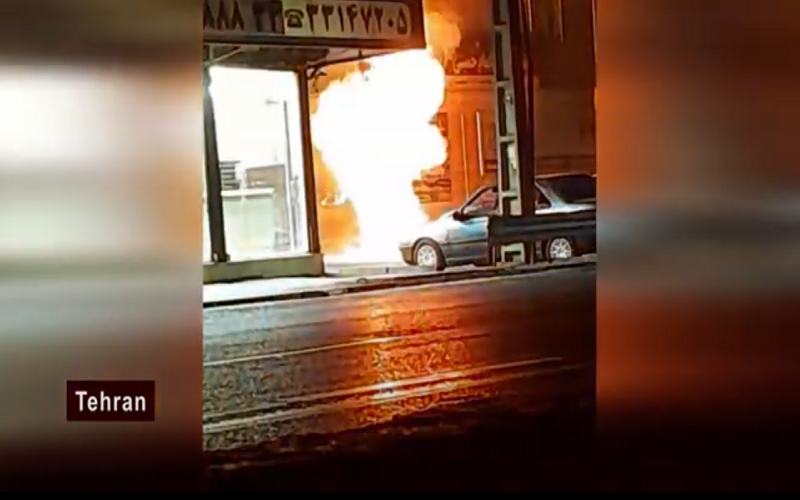

On Saturday, January 4, 2025, Iran’s rebellious youth launched a series of coordinated attacks on 15 regime-affiliated targets across the country. These actions were carried out in response to the regime’s execution of 1,000 individuals in 2024 and 18 additional executions on the first day of the new year. The targets included facilities tied to the Revolutionary Guards (IRGC), Basij paramilitary forces, and the State Security Forces (SSF).
Key Incidents of Resistance
Among the notable actions taken by the rebellious youth were:
- Khuzestan Province: Six explosions rocked the SSF’s provincial headquarters.
- Mashhad: Explosions targeted a center of fundamentalism and the headquarters of the Khomeini Foundation.
- Tehran and Surrounding Areas: Fires were set at multiple IRGC Basij bases in Tehran, Pakdasht, and Karaj.
- Eqlid: The Javad-al-Aimmah Basij Command was set ablaze.
- Masjed Soleiman and Isfahan: Images of Supreme Leader Ali Khamenei and former Quds Force commander Qasem Soleimani were burned on public walls, along with banners depicting Khamenei and Ruhollah Khomeini.
- Tehran: A billboard belonging to the Ministry of Intelligence’s espionage headquarters was destroyed by fire.

The NCRI Statement on Rising Executions
The National Council of Resistance of Iran (NCRI) issued a statement on January 2, condemning the regime’s escalating use of executions as a tool for repression.
“In the final phase of his regime, Ali Khamenei is setting new records for crimes and executions to delay his inevitable overthrow. Official records show that the number of executions in 2024 reached 1,000, an unprecedented figure in the past three decades. Considering secret executions, the real number is significantly higher,” the NCRI wrote.

The council highlighted the alarming rise in executions under the presidency of Masoud Pezeshkian. Nearly 70% of the year’s executions occurred after late July. Pezeshkian openly defended the brutalities, dismissing criticism of human rights violations by sarcastically asserting, “Those who talk about human rights ask why we execute murderers.”
Regional Failures and Internal Repression
While the number of executions in 2024 reflects a 16% increase compared to the previous year, 47% of these executions occurred in the final three months. This period coincided with significant regional setbacks for the regime and mounting domestic dissatisfaction. The leadership sought to compensate for its failures by intensifying its campaign of terror and intimidation.

However, the rebellious youth have mounted a formidable challenge, carrying out hundreds of anti-repression operations that have shaken the regime to its core. From Tehran to smaller cities like Lahijan and Bandar Anzali, these actions have targeted symbols of oppression, espionage, and plunder.
A Nation’s Wrath and the Struggle for Freedom
The regime, increasingly desperate to contain public dissent, has placed the IRGC on high alert. Despite heightened security measures, the rebellious youth continue their defiance, delivering a powerful message of resilience and hope to the Iranian people.

Observers note that these actions have gained momentum following the regional shifts, including the fall of the Assad regime in Syria. The Iranian regime now finds itself relying heavily on executions and intimidation to suppress growing unrest. Yet, the fiery responses from the youth signal that repression will not deter their fight for freedom.
The activities of Iran’s rebellious youth are not merely acts of defiance; they embody a broader message of courage, resistance, and the unyielding pursuit of victory against a regime that appears increasingly fragile.