



International backing signals growing recognition of a structured, rights-based alternative to authoritarian rule in Iran
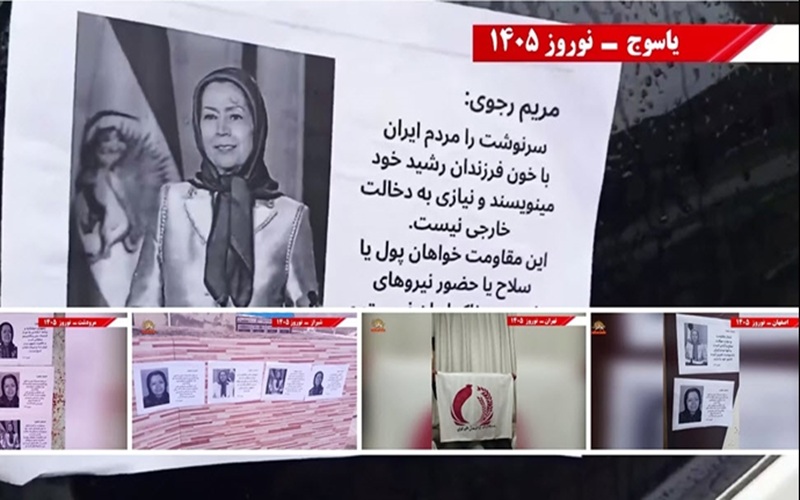
The Ten-Point Plan presented by Maryam Rajavi on March 15, 2026, during a major online conference has emerged as more than a political proposal—it is increasingly viewed as a constitutional framework for Iran’s democratic transition. The unprecedented endorsement by over a thousand lawmakers and international figures underscores a growing consensus: Iran’s future requires not vague aspirations, but a structured, operational roadmap.
At its core, the plan establishes a foundational principle often absent in Iran’s modern political history—sovereignty belongs exclusively to the people. Rajavi emphasized that only the Iranian people possess the legitimacy to determine their political future. This position decisively rejects both imposed governance models and hereditary rule, drawing a clear line between democratic self-determination and authoritarian continuity in new forms.
This principle resonated strongly with international observers. Gerard Craughwell highlighted that freedom cannot be externally imposed and praised the plan’s reliance on free elections as the mechanism through which citizens reclaim their political agency. His remarks implicitly addressed a persistent concern among analysts: that the fall of one authoritarian system could simply give rise to another under a different guise.
Among the plan’s most consequential provisions is the strict separation of religion and state. After more than four decades of theocratic governance, this is not merely a political reform but a structural correction. Margot Käßmann warned that religious fundamentalism—regardless of the faith—acts as a corrosive force in governance. She noted that by guaranteeing freedom of religion while removing it from the machinery of power, the plan transforms religion from a tool of conflict into a foundation for peaceful coexistence.
Equally significant is the plan’s emphasis on gender equality. Rajavi identified the full and active participation of women in political leadership as indispensable to any genuine democratic transition. This is not symbolic—it is strategic. Unlocking the capacity of half the population fundamentally alters the trajectory of national development. Linda Chavez described the proposal as a direct challenge to institutionalized gender discrimination, arguing that its commitment to equal political and social rights places it among the most progressive political platforms in the modern Middle East.
The plan also confronts a longstanding structural issue in Iran: the marginalization of ethnic communities. By explicitly recognizing the rights of diverse groups—including Kurds, Baluchis, Arabs, and Turkmen—it proposes a model of unity based on inclusion rather than coercion. In a country where excessive centralization has historically enabled repression, this provision offers a pathway toward what can be described as voluntary national cohesion grounded in justice.
Perhaps one of the most morally consequential elements is the explicit abolition of the death penalty. In a country with one of the highest execution rates globally, this stance represents a decisive break with the past. Nuala O’Loan interpreted this commitment as evidence that the Iranian resistance is aligned with universal human rights standards. The emphasis here is not on retribution, but on justice administered through the rule of law and an independent judiciary.
On the international front, the plan addresses one of the most critical concerns of the global community: Iran’s nuclear ambitions. Figures such as Wesley Clark and Carla Sands underscored the importance of the plan’s commitment to a non-nuclear Iran. Rajavi reiterated that a future Iran would prioritize peace and regional cooperation, signaling a strategic shift from being a source of instability to becoming a reliable international partner.
What distinguishes the Ten-Point Plan is that it is not a collection of abstract ideals. It is, as articulated during the conference, the architecture of a democratic state. The scale of international endorsement suggests that democratic governments increasingly view it as a viable alternative—not only to internal repression but also to the risks of external conflict.
As Guy Verhofstadt observed, the plan incorporates all the essential components of a normal democratic system. More importantly, it addresses a critical transitional challenge: preventing chaos in the aftermath of regime change. By outlining a clear path toward elections and institutional legitimacy, it reduces the risk of power vacuums and instability.
In strategic terms, the Ten-Point Plan functions as a national covenant for Iran’s future—one capable of bridging the gap between the collapse of authoritarian rule and the establishment of democratic governance. In doing so, it reframes the conversation: the issue is no longer whether Iran can change, but whether the international community is prepared to support a coherent and credible pathway to that change.