Resistance Units amplify the call for a democratic alternative to dictatorship
Despite the Iranian regime’s ongoing crackdown on dissent, the spirit of resistance continues to grow stronger across the country. On July 11, members of the PMOI (People’s Mojahedin Organization of Iran) Resistance Units carried out a bold act of defiance in Zahedan, sending a clear message: the movement for a free Iran is not only alive, it is expanding.
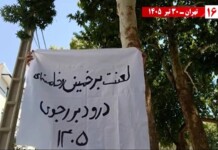
Their demonstration was more than just a protest—it was a declaration of intent. One of their banners read, “The resistance of the Iranian people against the religious dictatorship is just and nothing can smother its flames.” It encapsulated the growing momentum behind a nationwide call for democratic change.
“The real conflict in Iran has been ongoing for 44 years and it is between the people and the ruling religious dictatorship.” pic.twitter.com/cWrsE0UEKH
— People's Mojahedin Organization of Iran (PMOI/MEK) (@Mojahedineng) July 12, 2025
The Third Option: A New Path Forward
At the heart of the Resistance Units’ message is what they call the “Third Option,” a challenge to the long-standing policies of the international community regarding Iran. For decades, Western governments have oscillated between appeasing the clerical regime and considering military intervention—both strategies that have failed to deliver stability or justice.
The Resistance rejects both approaches. Instead, they advocate for regime change led by the Iranian people and the organized opposition. In Zahedan, placards carried this message: “Third Option: No to war, no to appeasement. Yes to regime change by the people and the Resistance.”
“The prerequisite for peace and security in the region is regime change by the people and Resistance of Iran” pic.twitter.com/BagjtVeOX5
— People's Mojahedin Organization of Iran (PMOI/MEK) (@Mojahedineng) July 12, 2025
This message underscores a key principle: that regional peace and security are impossible without democratic transformation in Iran. It calls on world powers to stop legitimizing the regime through diplomacy that ignores the will of Iran’s population.
Reframing the Conflict
The regime has long sought to distract from its domestic failures by provoking external crises—from regional interference to its pursuit of nuclear weapons. But the Resistance Units are shifting the narrative.
Their slogan, “The real conflict in Iran has been ongoing for 44 years and it is between the people and the ruling religious dictatorship,” reorients the focus from geopolitical tensions to the internal battle for freedom. Another pointed message read: “Khamenei, with or without a nuclear bomb, will be overthrown,” reinforcing the idea that Iran’s problems are rooted in its oppressive leadership, not foreign threats.
Beyond Dictatorship: A Democratic Vision
The protests in Zahedan also reaffirmed that the Iranian people reject all forms of autocracy—past and present. Slogans like “From Zahedan to Tehran, down with the oppressor, be it the Shah or the mullahs” and “No to Shah, no to mullahs. Yes to freedom and a democratic republic” reflect a consistent demand for a secular, democratic government.
This vision rules out any return to monarchy and dismisses any religious-based rule. As the demonstrators put it, “Tyrants are tyrants, whether they wear a crown or a turban.”
"The Iranian people's right to resistance for freedom must be recognized" pic.twitter.com/G4npaI0euT
— People's Mojahedin Organization of Iran (PMOI/MEK) (@Mojahedineng) July 12, 2025
A Crumbling Regime
The growing wave of activism across Iran is evidence that the regime is losing its grip. “Now everyone is convinced that the ruling religious dictatorship in Iran is more fragile than ever,” read one of the Resistance Units’ recent statements.
But the movement is not calling for foreign military aid or financial support. Instead, it asks for something both simple and powerful: recognition of the Iranian people’s right to resist tyranny.
"From Zahedan to Tehran, down with the oppressor, be it the Shah or the mullahs" pic.twitter.com/3TDV0P8iAv
— People's Mojahedin Organization of Iran (PMOI/MEK) (@Mojahedineng) July 12, 2025
“The Iranian people’s right to resistance for freedom must be recognized.” This demand encapsulates the moral clarity of the Resistance’s struggle—and offers the international community a clear choice. To stand with the people of Iran is not to interfere in their affairs, but to affirm their right to self-determination.
As protests continue to spread and deepen in resolve, the Resistance Units are proving that the dream of a free, democratic Iran is not only alive—it is inevitable.