


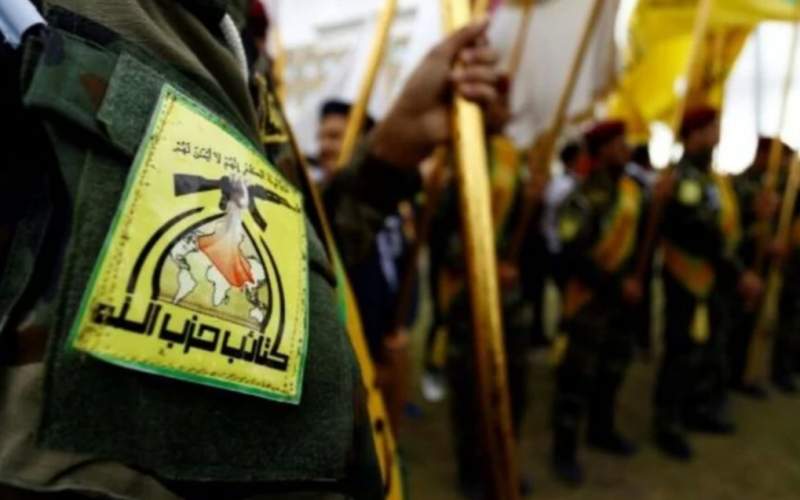

A joint investigation by U.S. and Iraqi authorities has uncovered a sophisticated financial network through which Iranian-backed militias in Iraq exploited international banking systems to transfer billions of dollars out of Iraq and into Iran. The scheme was designed to bypass U.S. sanctions and fund militant operations in the region.
According to an exclusive report by The Wall Street Journal, which cited confidential intelligence and financial records, groups such as Kataib Hezbollah, the Badr Brigades, an Asa’ib Ahl al-Haq orchestrated the operation. These militias used prepaid Visa and MasterCard bank cards—originally intended for legitimate personal or business use—to covertly funnel money to Iran.
Surge in Cross-Border Transactions
At the start of 2023, cross-border bank card transactions in Iraq amounted to around $50 million per month. But by April, this figure had skyrocketed to $1.5 billion. Investigators attribute this sudden surge to a scheme in which militants exploited the gap between Iraq’s official central bank exchange rate and the parallel market rate.
Militants purchased bank cards loaded with dollars at the official exchange rate, then withdrew the funds abroad and returned to Iraq to convert them on the black market—netting profits of up to 21 percent. The U.S. Treasury Department estimated that cardholders earned approximately $450 million in 2023 alone through this method, while Visa and MasterCard collected about $120 million in transaction fees.
Smuggling and ATM Raids
Thousands of these prepaid cards were smuggled into countries such as the United Arab Emirates, Turkey, and Jordan. Eyewitnesses in Dubai described scenes of Iraqis lining up at ATMs around the clock, withdrawing cash using stacks of cards. In some cases, individuals were caught at airports attempting to transport hundreds of cards hidden in cigarette packs or handbags.
As international scrutiny intensified, the perpetrators shifted tactics. They began collaborating with local stores to simulate fake transactions, receiving cash or goods in return for a 5 percent cut. High-end retailers in Dubai became primary targets. Fraudsters also bought card readers from businesses, used virtual private networks (VPNs) to mask their locations, and initiated a flurry of fraudulent card activity.
Delayed Response from Card Companies
Despite mounting evidence, U.S. officials say early warnings to Visa and MasterCard were initially ignored. Only after the U.S. Treasury Department provided concrete documentation did the companies begin taking action to curb the abuse.
A senior U.S. financial official criticized the lack of oversight over card issuers in Iraq, noting that cross-border card settlements were not subject to the same scrutiny as traditional bank transfers.
The Central Bank of Iraq admitted it had little control over the growing abuse and later hired the American consulting firm K2 for financial guidance. However, much of the damage had already been done.
Expanding the Card Network
By mid-2024, the number of licensed card issuers in Iraq had grown from five in 2017 to 17. Transaction volumes remained high, regularly exceeding $1 billion per month. The Qi Card—widely used by government employees, pensioners, and militia members—was identified as a major vulnerability.
In March 2025, MasterCard responded by blocking more than 100,000 Iraqi cards and delisting 4,000 merchants in the UAE. Half of the suspended cards were issued by Smart Card International, the company behind the K-Card. The following month, Visa flagged 70,000 cards and blocked an additional 5,000 merchants.
Sanctions and Regulatory Crackdown
The U.S. Treasury blacklisted three Iraqi card issuers for their connections to militant groups. One of these, Al-Saqi, was found to have links to the Abbasid Shrine. While Visa ceased processing transactions for Al-Saqi, the company’s website continued to display the Visa logo, raising concerns about enforcement.
In response, the Central Bank of Iraq imposed stricter regulations: monthly cross-border card transactions were capped at $300 million, individual card usage was limited to $5,000 per month, and all card issuers were required to maintain accounts at banks with U.S. correspondent relationships.
Militia Influence and Continued Abuse
Since 2019, the Popular Mobilization Forces (PMF)—a coalition of primarily Shiite militias—have expanded their grip over Iraq’s political and financial systems. By 2025, more than 200,000 PMF members were receiving their salaries through key cards.
Reports suggest that militia commanders have routinely confiscated the cards of lower-ranking members or created fake identities to obtain additional cards. The payment company Kay has announced it will no longer provide services to the PMF. However, U.S. officials report that money continues to flow through newly issued replacement cards and intermediary financial accounts.