



Tehran’s weakening grip on its last remaining regional proxies exposes a deep strategic rupture
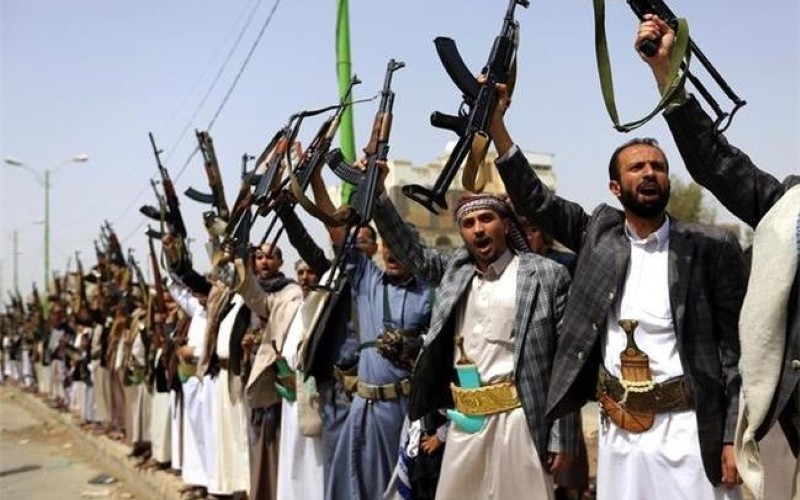
The Iranian regime is facing its most severe strategic setback in years as senior officials admit that Tehran has lost control over the Houthis in Yemen, the last major pillar of its regional proxy network. According to a comprehensive report published by The Telegraph, Iranian regime officials acknowledge that the Yemeni group—which has carried out repeated attacks on global shipping routes—no longer takes orders from Tehran.
A senior official aligned with the regime told the newspaper: “The Houthis have gone rogue. They are truly rebels now. They no longer listen to Tehran the way they used to.”
He added that similar patterns are emerging in Iraq, where several armed groups behave “as if we never had connections with them at all.”
These confessions mark a dramatic shift. After Israel’s targeted elimination of Hezbollah’s senior commanders and the isolation of Hamas following the siege of Gaza, the Houthis became the most important remaining proxy of the Iranian regime—a lifeline Tehran could not afford to lose. The weakening of this relationship reveals the fragility of the entire “Axis of Resistance” narrative built by the regime.
Tehran’s Desperate Attempts to Reassert Control
Facing this growing rupture, the regime deployed senior IRGC Quds Force commander Abdolreza Shahlaei to Yemen last week in a last-ditch attempt to regain influence. Iranian regime officials told The Telegraph the mission aims to pressure the Houthis into renewed cooperation, as they are now viewed by Tehran as the “only active group left.”
Media reports in Yemen describe the situation within the Houthis as a “leadership crisis,” noting that Iran regime’s envoys have been unable to fill the strategic void, reflecting the confusion and weakness in Tehran itself. Defense Line, a Yemeni outlet, reported that IRGC operatives “do not fill this strategic vacuum” and are instead “extensions of the disarray inside Iran.”
Shahlaei’s return also signals a broader recalibration of Iranian regime policy. Military sources quoted by Defense Line say his deployment is meant to strengthen Iranian influence in northern Yemen, though it could also escalate drone and missile attacks and further destabilize the region.
A Four-Decade Strategy Crumbling
The unraveling of the Houthis’ loyalty is not merely operational—it strikes at the core of the regime’s identity. For decades, Tehran’s clerical rulers have portrayed themselves as the guardians of the Palestinian cause and the mastermind behind a united regional front. Yet they did not participate in the Gaza ceasefire talks in Sharm el-Sheikh, aware that their influence had sharply diminished. Now, even the Houthis—who claim to act in defense of Palestinians—show little trust in Tehran.
The rift dates back to April, when the Iranian regime refused to assist the Houthis during heavy U.S. attacks on Yemen out of fear of being drawn into direct confrontation. This hesitation weakened Tehran’s credibility and accelerated the Houthis’ move toward independence.
Today the group controls Sanaa, prints its own currency, collects taxes, diverts international aid, traffics drugs, sells weapons to extremist groups in Africa, and disrupts global shipping in the Red Sea. Their geographic advantage—using Yemen’s mountains to hide missiles and drones—further reduces their need for Iranian oversight.
A former Yemeni diplomat told The Telegraph that the Houthis do not need anyone to motivate them. They act on what they believe, with or without Tehran. They have their own reasons for participating in regional conflicts.
Regional Setbacks Intensify Tehran’s Isolation
The loss of command over the Houthis follows a long series of blows to Iran regime’s network:
- Hezbollah’s leadership was shattered after Israel assassinated key commanders.
- Tehran’s channels to Hamas were cut after the group became isolated in Gaza.
- Several militias in Iraq act independently and show signs of distancing themselves from Tehran.
Combined, these developments expose the shrinking regional footprint of a regime long dependent on proxy warfare. Tehran now relies heavily on the few remaining groups still willing to appear aligned with it, but even these are fracturing.
Iran regime’s attempt to ease tensions with Gulf Arab states, especially Saudi Arabia, clashes with the Houthis’ desire to display military power. The contradiction leaves Tehran trapped between geopolitical necessity and the ambitions of a proxy it no longer fully controls.
Moreover, the assassination of Hezbollah leader Hassan Nasrallah has removed a key adviser to Houthi leader Abdul-Malik al-Houthi. Iranian regime and Hezbollah operatives are struggling to fill this leadership void, further weakening the coherence of the network.
A Regime Increasingly Cornered
The crisis within the proxy network represents more than a tactical challenge. It signals a profound weakening of the Iranian regime, whose regional power projection relied on militias operating in unison under Tehran’s guidance. The Houthis’ growing independence—and their demonstrated military resilience—marks the collapse of a strategy that enabled Tehran to avoid direct conflict while expanding influence.
As Yemeni officials call on the international community to curb Iran’s destabilizing actions, Tehran is attempting to reassert control over forces that have evolved beyond its grasp. The regime now faces the risk of losing not just a proxy, but the entire foundation of its four-decade doctrine of asymmetric warfare.