


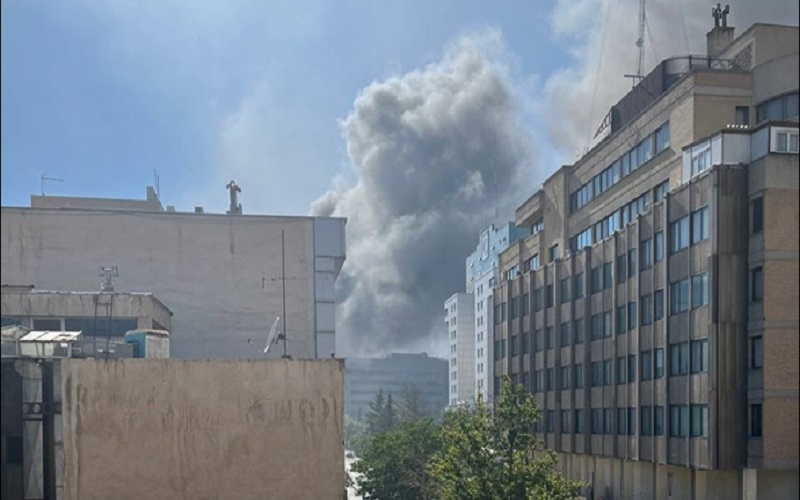

The brief yet intense Iran-Israel conflict has exposed structural vulnerabilities in Tehran’s regional influence model, raising critical questions about the future of its strategy in a rapidly evolving Middle East.
The recent 12-day confrontation between Iran and Israel, marked by waves of missile, drone, and cyberattacks, stands out as one of the most direct and unprecedented clashes between the two nations in over four decades. Although the hostilities concluded relatively quickly, analysts agree that the war’s broader implications are far from over. The consequences continue to reverberate across the region, challenging long-standing geopolitical alignments and exposing vulnerabilities in Iran regime’s regional posture.
Strategic Disruption in Tehran’s Regional Model
While the military outcome remains a matter of debate, the conflict has clearly disrupted Iran regime’s regional influence model. The Iranian regime, which has long relied on a network of aligned forces and proxy groups to project power beyond its borders, now faces the challenge of strategic recalibration. In light of the war’s aftermath, redefining its regional approach is no longer optional—it has become an urgent imperative.
The conflict revealed significant coordination breakdowns in countries like Lebanon, Syria, and Iraq, where Tehran has historically maintained influence. Communication networks and logistical links among Iran-aligned forces were impaired, and the muted or delayed responses from proxy groups—such as Hezbollah in Lebanon, the Houthis in Yemen, and Iraq’s Popular Mobilization Forces—raised eyebrows.
These groups, often portrayed as the frontline of Iran regime’s “resistance axis,” refrained from significant escalation during the war. Their silence was perceived in some quarters of the pro-resistance public as a sign of hesitation, disunity, or strategic disinterest.
Limited Global and Regional Support
Another notable feature of the conflict was Tehran’s diplomatic isolation. Iran’s regime received no explicit support from its major international partners, including Russia and China. According to diplomatic sources, both countries privately urged Tehran to avoid further escalation in the second week of the war.
Arab states, such as Saudi Arabia, Egypt, and Jordan, largely stayed silent or subtly indicated that Iran’s regional policies contribute to instability. Against the backdrop of recent normalization efforts between Israel and several Arab governments, this cautious distance underscored Iran regime’s increasingly fragile political standing in the region.
Domestic Repercussions and Rising Internal Pressures
The war also triggered notable domestic effects in Iran. The exchange rate spiked, communications infrastructure faced disruptions, and localized protests erupted in ethnically diverse provinces like Khuzestan, Kurdistan, and Sistan and Baluchestan. These developments reflect deep-seated economic grievances and underscore the internal pressures Tehran faces as it navigates complex foreign policy challenges.
Sanctions, economic stagnation, and persistent discontent in minority regions have raised the cost of maintaining Iran’s assertive regional posture. Continued internal strain could constrain Tehran’s ability to engage in or sustain foreign interventions, especially if those interventions do not translate into clear strategic gains.
A Diminished Arc of Influence
The Iranian regime’s regional influence over the past two decades has largely been built around the concept of a “ring of fire”—a network of paramilitary groups encircling Israel to deter or counterbalance its military presence. However, recent developments have significantly weakened this strategy.
The heavy blow to Hamas and Hezbollah following the October 7, 2023 “Al-Aqsa Storm” operation, combined with the fall of Syria’s Bashar al-Assad, represents a serious regional setback for Tehran. These shifts signal the erosion of key pillars in Iran’s deterrence architecture and its traditional model of influence.
Time for Strategic Reassessment
Experts argue that Tehran must now adopt a more multifaceted and pragmatic approach to regional engagement. Future ties with countries such as Iraq, Syria, and Lebanon may need to focus less on paramilitary alliances and more on economic cooperation, cultural diplomacy, and institutional state-to-state relations. This transformation would not only help restore trust but also align Iran’s foreign policy with its domestic economic and political realities.
A Geopolitical Turning Point
Despite the brief duration of the 12-day war, the conflict has been widely described as a geopolitical turning point. It has exposed the tension between Tehran’s foreign ambitions and its internal stability, and forced a reassessment of how Iran engages with a region that is itself undergoing rapid realignment.
The central question now is whether Iran will adapt to this changing landscape—recognizing shifting alliances and recalibrating its regional footprint—or whether it will continue to double down on its traditional reliance on proxy networks and ideological confrontation.
In a Middle East that is redefining its order, Tehran stands at a crossroads—between adaptation and entrenchment, between isolation and integration.