



With the October deadline fast approaching, Tehran faces mounting pressure as Europe threatens to reactivate UN sanctions through the JCPOA’s snapback mechanism—reviving fears of economic collapse, diplomatic isolation, and military escalation.
As the expiration date of key provisions in UN Security Council Resolution 2231 approaches on October 17, 2025, the Iranian regime faces a rapidly narrowing diplomatic window. At the heart of this critical moment lies the “trigger mechanism”—also known as “snapback”—a powerful clause within the Joint Comprehensive Plan of Action (JCPOA) and Resolution 2231 that enables the automatic reimposition of all previous UN sanctions on Iran, including six resolutions adopted between 2006 and 2010.
This mechanism was designed to deter Iranian non-compliance. It bypasses traditional Security Council veto powers through a “reverse veto” system, preventing any permanent member—including China and Russia—from blocking the reimposition of sanctions once a complaint is formally lodged.
How the Snapback Works
The activation process begins when a JCPOA member files a formal complaint to the agreement’s Joint Commission. The Commission has 15 days (extendable) to resolve the dispute. If unresolved, the matter escalates to the foreign ministers of participating countries and then to the UN Security Council. The Council then has 30 days to adopt a resolution to continue the suspension of sanctions. If this resolution is not passed—whether due to inaction or veto—the previous UN sanctions are automatically reinstated. This mechanism will remain valid until October 17, 2025 (26 Mehr 1404), after which it will expire.
Europe Turns Up the Heat
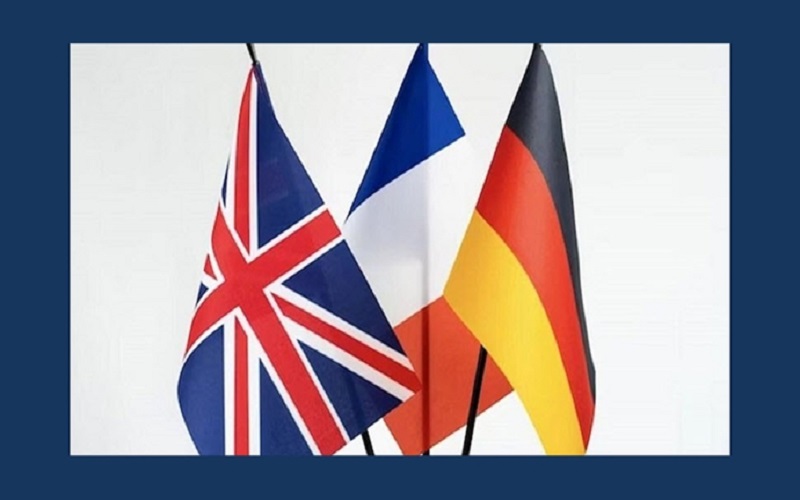
In recent months, France, Germany, and the United Kingdom—collectively known as the European Troika—have significantly escalated diplomatic pressure on Iran. The trigger: Tehran’s refusal to return to the negotiating table and its abandonment of key JCPOA commitments. The tensions worsened after Iran suspended its voluntary cooperation with the International Atomic Energy Agency (IAEA), following Israeli and US military strikes on its nuclear facilities.
According to the IAEA’s June 2025 report, Iran has expanded its stockpile of 60% enriched uranium, a level dangerously close to weapons-grade, while continuing to obstruct international inspectors. These developments have reignited serious concerns in Western capitals and brought the snapback mechanism back into active consideration.
Tehran’s Deepening Isolation
Iran’s regime now finds itself in its most precarious political position in over four decades. A confluence of domestic unrest, regional instability, and international isolation has left Tehran increasingly vulnerable. The only viable path to avoiding the activation of snapback sanctions appears to be a swift return to nuclear negotiations and full cooperation with the IAEA.
Europe’s hardening stance reflects a broader geopolitical shift. Accusations that Tehran is supporting Russia’s war in Ukraine, combined with strong endorsements from Germany and the UK for Israel’s military actions, have pushed Europe from its traditional mediator role to an active participant in the pressure campaign.
On July 13, Iranian Foreign Ministry spokesperson Esmail Baghaei rejected Europe’s warnings as “baseless and politically motivated,” vowing that Iran would respond appropriately if the snapback mechanism were triggered. He also pointed to Iran’s ongoing diplomatic engagements with European capitals as a sign of its willingness to defuse tensions—though few believe those efforts will be enough without concrete policy shifts.
The China-Russia Factor
While China and Russia remain Iran’s primary backers on the Security Council, their influence is limited in the current climate. Both countries are under growing global scrutiny, particularly over the war in Ukraine, and neither appears willing or able to fully shield Iran from the consequences of non-compliance.
Beijing may attempt to reduce Western pressure behind the scenes, while Moscow could encourage Tehran to adopt a more flexible negotiating posture. But ultimately, the fate of the snapback hinges on how much diplomatic ground Iran and the United States are willing to give.
The Economic and Security Fallout
The return of UN sanctions would be catastrophic for Iran’s already battered economy. While Tehran has managed to sustain oil exports through a shadow fleet and by selling to non-Western markets—particularly China, its only major buyer—these exports would likely fall sharply under renewed sanctions. The International Energy Agency (IEA) warns that exports could drop from 1.5 million barrels per day to under 500,000, slashing vital government revenue.
Iran’s aging oil infrastructure compounds the problem. Refineries are outdated—some over 50 years old—and a quarter of refined output is converted into low-value products like bitumen and fuel oil, compared to just 4% in modern global refineries. Modernization efforts have stalled, and with sanctions in place, investment and parts will become nearly impossible to obtain.
The petrochemical sector, which Iran has relied on to offset declining oil revenues, is also struggling. Capacity is capped at 70% due to chronic gas shortages. Refineries are running at a loss, and no new development projects are underway. In short, Iran is poorly positioned to weather another round of economic isolation.
Beyond oil, banking and financial sectors will also suffer. SWIFT-based restrictions, mainly under European jurisdiction, would severely hamper Iran’s international transactions. Despite attempts to pivot toward BRICS nations, US influence in hubs like the UAE could block Iran’s workarounds and intensify currency corruption. Experts warn that unless Iran diversifies its trade partnerships and stops artificially suppressing the exchange rate, the pressure will only grow.
Political Consequences and Regional Risks
Politically, the reactivation of snapback sanctions would dramatically weaken Iran’s position on the world stage. Since the JCPOA was signed in 2015, Tehran has lost significant regional leverage. Proxy groups are diminished, the Syrian regime has fallen, and indirect conflict with Israel has escalated into open confrontation.
The snapback could also provide the legal and political justification for further military action, especially from Israel with tacit US and European support. In such a volatile context, Iran’s threats to withdraw from the Nuclear Non-Proliferation Treaty (NPT) appear more symbolic than strategic. Any such move would likely backfire, inviting further global condemnation and potentially harsher punitive measures.
A Moment of Reckoning
The JCPOA was intended to prevent nuclear proliferation in exchange for sanctions relief. However, with the US withdrawal in 2018, Iran’s step-by-step breach of its commitments, and military escalations in 2025, the agreement now hangs by a thread. As the October deadline nears, Tehran is under enormous pressure to either revive negotiations or face comprehensive international isolation.
The snapback mechanism, immune to veto, is a ticking clock that could reverse years of fragile diplomatic progress. Its activation would not only devastate Iran’s energy and financial sectors but could also push the country closer to direct conflict.
Whether Iran chooses diplomacy or defiance in the coming months will shape not only its own future, but also the geopolitical stability of the broader Middle East.