


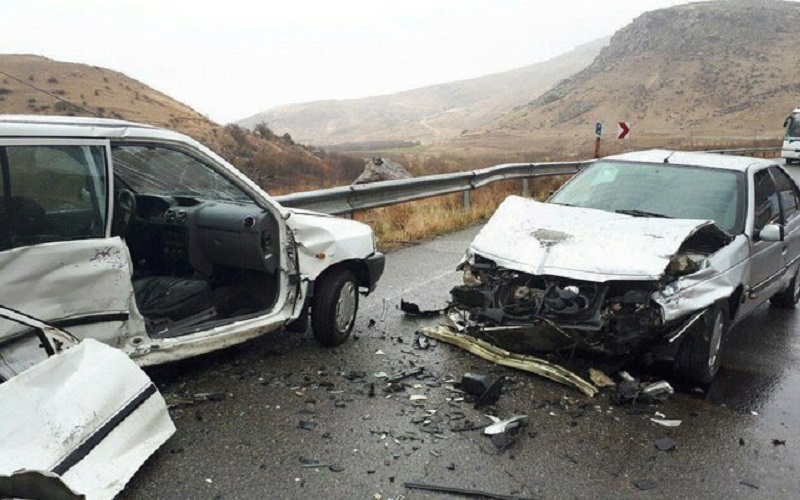

The Traffic Police of the Iran regime’s Police Command (FARAJA) has reported a sharp rise in road fatalities during the Nowruz holiday season. From the start of the Nowruz traffic plan in 2025 until March 26, at least 396 people lost their lives, and nearly 9,000 were injured in traffic accidents across the country.
Alarming Statistics on Nowruz Road Accidents
Hassan Momeni, deputy head of the FARAJA Traffic Police, stated on March 26 that since the beginning of Nowruz travel on March 15, a total of 331 fatal accidents had occurred, resulting in 396 deaths. Additionally, 6,983 accidents involving injuries were reported, leaving 8,816 people wounded.
According to Momeni, of the total 51,501 reported accidents, the primary causes were drivers failing to pay attention to the road (44%) and loss of vehicle control (29%).
Ahmad Karami Assad, head of the FARAJA Traffic Police, also confirmed to ILNA news agency that 396 people had died in urban and suburban accidents over the past 11 days. However, he emphasized that this number is not final and that the Forensic Medicine Organization will release the official figures after the Nowruz travel period concludes.
Conflicting Reports on Casualties
Inconsistencies in accident statistics have raised concerns. On March 25, two FARAJA traffic police officials and a representative from the Ministry of Health provided differing numbers of fatalities in the first 10 days of Nowruz travel, reporting figures of 271, 334, and 339 deaths, respectively.
This pattern of rising road fatalities is not new. During the first 10 days of Nowruz travel in 2024, official sources reported 417 deaths and 11,392 injuries in traffic accidents.
A Persistent and Growing Crisis
Iran has long struggled with high road accident fatality rates, particularly during peak travel seasons like Nowruz. In the first 10 months of 2024 alone, 16,399 people were killed in traffic accidents, and 328,750 others were injured. The situation worsened in 2023, when more than 20,000 people lost their lives in road crashes—a figure that, according to the Forensic Medicine Organization, marked a 12-year high.
Experts and some officials have attributed these tragedies to poor road conditions and the low quality of vehicles. The lack of effective traffic regulations and enforcement further exacerbates the problem.
Mohammad Esmaeil Qaidari, head of Beheshti University of Medical Sciences, has previously stated that traffic accidents are the third leading cause of death in Iran, following cardiovascular diseases and cancer.
With road fatalities continuing to rise each year, Iran’s transportation and traffic safety policies remain under intense scrutiny. As Nowruz travel continues, so does the tragic toll of road accidents—underscoring an urgent need for systemic reforms to improve vehicle safety, road infrastructure, and driver awareness.