



In Iran, many workers find themselves in precarious situations when they are unfairly dismissed or face wage non-payment. Complaints filed by workers with labor dispute resolution authorities often take months to address, leaving workers and their families in financial limbo for extended periods. For some, this process can take six months or more, creating significant hardship.
Unresolved Complaints: A Lengthy and Frustrating Process
The Iranian Labour News Agency (ILNA) recently reported on the plight of workers who are not paid for months and then dismissed—often under the guise of “retrenchment,” a term commonly used by employers to justify layoffs. These workers are left with no option but to turn to the labor dispute resolution authorities for help. However, the process is excruciatingly slow.
One report highlights the story of a worker who, after enduring three months without pay, was fired. He had no choice but to file a complaint with the labor department, only to face a prolonged wait. “When a worker submits their complaint, they are not waiting for days or weeks, but months,” the report states, underlining the inefficiency of the system.
This delay in addressing workers’ grievances exacerbates their financial problems, leaving them without a steady income for an extended period. For workers living paycheck to paycheck, such delays can be devastating.
Wage Increases Not Enough to Bridge the Gap
In March 2024, the Supreme Labor Council agreed to a 35% increase in the minimum wage for workers. For a family of four, this raised the minimum wage to 12,107,000 tomans. While this increase may seem significant on paper, it is far from adequate in addressing the cost of living.
According to Majid Rahmati, head of the wage committee of the Coordination Center of Labor Councils in Tehran Province, the subsistence basket—defined as the basic cost of living for a family of four—requires 32,850,000 tomans per month in Tehran. Across the country, the subsistence figure stands at 26,550,000 tomans. This stark difference reveals a gap of about 15 million tomans between workers’ wages and their actual living expenses, leaving many families struggling to make ends meet.
Workers Left in Limbo
Criticism of the slow and unjust treatment of workers’ complaints has been mounting. Armin Khoshvakhti, a labor law expert, expressed frustration over the inefficiency of the system. He told ILNA, “Sometimes workers have to wait up to six months for their complaints to be processed.” He cited cases where workers had already gone unpaid for three months before being forced to wait even longer for their grievances to be addressed.
Ehsan Sohrabi, a labor activist, also voiced his concerns over the unfair practices of some employers. He criticized the systemic delays and the lack of accountability, stating that some employers “take steps that align with the economic interests of the Chamber of Commerce” while neglecting their workers. He added that many workers are left wandering through provincial labor departments, burdened with the stress of proving their cases and battling potential employer influence.
Sohrabi further emphasized that the situation is particularly dire in densely populated, labor-intensive provinces. Workers often receive their long-overdue wages so late that the compensation feels more like a “small donation” than a rightful payment for their labor. This chronic delay in wage distribution creates significant challenges for workers and their families, many of whom are already living on the margins of survival.
The Growing Crisis
The combination of rising living costs, delayed wage payments, and the dysfunctional dispute resolution process has worsened the situation for workers in Iran. As ILNA reports, many workers have lost hope of recovering their unpaid wages, particularly when they are dismissed without justification by profit-focused employers.
The report concludes with a sobering observation: “There is no hope for a worker who has not received his wages for months, especially in a situation where exploitative employers have unjustly terminated him.” This disillusionment is contributing to widespread dissatisfaction among Iran’s working class.
Protests and Strikes: A Call for Change
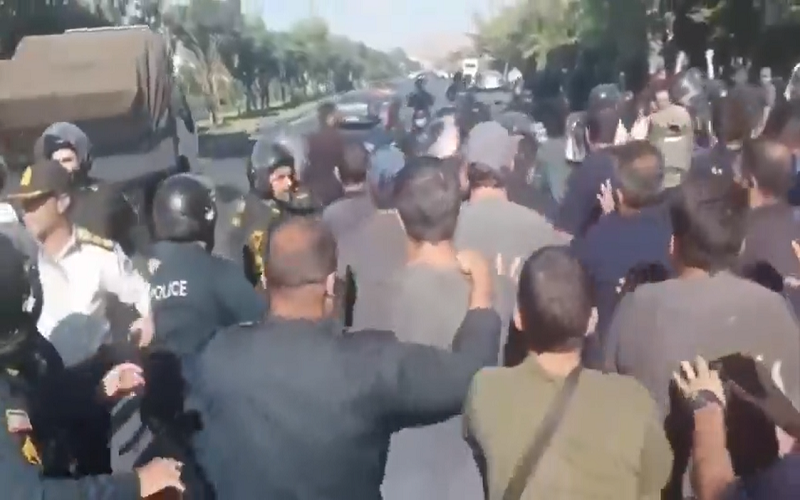
In recent years, workers across Iran have staged numerous protests and strikes to demand better living conditions and the payment of their overdue salaries. Despite these efforts, their demands have largely gone unmet. The ongoing protests reflect the growing frustration within the labor force, as workers continue to fight for their fundamental rights amidst economic uncertainty.
The current economic and labor conditions in Iran paint a bleak picture for the country’s workforce. With ever-widening gaps between wages and living expenses and a slow-moving bureaucracy, the struggles of Iran’s workers are far from over. Without meaningful reforms, the situation is likely to deteriorate further, leaving countless families in increasingly dire straits.