



Iran’s regime is responding to last week’s UN nuclear watchdog board resolution against it by expanding its uranium-enrichment capacity at two underground sites. However, the escalation is not as significant as many had feared, diplomats said on June 12.
Iran’s regime strongly objects to such resolutions by the International Atomic Energy Agency’s (IAEA) 35-nation board of governors. In response to a previous resolution 18 months ago, it began enriching uranium up to 60 percent purity, close to weapons grade, at a second site and announced a major expansion of its enrichment program.
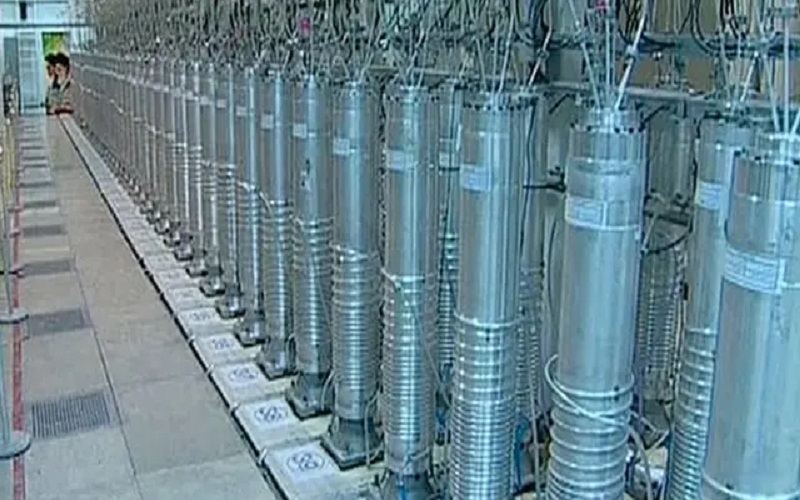
This time, Iran’s regime plans to install more cascades, or clusters, of centrifuges—the machines that enrich uranium—at both its underground enrichment sites, according to five diplomats. IAEA inspectors monitoring Iran’s progress plan to issue a report to member states on June 13, three of the diplomats said.
“It’s not as much as I would expect,” one Vienna-based diplomat remarked, referring to the scale of Iran’s escalation. “Why? I don’t know. Maybe they’re waiting for the new government,” they said, alluding to the deaths in a helicopter crash in May of Iranian President Ebrahim Raisi and Foreign Minister Hossein Amirabdollahian, and the upcoming presidential election on June 28.
The IAEA board passed a resolution a week ago calling on Iran to enhance cooperation with the agency and reverse its recent barring of inspectors, despite earlier US concerns that Tehran would respond with atomic escalation. Only Russia and China opposed the resolution.
Diplomats did not specify the number or type of centrifuges being added or the enrichment levels, though one diplomat mentioned they would not be used to rapidly expand Iran regime’s production of uranium enriched up to 60 percent, close to the 90 percent needed for weapons grade.
The diplomats indicated they were waiting to see the IAEA’s report on Iran regime’s actions but were aware of Iran’s plans. One diplomat described the move as “at the lower end of expectations and something we’re pretty sure they were going to do anyway,” implying it would have occurred even without the resolution.
Iran’s regime did not fully implement its November 2022 announcement following the previous resolution. While it installed all the centrifuges it had planned at its underground enrichment plant at Natanz, 12 cascades of one advanced model, the IR-2m, are not yet operational.
Currently, Iran’s regime is enriching uranium up to 60 percent at an above-ground pilot plant at Natanz and at its Fordow site, which is located within a mountain. Although it started enriching uranium up to 60 percent at Fordow in November 2022, it has yet to install all the additional cascades it had planned.
The Iranian regime’s nuclear activities pose a significant danger. The continued expansion and enrichment efforts bring Iran closer to having the capability to produce nuclear weapons, heightening regional and global security risks.
The international community remains concerned about the potential for Iran to develop a nuclear arsenal, which could destabilize the Middle East and lead to a nuclear arms race in the region.