


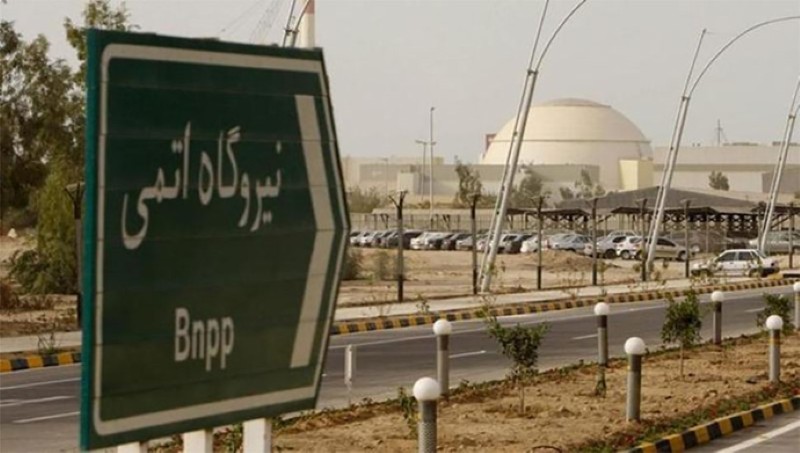

Analysts argue Tehran’s pursuit of nuclear weapons has been driven by regime survival and ideology, not economic benefit — with costly consequences for the country’s development.
From its inception, Iran’s nuclear program — as framed by regime decision-makers — was never merely a scientific or industrial undertaking. Rather, it emerged as a perceived existential necessity for the survival of the political order. A content analysis of the program’s origins suggests that, after the end of the eight-year Iran–Iraq war and the acceptance of a ceasefire, senior figures concluded that nuclear capabilities were essential to guarantee the regime’s continuity and sustain its strategy of state-sponsored coercion and deterrence.
This logic, policymakers argued, reflected a hard-headed reading of global power dynamics: without nuclear deterrence, the regime believed it could not secure its standing in a world organized around military and strategic influence.
A strategic choice backed by vast resources
Under that doctrine, Iran regime’s leaders reportedly committed vast financial resources to a clandestine path toward nuclearization, coupled with extensive measures to conceal the program’s scope. Disclosures made in March 2004 by the regime’s opposition, the People’s Mojahedin Organization of Iran (PMOI/MEK) and the National Council of Resistance of Iran (NCRI) pointed to a decision taken at the highest national security levels to pursue this course — a move framed by decision-makers as necessary for regime survival.
In practice, the program demanded large investments and secrecy, diverting scarce national resources into a military-strategic project whose primary aim was political deterrence rather than broad economic benefit.
“The nuclear issue is political, not economic”
A striking confirmation of this mindset came from economist Mahmoud Jamsaz, who in a commentary published on the Rasad-e Rooz website on 29 October 2025 argued bluntly that Iran’s nuclear effort is primarily political. Jamsaz posed the crucial question — could the nuclear program deliver meaningful economic returns? — and answered that the program’s nature makes it economically unjustifiable.
He wrote that the nuclear issue has “been politicized to the point that the economy is held hostage”: no matter how much is spent, proponents view it as insufficient because the goal is strategic deterrence, defined by ideological and doctrinal aims rather than by cost-benefit calculations.
Nuclear weapons do not equate to economic development
Jamsaz contrasted nuclear-armed countries that have weak economies with those that achieved prosperity through strong institutions, human capital and sound policy. He cited — by implication — the stark gap between the two Koreas after their separation: despite North Korea’s early access to heavy resources, South Korea’s GDP and per-capita income vastly outstripped the North’s, a disparity rooted in governance, investment in people and infrastructure, and effective economic policy — not in possession of weapons.
His conclusion was unequivocal: “The bomb does not bring development.” Economic strength, he argued, comes from human capital, infrastructure and sound policymaking, not from militarization or nuclear arsenals.
A late recognition with consequential lessons
Jamsaz’s candid assessment — coming decades after the program’s launch — frames the nuclear drive as a political project that has exacted heavy economic and moral costs. It implies that national strength in the modern world is built through economic credibility and institutional capacity (as reflected in international rankings and credit assessments), not through the acquisition of strategic weapons.
Observers and critics argue that the prioritization of a clandestine nuclear path diverted resources from development, undermined transparency and accountability, and compounded Iran’s isolation — outcomes that run counter to long-term national interests.
Opposition and whistleblowing played a role
From the start, dissidents, opposition groups and exposing actors have claimed that the nuclear project served primarily to shore up the regime’s hold on power. Disclosures and leaks in the past played a key role in bringing global attention to aspects of the program that had been shrouded in secrecy.
Whether the program ultimately enhances national security or simply entrenches a political status quo at the expense of broad-based development remains a central question for Iran’s future. The debate underscores a deeper choice facing the country: invest in weapons for short-term deterrence, or invest in people, institutions and policies that produce sustainable prosperity.