Nuclear violations, regional aggression, and deepening isolation push Tehran toward harsher global penalties
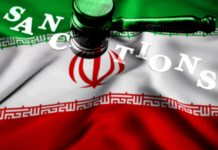
The 30-day deadline to prevent the return of United Nations sanctions against Iran is rapidly approaching, marking another escalation in the regime’s deepening confrontation with the international community. The annual UN General Assembly in New York represents Tehran’s last opportunity to halt the automatic reimposition of sanctions, known as the “snapback” mechanism.
Snapback Triggered by Nuclear Violations
The process began after France, Germany, and the United Kingdom declared on August 28 that Iran had breached the 2015 nuclear agreement (JCPOA). Tehran’s argument that the deal became void after the U.S. withdrawal in 2018 has failed to convince European states. Instead, the regime’s restriction of International Atomic Energy Agency (IAEA) inspections—further tightened after Israel’s 12-day war and bombings of nuclear facilities—cemented the case for sanctions.
The snapback mechanism was designed within the JCPOA to ensure that if Iran violated the deal, sanctions could be reimposed without a Security Council veto. Once activated, it freezes Iranian assets abroad, halts arms transactions, and imposes curbs on the missile program. The deadline expires on October 18, after which Russia and China could block further sanctions attempts.
Iran’s Dangerous Nuclear Escalation
While Tehran continues to insist its nuclear program is “peaceful,” regime officials have increasingly issued threats about pursuing nuclear weapons. Iran is now enriching uranium to levels close to weapons-grade—the only country without a declared weapons program to do so.
Under the JCPOA, enrichment was capped at 3.67 percent with a stockpile limit of 300 kilograms. Yet the IAEA reports that Iran now possesses approximately 9,875 kilograms of enriched uranium, including 440 kilograms enriched to 60 percent—a level far beyond civilian energy needs.
U.S. intelligence agencies assess that while Iran has not formally launched a weapons program, it has taken steps that shorten the timeline should it decide to build a bomb.
Facilities Under Fire
Iran’s nuclear infrastructure has been repeatedly targeted in recent months. The Natanz facility—the country’s main enrichment site—was hit by both Israeli and U.S. strikes. According to the IAEA, enrichment there had reached 60 percent before the attacks. Much of Natanz’s centrifuge infrastructure was destroyed despite being housed in underground bunkers designed to withstand airstrikes.
Other key facilities, including Fordow near Qom, the Isfahan nuclear technology center, and the Arak heavy water reactor, were also bombed by Israel. The strikes dealt a severe blow to Iran’s nuclear capabilities, leaving the regime scrambling to maintain a program that had already violated international agreements.
Mounting Pressure on an Isolated Regime
China remains one of Iran’s few lifelines, buying crude oil despite sanctions. Russia, embroiled in its war in Ukraine, has relied heavily on Iranian drones. Both Beijing and Moscow stand to lose if sanctions tighten further, yet their support cannot mask Tehran’s growing isolation.
The looming snapback sanctions underscore the regime’s failure to secure legitimacy on the global stage. With the economy already collapsing under mismanagement and corruption, the reimposition of UN sanctions threatens to accelerate Iran’s downward spiral.
Tehran’s insistence on nuclear brinkmanship and regional aggression has left it cornered: facing harsher sanctions, deeper isolation, and mounting internal discontent. Far from demonstrating strength, the regime’s defiance only highlights its vulnerability and the heavy price being paid by the Iranian people.