



As diplomatic pressure mounts over Iran regime’s nuclear program, the regime is doubling down on its refusal to halt domestic uranium enrichment—setting the stage for a potentially explosive standoff with the West by the end of August. The firm stance comes amid growing speculation that the United States and its European allies may soon invoke the so-called “trigger mechanism” that would reimpose UN sanctions on Tehran.
On July 16, Alaeddin Boroujerdi, a senior member of Iran regime’s Parliamentary National Security and Foreign Policy Committee, reiterated the regime’s unwavering position: “Iran will never accept zero enrichment.” This declaration is in line with the long-standing policy of the Iranian regime, which considers uranium enrichment a national right and strategic necessity.
That same day, the Iranian regime Parliament rejected any renewed nuclear talks with the United States unless a set of strict preconditions are met. Among them are guarantees against any future military strikes by the US or Israel and financial compensation for recent economic damages. These demands, articulated by Parliament Speaker Mohammad Bagher Ghalibaf, reflect the hardline faction’s growing influence in shaping Iran’s nuclear policy.
Although Ghalibaf’s statement does not represent the official diplomatic position of the regime, it resonates strongly with the anti-negotiation camp in Tehran. This group—dominated by IRGC-aligned hardliners—continues to push for conditions that effectively block any serious return to talks, a move seen by many observers as a calculated effort to prolong the crisis and extract concessions through brinkmanship.
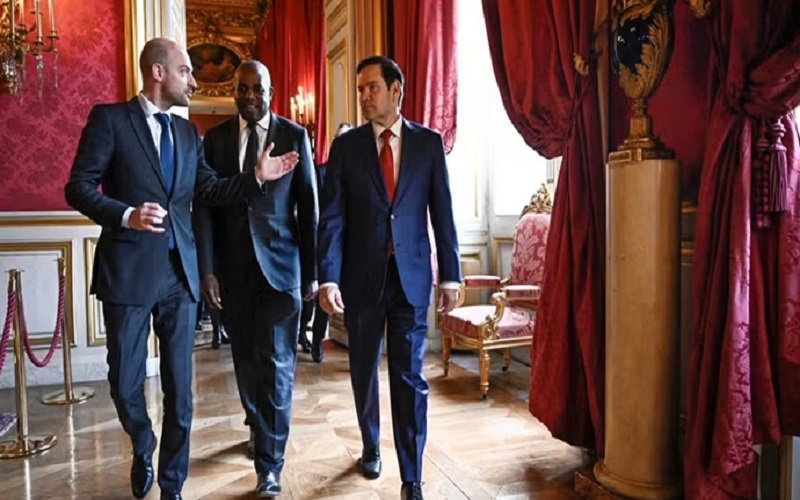
Meanwhile, on the Western front, diplomatic urgency is increasing. Axios reported that US Secretary of State Marco Rubio and his counterparts from France, Germany, and Britain have tentatively agreed to set an unofficial deadline at the end of August for reaching a new agreement with Tehran. If no progress is made by then, the European trio is expected to initiate the trigger mechanism outlined in the 2015 Joint Comprehensive Plan of Action (JCPOA), which would restore all United Nations sanctions on Iran.
Although the US State Department confirmed ongoing consultations with European allies, it stopped short of acknowledging the August deadline. Still, unnamed European officials told Axios that Tehran will soon be warned about the consequences of continued non-cooperation.
One of the sticking points in these faltering negotiations remains the US demand for a total ban on uranium enrichment on Iranian soil—a condition Tehran continues to reject outright. US President Donald Trump, who withdrew from the JCPOA in 2018, has publicly called for a new, stricter deal with Iran. Adding to the pressure, Russia’s Vladimir Putin has reportedly urged Tehran behind the scenes to accept a zero-enrichment proposal—though so far with no visible success.
Iranian regime officials responded angrily to reports that the trigger mechanism might be activated. Alireza Salimi, a member of the presidium of Iran’s parliament, warned that “If the trigger mechanism is implemented, it will definitely face our response. The Europeans should not imagine that they can do anything and not get a response.”
These statements indicate that the Iranian regime is preparing for confrontation rather than compromise. With the deadline approaching and both sides refusing to budge on fundamental demands, the risk of escalation—whether diplomatic or military—is growing. As internal hardliners tighten their grip and Western patience runs thin, the path forward appears increasingly fraught with danger.