



The nuclear ambitions of Iran’s regime have long been a source of global concern, but recent developments signal that the threat is nearing a critical juncture. With mounting evidence of the regime’s intent to destabilize the region and pursue nuclear weapons, calls for decisive measures, like those championed by U.S. Senator Lindsey Graham, are gaining traction.
A Growing Threat to Global Security
Iran’s regime has continuously expanded its nuclear program, pushing the limits of international agreements like the Joint Comprehensive Plan of Action (JCPOA). Recent remarks by Esmail Baghaei, the spokesperson for Iran regime’s Ministry of Foreign Affairs on January 20, 2025, confirm the regime’s willingness to abandon the Nuclear Non-Proliferation Treaty (NPT) if Western powers activate the JCPOA’s “trigger mechanism,” which could reimpose sanctions. This defiant stance highlights Tehran’s strategy of using its nuclear program as leverage against the international community.
The danger posed by Iran’s regime extends beyond its nuclear activities. The regime wields influence across the Middle East through a network of proxy forces, including Hezbollah and Hamas, which it uses to destabilize the region and challenge U.S. and allied interests. These proxies have engaged in conflicts that undermine peace and exacerbate humanitarian crises, further showcasing the regime’s ambitions to dominate the region.
Senator Graham’s Urgent Call
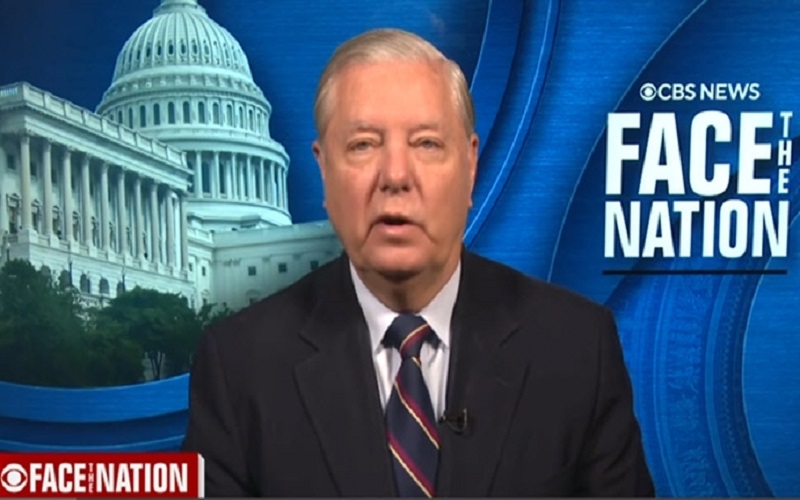
On January 19, 2025, Senator Lindsey Graham (R-SC) articulated the urgency of addressing Iran’s nuclear ambitions during an interview on CBS’s Face the Nation. Graham dismissed diplomacy as an effective solution, claiming there is a “one in trillion chance” that negotiations will curb the regime’s nuclear project. Instead, he argued for preemptive military action, asserting a “90% chance” of success if the U.S. supports Israeli-led strikes on Iran’s nuclear facilities.
Graham characterized the regime as a “religious Nazi regime,” driven by an ideology that threatens regional stability and global security. He warned that failing to act decisively would embolden the regime, allowing it to continue its nuclear advancements and expand its proxy operations.
International Alarm
The dangers of Iran’s regime’s nuclear program are not lost on global leaders. French President Emmanuel Macron recently emphasized that Tehran’s nuclear ambitions are approaching the “point of no return,” urging strategic coordination with the U.S. to prevent the regime from achieving its goals. Similarly, reports from the Wall Street Journal suggest that former U.S. President Donald Trump’s transition team is considering all options, including preemptive military strikes, to thwart Tehran’s nuclear ambitions.
The Case for Decisive Action
The time for decisive action is now. Iran’s regime has repeatedly demonstrated its disregard for international agreements and its willingness to exploit diplomatic negotiations to buy time for its nuclear advancements. Allowing Tehran to continue unchecked would have catastrophic consequences for regional and global security, potentially sparking a nuclear arms race in the Middle East.
Senator Graham’s call for preemptive measures reflects an acknowledgment of this reality. His stance underscores the growing consensus that the regime’s nuclear ambitions cannot be addressed through diplomacy alone. A coordinated effort to neutralize Iran’s nuclear facilities and curtail its proxy influence is essential to safeguarding global stability.
Conclusion
The world stands at a crossroads in confronting Iran’s regime and its nuclear project. The dangers posed by Tehran’s defiance and ambitions are too significant to ignore. As Senator Graham and other leaders have emphasized, decisive action is the only path to ensuring a secure future free from the shadow of Iran’s nuclear threat.