


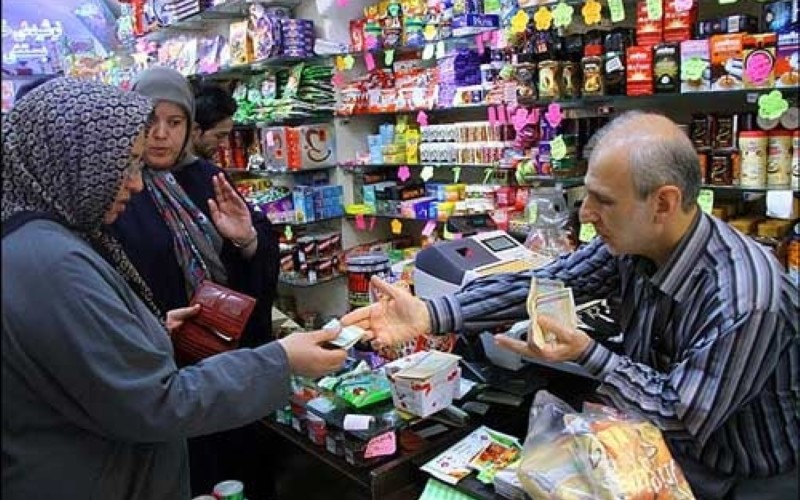

Setareh Sobh’s rare acknowledgment reveals a society suffocating under economic ruin, environmental catastrophe, and a regime trapped in its own dead end.
When a state-controlled outlet acknowledges the breakdown of a society’s most basic needs, it signals a crisis far deeper than any official narrative can contain.
Setareh Sobh, a government-aligned newspaper, unintentionally offered a stark and unfiltered glimpse into life under the system built by the regime’s supreme leader Ali Khamenei.
Its report from November 6 reveals a population battling for survival in a country where even bread, water, and air—fundamental conditions of human existence—have been pushed to the brink.
The newspaper begins by stating that for decades, the essentials of life have been “endangered” in Iran, and rather than improving, these threats have grown “steadily worse.”
It notes that the economic and environmental situation deteriorated sharply under the so-called “value-driven” thirteenth government, marked by what it calls the largest corruption scandal in Iran’s history.
Yet it adds that even under the current administration, which took office with promises of improvement, the availability of essential needs has reached its worst point in recent memory.
The paper concludes that the outlook is even darker than the present, describing citizens as “exhausted” and struggling under unbearable pressure.
Setareh Sobh then shifts to the environmental devastation threatening millions of Iranians, highlighting the severe air pollution generated by substandard gasoline and an aging fleet of vehicles—including twenty million outdated motorcycles, taxis, and trucks—that pump toxins directly into people’s lungs.
It bluntly attributes the title of “world’s most polluted city” to the authorities responsible for this longstanding neglect. In doing so, the newspaper exposes not merely an environmental failure but a governing system that treats public health as expendable.
The economic picture is no less alarming. The paper reports that point-to-point inflation in November 2025 exceeded 49 percent, pushing the country to the edge of a 50-percent inflationary shock.
The meaning of this figure is straightforward and devastating: the purchasing power of ordinary Iranians has fallen by half compared to the previous year.
Food prices, dairy products, and vegetables have become increasingly unstable, with costs rising daily and hitting low-income households hardest.
The suffering endured by workers, retirees, unemployed citizens, and millions of others goes far beyond what Setareh Sobh can capture in a single report, but the direction is unmistakable. Poverty is expanding relentlessly.
To underline the scale of the crisis, the paper cites economist Masoud Nili, who estimates that between 2022 and 2024 alone, more than five million people fell into poverty.
This means the number of poor in Iran has risen from around 26 million before 2021 to 31 million today—an indictment of a governing system whose economic management has failed in its most basic responsibilities.
The newspaper reinforces this point by recalling Nobel laureate Milton Friedman’s warning that chronic inflation corrodes every aspect of life, from culture and art to social cohesion. Today’s Iranian society is witnessing this destruction firsthand.
Setareh Sobh then raises a simple but devastating question: what happens to a nation when it cannot reliably secure bread, water, or clean air?
It reminds readers that the role of a government is to control inflation, stabilize monetary policy, expand production, and secure economic well-being.
Countries that have progressed have done so through responsible policymaking. In contrast, the regime ruling Iran prioritizes its own survival over the livelihood of its people. The result, as the paper implicitly admits, is a society transformed into a “powder keg beneath the ashes.”
In its final assessment, Setareh Sobh argues that prices have “lost their brakes” and are crushing low-income citizens, and that the situation continues unchanged because the governing system refuses to reevaluate its priorities.
It warns that national resources must be used domestically rather than being spent in Gaza, Yemen, Lebanon, Syria, and Iraq—a rare acknowledgment from a state outlet of the enormous cost of Tehran’s regional interventions.
Yet such advice remains futile. The reality is that the system shaped by Khamenei is trapped in a maze of self-created crises.
Its survival strategy depends on exporting instability to the region, not solving the domestic catastrophes strangling its population.
Meanwhile, ordinary Iranians, stripped of economic security and environmental safety, are losing their capacity to tolerate the situation.
Their daily struggle for survival is transforming into a political reckoning, one directed at a regime whose entire legacy is defined by decay, corruption, and collapse.
The message behind Setareh Sobh’s reporting is unintentional but unmistakable. A government that cannot provide bread, water, or air has no claim to longevity.
The people living under it are reaching the limits of endurance—and in the space created by suffering, the demand for change grows stronger every day.