


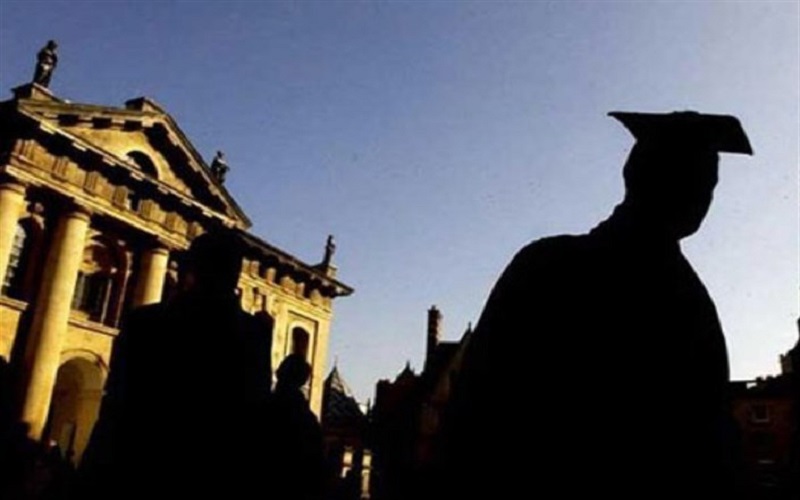

Iran is experiencing an alarming surge in student migration, with experts warning that the country is facing an unprecedented brain drain that threatens its long-term development. According to Bahram Salavati, researcher and former director of the Iranian Migration Observatory, the number of Iranian student migrants has surpassed 100,000 for the first time in the nation’s history—yet only one percent are expected to return.
In an interview with the state-run Entekhab news agency, Salavati revealed that the trend of student emigration has accelerated dramatically over the past two decades. “Since 2006, one year after Mahmoud Ahmadinejad’s first administration began, the population of Iranian students abroad has doubled every ten years,” he said. “But since 2021, this doubling has occurred within just four years.”
By the end of the 2010s, the number of Iranian student migrants stood at approximately 60,000. That number is projected to reach 120,000 in 2025. Experts noted that 68 percent of young Iranians now express a desire to emigrate and live abroad, citing deep dissatisfaction with the country’s political, economic, and social conditions.
One-Way Migration and the Loss of Human Capital
Salavati described the near-total lack of returnees as a dangerous phenomenon. “The return rate of just one percent reflects the irretrievable flight of the elite,” he warned. “The migration process from Iran has become one-sided. The model of talent exchange does not apply here at all… This is the reality of 2025, but the real shocks are still ahead.”
Experts point to a combination of factors driving this exodus, including severe economic crises, political repression, cultural restrictions, and a widespread sense of hopelessness. On social media, many young Iranians cite the lack of basic life necessities and the insecurity of their economic and social future as key motivations for leaving the country.
This growing migration trend is not limited to students. Highly skilled professionals—such as doctors, nurses, engineers, and university professors—are also leaving Iran in increasing numbers, prompting widespread concern about the nation’s ability to sustain its intellectual and professional infrastructure.
Government Acknowledges the Crisis
Even officials within the regime have begun to acknowledge the severity of the problem. In November 2024, Ali Rabiei, advisor to the regime’s President Masoud Pezeshkian on social affairs, admitted that the age of emigration has dropped below 18 years. “Immigration has become a form of escape,” he said.
Pezeshkian himself has spoken repeatedly about the phenomenon. In a recent speech, he lamented: “We are now raising children who are 90 percent focused on going abroad. It is not an achievement to become an elite only to take our knowledge and talents to America.”
However, Salavati criticizes the regime’s framing of the issue, particularly the simplistic notion that elite migration is driven solely by financial incentives. “This is a crude and immature analysis,” he said, noting that such misconceptions are common even among the regime’s senior leaders. “Elites are acting rationally and protestingly in response to structural dysfunction. Their migration is a survival strategy.”
A Global Leader in Brain Drain
Iran’s rapid brain drain has also drawn international attention. In a November 2023 report, the Financial Times cited data from the OECD showing that Iran recorded the fastest rate of migration to wealthy countries between 2020 and 2021.
State-run media has also documented the troubling trend. In a report titled Early Migration, the newspaper Etemad referenced data from the Iranian Migration Observatory, analyzing statistics from the General Passport Office between 2000 and August 2020. The report found that 15 to 37 percent of top scorers in the national university entrance exam—those eligible for elite programs and Olympiads—had emigrated. Only 2.5 to 4.5 percent of them returned to Iran.
“We lack clear statistics in this area—it remains one of the black boxes that needs transparency,” Salavati said at the time. “We once attempted a research project focusing on students in SAMPAD [national gifted schools], but even that was not permitted.”
Looking Ahead
As the number of young and educated Iranians seeking opportunities abroad continues to rise, the warnings from researchers like Salavati underscore a looming crisis for the Iran: a hollowing out of its future intellectual capital. Without significant reforms and a reversal of current policies, experts fear that the country may lose an entire generation of its best and brightest—perhaps permanently.