



Tehran and 17 Other Provinces Disrupted as Dam Levels Hit Century-Low and Heat Surges Past 50°C
Iran is grappling with a worsening water and electricity crisis as a historic heatwave sweeps across the country, disrupting daily life in more than half of its provinces. According to official reports, at least 18 of Iran’s 31 provinces, including the capital Tehran, have been severely affected by power outages, reduced water pressure, and widespread office closures aimed at conserving energy resources.
Dam Water Levels at Century-Low
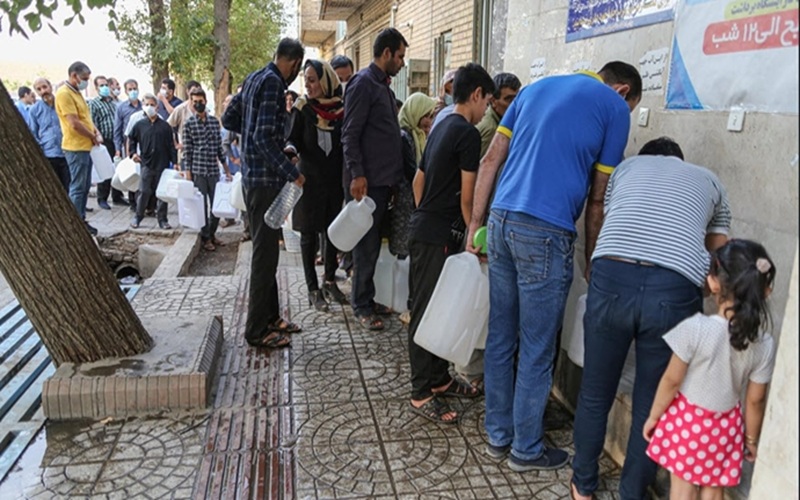
The crisis comes amid an unprecedented drop in water reservoir levels. The Tehran Provincial Water Supply Company announced that dam water levels supplying the capital have plunged to their “lowest point in a century,” urging residents to install water tanks and pumps to mitigate the impact. Many neighborhoods in Tehran have reported daily water outages lasting several hours. The company attributed the crisis to prolonged drought and a severe reduction in rainfall across the region.
Record Temperatures and Government Closures
Southern and southwestern regions, particularly Khuzestan province, have recorded temperatures exceeding 50°C. The city of Shush reported a peak temperature of 52°C. In response, government offices in at least 10 provinces were closed on Wednesday to reduce electricity consumption. Meteorological officials expect the extreme heat to continue through the week.
In Tehran, temperatures have reached the highest levels seen in 60 years, prompting emergency measures and warnings. Mohammad Esmail Tavakoli, head of the Tehran Provincial Emergency Organization, advised the public—especially vulnerable groups—not to leave their homes between 10 a.m. and 4 p.m. due to the risk of heatstroke. Children, the elderly, pregnant women, and individuals with chronic illnesses are particularly at risk, Tavakoli warned.
Government Officials Admit to Mismanagement
The regime’s own officials have acknowledged the depth of the crisis and the decades of neglect that led to it. President Masoud Pezeshkian admitted that “the water crisis is more serious than what is being talked about,” cautioning that continuing the current trend could result in a future for which “no solution can be found.” He also dismissed quick-fix measures like transferring water to Tehran as insufficient.
Mehdi Pirhadi, head of the Tehran City Council’s Health and Environment Commission, went further, criticizing responsible agencies for “inaction, poor planning, and failure to adopt modern technologies.” In a fiery address to the council on Tuesday, Pirhadi called for legal accountability: “Some people should be tried in this city,” he said, referring to those whose negligence has deepened the crisis. He also condemned the burden placed on citizens, who are now forced to purchase water pumps and tanks to maintain basic access.
Urban Overcrowding and Unplanned Development
Urban planning failures have exacerbated the problem. Minister of Roads and Urban Development Farzaneh Sadegh described Tehran as a “shelterless city,” overwhelmed by population growth without adequate infrastructure. She attributed the ongoing water and energy disruptions to a lack of sustainable development and poor long-term planning.
Warnings of Water Rationing Ahead
As Iran’s energy infrastructure buckles under pressure, Parliament’s Energy Commission member Reza Sepahvand warned of imminent water rationing. “Unfortunately, in the coming months, we will likely see water rationing across much of the country,” he told Tejarat News on Tuesday. Sepahvand pointed to systemic mismanagement, including the construction of water-intensive industries in desert regions and stalled, expensive water transfer projects, as root causes.
In Bushehr province, residents have reported extreme shortages, receiving only two hours of water every 48 hours. These reports were confirmed by local MP Jafar Pourkabgani, highlighting the increasingly desperate conditions many citizens face.
Outlook: A Nation on the Brink
Despite government assurances and temporary closures, the crisis shows no sign of abating. Government spokesperson Fatemeh Mohajerani acknowledged that while the regime is reluctant to enforce shutdowns due to economic losses, further closures may be necessary. “There is no problem in the northern provinces,” she claimed, “but the situation in Tehran is exceptional.”
With Iran’s climate challenges intensifying and infrastructure faltering, the current crisis underscores the cost of long-standing mismanagement and the urgent need for sustainable, long-term solutions. Without immediate structural reform, experts warn, Iran may face not just temporary outages—but irreversible collapse in its water and energy systems.