


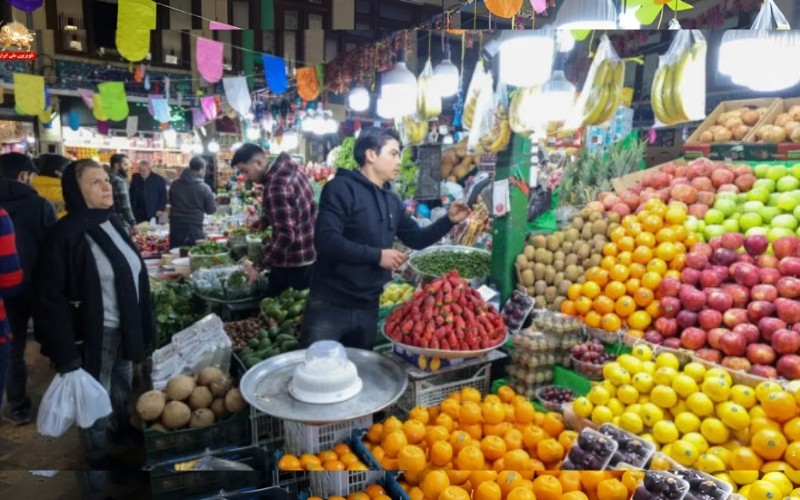

From a police officer contemplating selling his kidney to expert warnings of famine, signs of a looming food crisis are spreading across Iran
Soaring prices, collapsing purchasing power, and acute shortages of foreign currency for imports have pushed Iran to the edge of a food crisis. What was once discussed quietly among experts is now surfacing publicly, even within the ranks of the Iran regime itself. Analysts warn that the convergence of inflation, currency collapse, and environmental stress could ignite widespread hunger—and social unrest.
A video circulated widely on social media shows a police officer in Kohgiluyeh and Boyer-Ahmad Province describing his dire living conditions. In the footage, the officer states that economic pressure has become so severe that he has even contemplated selling his kidney to survive. While the regime-aligned outlet Rooidad24 reported on December 15 that the officer later attempted to soften his remarks, claiming they were merely an internal “venting of pain,” the public reaction revealed a far deeper reality: crushing economic pressure is no longer confined to the poorest layers of society and has reached even state security personnel.
This incident has become a stark symbol of Iran’s deepening economic collapse, a crisis that regime-affiliated experts themselves increasingly acknowledge. In a December 21 editorial, Hossein Marashi, secretary-general of the so-called Construction Party, wrote that Iran’s average economic growth over the past two decades has hovered around just one percent, while inflation has surged from an average of 21–22 percent to more than 53 percent this year. This explosive inflation has not only devastated household purchasing power but has also severely constrained the Iran regime’s ability to secure foreign currency for importing essential goods.
Marashi openly described Iran’s economy as having been “held hostage by the nuclear issue” for two decades. Stressing the urgency of food security, he admitted that the regime has been forced to import basic goods using a dollar exchange rate of 125,000 tomans simply to ensure that “at least some goods remain available in the market,” even at exorbitant prices. This admission underscores the fragility of food supply chains under the current system.
Official data and media reports confirm a dramatic rise in food prices. Food inflation reportedly reached around 58 percent earlier this year—more than double the level recorded during the same period last year. Such price shocks have pushed low-income households into a survival mode, where adequate nutrition is increasingly out of reach.
The crisis has now crossed from economics into nutrition and public health. Field reports and unofficial data indicate that many families can no longer afford protein-rich foods. Consumption of meat, dairy products, and even basic grains has declined sharply, with visible consequences for children’s health and long-term development.
At the same time, customs data reveal a significant drop in imports of animal feed, threatening food security across the agricultural sector. Reduced feed availability directly affects meat and dairy production, compounding shortages and accelerating price increases. In an economy already crippled by foreign currency scarcity, these dynamics further restrict access to essential nutrition.
Multiple structural factors are intensifying Iran’s food crisis. The first is the collapse of the national currency. The Iranian rial has fallen to historic lows, with the dollar surpassing 130,000 tomans. This currency freefall has fueled inflation across all sectors, particularly imported foodstuffs, while dwindling reserves have left the Iran regime struggling to finance basic imports.
The second factor is drought and water mismanagement. Agriculture, which consumes an estimated 80–90 percent of Iran’s water resources, is nearing systemic breakdown due to prolonged drought and regime mismanagement. Declining rainfall and groundwater depletion have sharply reduced domestic food production, further weakening already strained food reserves.
A third driver lies in the Iran regime’s own currency and import policies. Facing foreign exchange shortages, the government has recently allowed exporters to use their export earnings directly to import basic goods. This policy effectively acknowledges that the regime no longer possesses sufficient official currency reserves and shifts the burden of food security onto the market and consumers, driving prices even higher.
The food crisis is no longer merely an economic concern; it is rapidly becoming a social and political threat. Rising inflation, shrinking purchasing power, and widespread nutritional deprivation are eroding social stability. Reports indicate growing discontent and protests among workers, employees, and even members of the military and security forces. Economic pressure is widening social fractures that the regime has long relied on repression to contain.
Marashi issued a blunt warning and claimed that, what military confrontation and political pressure failed to achieve against the Iran regime, a food crisis might accomplish. “The crisis of food supply,” he warned, “has the potential to bring hungry people into the streets.” Emphasizing the immediacy of the danger, he concluded that either the regime’s leadership must intervene directly, or the president must move beyond existing constraints and make fundamental decisions grounded in reality.
Although the threat of famine is rarely acknowledged in official regime discourse, independent indicators tell a consistent story. High inflation, currency collapse, drought, and declining consumption are all simultaneously active—classic warning signs of a looming food crisis. Existing economic policies are plainly insufficient to address a crisis of this scale and complexity.
As living standards deteriorate and food insecurity spreads, tens of millions of Iranians are experiencing the consequences of decades of regime mismanagement firsthand. Without urgent, transparent, and evidence-based action—rather than denial and short-term fixes—the Iran regime risks pushing the country toward a humanitarian and social catastrophe driven by hunger itself.