


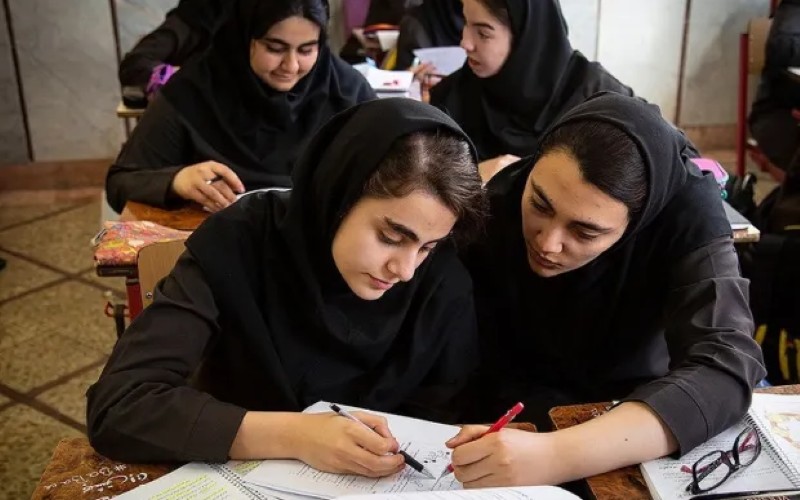

Lower costs, easier access to European universities, and growing disillusionment with Iran’s education system push families to send children abroad.
Turkey Emerges as a Preferred Destination
Over the past three decades, Turkey has steadily grown into one of the top destinations for Iranian migrants. Official data shows that while just 23,000 Iranians lived in Turkey in 1990, the figure reached 84,000 by 2020. In the past five years, with migration accelerating, the Iranian population in Turkey has approached 100,000.
For many families, the driving force behind this migration is not only economic hardship but also the pursuit of educational opportunities for their children. Schools in Turkey are increasingly seen as a gateway to European universities, a prospect that makes them highly attractive to Iranian parents.
Education as the Key to Migration
Parents believe that enrolling their children in Turkish schools increases the likelihood of continuing higher education abroad, particularly in Europe. This belief has led to a sharp rise in educational migration at both the high school and university levels.
Iranian migration agencies have seized on this demand. Their advertisements portray Turkish schools as a steppingstone to prestigious European institutions. Unlike in the past, this trend is no longer limited to elite students, Olympiad medalists, or top exam scorers; many average high-achieving students now leave Iran before even attempting the national entrance exam.
A Country Losing Its Best Minds
Iran is among the regional leaders in brain drain. According to the Iranian Migration Observatory, from 2001 to 2020, only 56.6% of high school Olympiad medalists remained in Iran. Among National Elites Foundation scholars, the figure was just 69.1%. The highest levels of migration are found among Olympiad medalists (37.2%), National Elites Foundation members (25.5%), and top-ranked university exam candidates (15.4%).
A closer look at national entrance exam data paints an even starker picture: between 2001 and 2015, more than 1,400 out of 5,356 top-ranked students left the country—over 25%.
This steady exodus underscores a deep crisis in Iran’s higher education system, where many of the nation’s brightest view leaving as their only viable future.
Schools Abroad: Iranian and Turkish Options
Iranian families in Turkey face two main choices: Iranian schools abroad, which remain tied to Iran’s education system, or Turkish schools that integrate students directly into the Turkish system.
Iranian schools allow students to sit for Iran’s national entrance exam while simultaneously offering access to Turkish and European universities. Turkish schools, on the other hand, provide broader integration into the host country’s education system, especially for students fluent in Turkish.
In both cases, tuition remains relatively affordable compared to private schools in Iran. For example, in 2021 average annual tuition for elementary Iranian students in Turkey was around 4,000 lira, while high school fees stood at roughly 7,000 lira—figures lower than many private schools in Tehran.
Migration Agencies Exploit the Demand
Iranian migration agencies actively promote Turkey as a low-cost alternative to Europe, often promising families not just education but residency permits as part of their packages.
This targeted recruitment strategy uses Iranian students—especially high achievers—as a magnet. Turkey, like several European countries, has recognized the value of attracting Iranian talent, but offers easier residency and lower living costs than Europe, making it an appealing middle ground.
According to Turkey’s Ministry of National Education, during the 2021–2022 academic year, nearly 8,000 Iranian students were enrolled in Turkish universities. This placed Iran among the top five countries sending students to Turkey, alongside Azerbaijan, Syria, Turkmenistan, and Iraq.
Migration Trends and Growing Alarm
Between 2010 and 2020, the number of Iranian migrants worldwide grew by roughly half a million, averaging about 50,000 new departures every year.
Unlike countries such as India or China, where most students eventually return, Iranian elites rarely come back. Only about 10 to 15 percent of Iranian elites return after migration, highlighting the depth of the brain drain crisis.
This means educational migration is not simply temporary but often the first step in permanent emigration.
Official Concerns and Domestic Backlash
In 2022, Iranian media reported that a Turkish cultural institute held entrance exams for Iranian high school students, offering scholarships without the knowledge or approval of Iran’s Ministry of Education. The revelation sparked protests from the ministry, which accused foreign institutions of illegally recruiting Iranian students.
Even senior regime officials have acknowledged the problem. President Massoud Pezeshkian has repeatedly called for policies to keep Iranian students at home. Yet, worsening repression, economic collapse, and widespread uncertainty about the future are driving families to send their children abroad despite the emotional toll.