


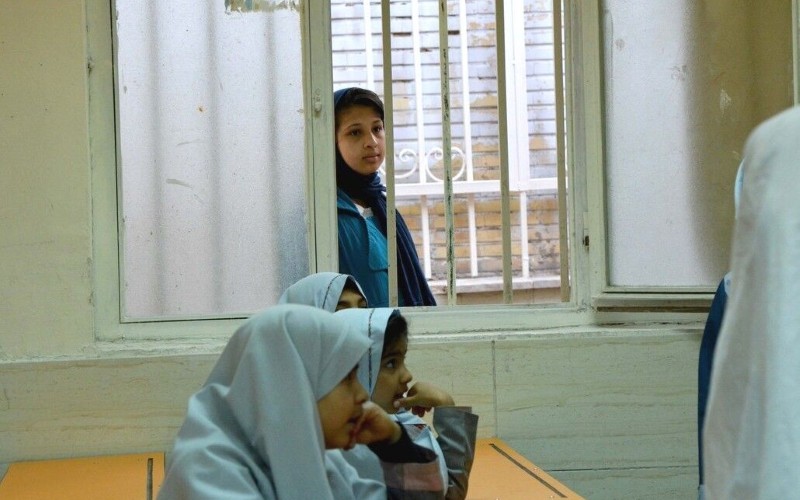

Conflicting reports reveal a growing wave of school dropouts in Iran, with economic hardship and systemic failures pushing children out of classrooms.
As concerns mount over the rising number of children and adolescents leaving school in Iran, the regime’s Minister of Education has admitted that nearly one million students are currently out of school.
In an interview with the state-run ILNA news agency, Minister Alireza Kazemi confirmed that 950,000 children have either dropped out or never enrolled. He claimed the Ministry of Education has “person-by-person” statistics and dismissed reports suggesting the real number could be twice as high.
However, this contrasts sharply with earlier remarks by Farshad Ebrahimpour, a member of the regime’s Parliament Education Commission. In October 2024, Ebrahimpour revealed that two million students had not registered for the 2024–2025 academic year, blaming widespread poverty and families’ inability to cover education costs.
Kazemi denied claims that students are leaving school to join the workforce, but other sources tell a different story. In May, the Donya-e-Eqtesad newspaper reported that financial hardship and child labor to support household incomes are major drivers of school dropout rates.
The problem is not new. For years, officials and experts have warned about the growing wave of Iranian children abandoning education due to economic, social, and family pressures. In December 2024, Kazemi himself acknowledged these factors as the leading causes behind the crisis, while conceding that poor educational infrastructure also plays a role.
The Statistical Center of Iran reported in July that dropout rates in elementary and junior high schools had risen in the 2023–2024 academic year compared to the previous year.
Kazemi further admitted that deteriorating conditions in classrooms contribute directly to student decline. Overcrowded classes, inadequate preschool programs, language gaps in bilingual areas, and overreliance on smartphones were cited as key problems. He pointed to falling student grade averages as evidence of what he called “academic decline,” adding, “Let’s work in a class of 50 people that has no standards and see what product you produce? Our teachers work hard, but many variables are not in their control at all.”
The scope of the problem is underscored by research from Gholamali Afrooz, a professor at the University of Tehran, who stated in November 2024 that only 70 percent of Iranian students who enter elementary school graduate from high school. He added that the remaining 30 percent leave school without a diploma, often entering the job market prematurely.
The gap between the regime’s official claim of 950,000 dropouts and independent estimates of two million reveals more than a statistical dispute. It underscores a deepening education crisis in Iran, one that cannot be masked by denial and official underreporting.