


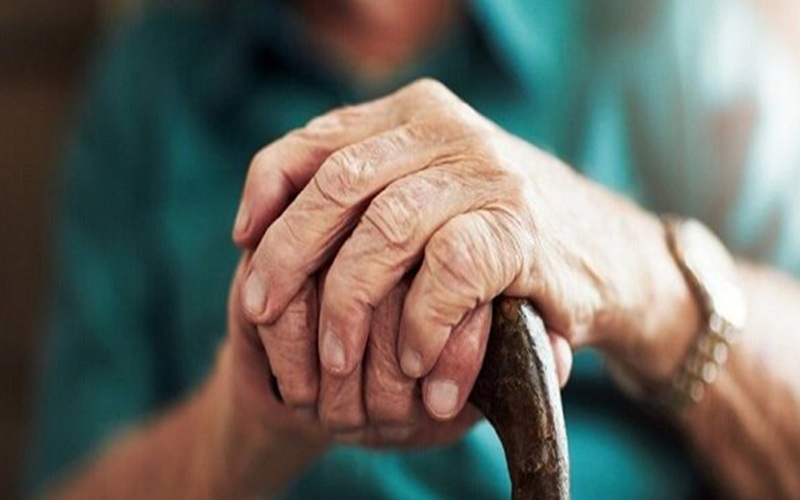

As poverty, disability, and inadequate healthcare converge, Iran’s aging population faces an increasingly uncertain future—one shaped less by demographic change than by decades of political priorities that have neglected social welfare.
A society is often judged by how it treats its most vulnerable. By that measure, today’s Iran offers a sobering picture.
For millions of elderly Iranians, retirement no longer represents security after a lifetime of work. Instead, it marks the beginning of a daily struggle to afford medicine, food, housing, and basic healthcare. Growing old in Iran has become increasingly synonymous with poverty, chronic illness, and social isolation.
The country’s rapidly aging population is frequently discussed as a demographic challenge. Yet demographics alone do not explain why so many elderly citizens are living in hardship. The deeper problem lies in decades of governance that have consistently placed political and ideological priorities above the welfare of ordinary people.
Poverty Has Become a Defining Reality for Many Elderly Iranians
Recent reports paint an increasingly alarming picture.
According to Iranian media reports citing experts on aging, old age in Iran is becoming inseparable from poverty, loneliness, disability, and declining access to support services. Many elderly citizens suffer from multiple chronic illnesses while simultaneously facing shrinking financial resources and weaker social support networks.
The numbers themselves are striking.
Iran’s State Welfare Organization reports that more than 264,000 elderly people with disabilities are currently under its care. Demographic projections further indicate that by 2050 nearly one-third of Iran’s population could be over the age of 60, fundamentally reshaping the country’s social and economic landscape.
An aging society is not inherently a crisis. Many developed countries have older populations while maintaining high standards of living for senior citizens.
Iran’s crisis stems from something else: inadequate preparation combined with long-standing structural failures.
Retirement No Longer Guarantees Economic Security
Financial hardship has become one of the defining characteristics of old age in Iran.
According to domestic reports, approximately one-third of Iran’s elderly population now lives below the absolute poverty line.
At the same time, the costs of medicine, medical treatment, rehabilitation services, and long-term care continue to rise faster than many pensions.
For countless retirees, fixed incomes have become increasingly insufficient to meet even essential living expenses.
This erosion of purchasing power reflects a broader pattern that has affected nearly every segment of Iranian society, but older citizens are especially vulnerable because their ability to supplement their income is often limited or nonexistent.
Healthcare Is Struggling to Meet the Needs of an Aging Population
Economic insecurity is only one dimension of the problem.
Iran also faces growing shortages in geriatric healthcare.
Medical experts have warned of an insufficient number of specialists in elderly medicine, inadequate long-term care services, and a shortage of specialized facilities capable of treating aging patients with complex medical conditions.
As a result, families increasingly shoulder responsibilities that, in many countries, are supported by professional healthcare and social service systems.
The burden falls particularly heavily on middle-aged children who must balance employment with caring for aging parents in a deteriorating economic environment.
The consequences extend beyond healthcare, affecting workforce participation, household finances, and overall social wellbeing.
War Exposed Existing Weaknesses Rather Than Creating Them
The recent war further intensified these pressures.
Older people living in affected areas often experienced disruptions in medical treatment, shortages of essential medications, damage to their homes, and reduced access to healthcare facilities.
Yet it would be misleading to view the conflict as the origin of today’s crisis.
The war did not create Iran’s inadequate welfare infrastructure; it exposed weaknesses that had accumulated over many years.
A resilient social protection system should be capable of supporting vulnerable populations during national emergencies.
The experience of many elderly Iranians demonstrated just how fragile that system has become.
A Demographic Challenge That Authorities Can No Longer Ignore
Population experts increasingly warn that aging will become one of Iran’s defining long-term policy challenges.
Growing numbers of retirees will place additional strain on pension funds, healthcare services, and long-term care facilities.
Without substantial reform, these pressures are likely to intensify as life expectancy rises while birth rates continue to decline.
The question is not whether Iran will become an aging society.
It already is.
The real question is whether its institutions are capable of adapting before demographic trends outpace available resources.
The Problem Is Not a Lack of Wealth
Government officials frequently cite financial constraints when discussing pensions, healthcare, or welfare spending.
Yet Iran is not a resource-poor country.
It possesses some of the world’s largest reserves of oil and natural gas, along with significant mineral wealth and substantial economic potential.
The country’s experience during previous periods of high oil revenues is instructive. Increased state income did not produce lasting improvements in the living standards of pensioners or significantly strengthen the social safety net.
Instead, recurring economic crises have continued to erode the purchasing power of retirees.
This suggests that the central issue is not simply the availability of resources but the allocation of those resources.
Governance Determines Social Priorities
The condition of Iran’s elderly reflects broader choices about governance.
When public spending consistently prioritizes security institutions, ideological projects, and regional ambitions over healthcare, pensions, and social welfare, the consequences eventually become visible in everyday life.
Older citizens are among the first to feel these consequences because they depend more heavily on functioning public institutions than younger generations.
As Iran’s population continues to age, the country’s treatment of its elderly will become an increasingly important measure of governmental effectiveness.
Without greater transparency, accountability, and policies that place citizens’ welfare at the center of national priorities, demographic change will only deepen existing inequalities.
For millions of elderly Iranians, the challenge is no longer preparing for old age. It is surviving it with dignity.