


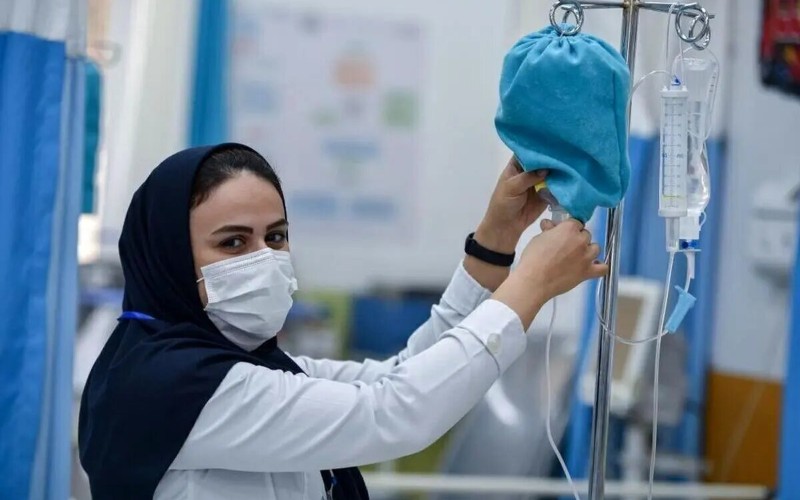

Regime corruption, unpaid wages, and unbearable working conditions push Iran’s medical workforce toward collapse
Iran’s healthcare system is rapidly collapsing under the weight of the regime’s anti-people policies and institutionalized corruption. Even regime officials now admit that the country faces a shortage of at least 165,000 nurses, while the ratio of nurses to patients is several times lower than the global standard. Thousands of nurses have already left the country, and many more are preparing to do so.
According to the IRGC-affiliated Fars News Agency (October 21, 2025), Qassem Abutalebi, head of the Supreme Nursing Council, admitted:
“We currently have a shortage of 165,000 nurses… The nurse-to-hospital-bed ratio in Iran is 0.9, while the global standard is three nurses per bed.”
Globally, there are three to five hospital beds per 1,000 people. In Iran, that figure is just 1.6—meaning the number of nurses per capita is six times below the international standard.
Meanwhile, private hospitals—often owned or controlled by regime elites and the Revolutionary Guards—employ as few nurses as possible, forcing existing staff to endure brutally long shifts and mandatory overtime. Even the regime’s own officials have been forced to acknowledge the crisis. During a recent visit to the Persian Gulf Hospital, Friday prayers leader in Hormozgan Province, Mohammad Ebadi-Zadeh, admitted that the severe shortage of staff had led to “exhaustion, stress, and burnout” among nurses (ISNA, October 27, 2025).
In state hospitals, a single nurse is often responsible for 12 patients at a time, according to Hamshahri Online (October 26, 2025). The Secretary-General of the National Nursing Association warned that this situation has directly resulted in avoidable patient deaths (Asr Iran, March 28, 2025).
Most nurses earn around 20 million tomans per month—barely half of Iran’s current poverty line, which was estimated at 35 million tomans seven months ago (Rokna News, March 21, 2025). With inflation and currency collapse continuing, nurses’ salaries now cover only about 50% of the basic cost of living, and even these meager wages are often delayed for months.
Basir Hashemi, president of Shiraz University of Medical Sciences, told Fars News that “Fars Province is two months behind on nurse payments, which is still better than other provinces, where delays have reached seven or eight months.”
Most nurses in private hospitals are hired on temporary or contractor-based terms, leaving them without insurance, pensions, or employment benefits—conditions similar to those faced by Iran’s exploited industrial workers.
The pressure has become so severe that Afkar News (November 6, 2024) described “migration as a common feature of nursing life in recent years.” Every year, more than 3,000 nurses emigrate in search of fair pay and humane conditions (Asr Iran, March 28, 2025).
Abbas Ebadi, deputy minister of nursing at the Ministry of Health, acknowledged that the regime’s policies have directly fueled the exodus:
“The cost of training a nurse is enormous. If we added even half of that amount to their salaries, they wouldn’t leave. It’s clear that we have failed to retain our nursing workforce.”
He also admitted that workplace violence and mistreatment by hospital administrators are widespread (Khabar Online, August 17, 2025).
Growing Protests Across Iran
Over the past year, Iranian nurses have repeatedly protested in cities across the country, demanding fair wages, safer conditions, and an end to contract labor. The scale of these demonstrations has forced even state-run media to acknowledge them.
ILNA News Agency (November 4, 2025) reported:
“Nurses at Qaem Hospital in Mashhad gathered to protest officials’ neglect of their demands. Low pay rates, delayed salaries, and worsening burnout are among the main causes of their protest. They say, ‘We can’t live on these wages.’”
On the same day, Rooz-e-Now reported that nurses in Kermanshah protested outside the local medical university over “discrimination, unpaid wages, and low pay scales.” Many participants said they had not received their salaries for months.
A System in Freefall
The Iranian nursing crisis is not an isolated failure—it is part of a broader systemic collapse. Chronic corruption, budget cuts, and the regime’s militarized control of public funds have hollowed out Iran’s health infrastructure. While billions are spent on regional militias and propaganda, hospitals lack basic staff, supplies, and funding.
This wave of nurse protests has become part of the nationwide uprising for justice and freedom, reflecting the deepening public rejection of the regime’s oppressive and exploitative rule. The courage of Iran’s nurses—men and women working tirelessly under impossible conditions—has turned them into symbols of both endurance and defiance.