


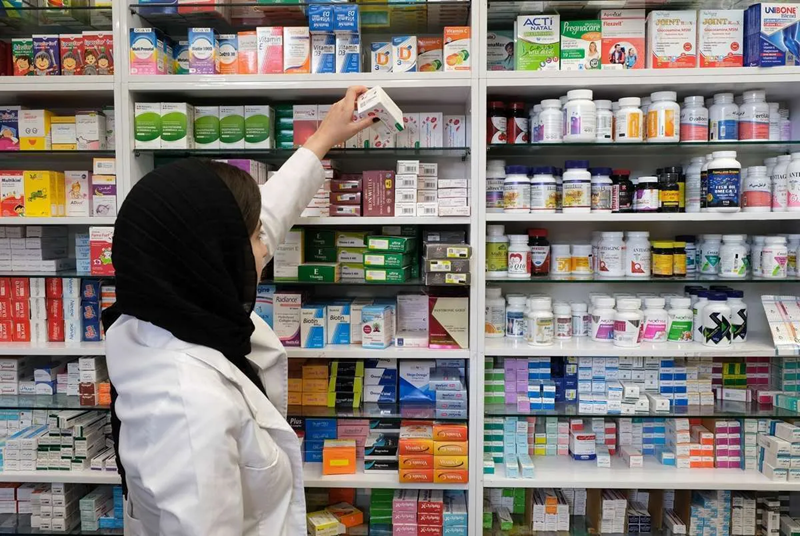

Supply chain disruptions, currency shocks, and financial restrictions converge to push essential drugs out of reach for millions of patients
Several weeks after the war involving the United States, Israel, and Iran—and despite a fragile ceasefire—the shortage and rising cost of medicine in Iran is no longer an isolated concern. It is rapidly evolving into a widespread humanitarian and public health crisis.
The Iran medicine crisis is the result of multiple converging pressures: disruption in supply chains following the conflict, shifts in currency policy, and mounting financial strain on both insurers and ordinary citizens. Yet beyond macroeconomic indicators and policy analysis, the crisis is most acutely reflected in the daily struggles of patients trying to access life-saving treatments.
The war in the Persian Gulf severely disrupted two critical arteries of Iran’s pharmaceutical supply chain: the Strait of Hormuz and regional air transport routes. According to analysis published by the Think Global Health website, trade volume through the Strait of Hormuz dropped by nearly 90 percent in the early days of the conflict, while air freight capacity across the Gulf also declined sharply. These disruptions have delayed and increased the cost of transporting not only oil and industrial goods but also medicines and pharmaceutical raw materials.
For Iran—heavily reliant on imports of pharmaceutical ingredients, particularly from India—this has translated into shipment delays, higher transportation costs, and intensified pressure on the domestic drug market. Industry insiders report that many importers have rerouted shipments through Turkey in an attempt to mitigate these disruptions, though this alternative has proven both costly and logistically complex.
Compounding the impact of war, recent changes in Iran’s currency policy have further destabilized the pharmaceutical sector. According to industry sources, preferential foreign currency rates are now allocated to only around 10 percent of imported medicines and raw materials. The remaining 90 percent must be financed through the NIMA exchange system, which experienced a significant surge following the move toward currency unification in January 2026.
This sharp increase—combined with currency shortages and liquidity constraints—has driven up the cost of both importing and producing medicine, weakening an already fragile supply chain from raw material procurement to domestic manufacturing.
Reports indicate that the most severe consequences are being felt by patients with chronic illnesses, cancer, and other serious conditions requiring continuous medication. These groups are particularly vulnerable, as even minor price increases or supply interruptions can have immediate and life-threatening consequences.
Although international sanctions do not explicitly target medicine, they have effectively obstructed access to it. Financial and banking restrictions have made it extremely difficult for Iran to transfer funds to foreign pharmaceutical companies, especially those based in Europe and the United States. In many cases, transactions are either delayed for extended periods or fail entirely.
Many international banks, wary of potential U.S. penalties, refuse to facilitate such transactions altogether. As a result, the legal procurement of medicine and raw materials has become a slow, complex, and expensive process. In effect, sanctions have paralyzed the pharmaceutical supply chain through financial channels without formally including medicine on restricted lists.
Despite mounting reports of shortages, Iranian regime officials maintain that the situation remains under control. However, patient testimonies suggest otherwise, pointing to increasing difficulty in accessing certain medications and significant price hikes.
At the same time, some domestic reports indicate that recent military strikes have damaged pharmaceutical warehouses and production facilities. According to these accounts, portions of drug reserves—including those designated for patients with special conditions—have been destroyed or rendered temporarily unusable. Independent verification of the full extent of this damage remains limited.
The spokesperson for Iran’s Pharmacists Association stated that “25 pharmaceutical units and companies have been directly and indirectly targeted,” with specific reference to direct attacks on Tofigh Daru and the Pasteur Institute.
Nevertheless, officials from the Food and Drug Organization assert that, due to prior planning, strategic reserves, and reliance on domestic production, the country has avoided a severe nationwide shortage. They emphasize the pharmaceutical sector’s “resilience,” developed through years of sanctions and conflict, and argue that temporary shortages are manageable.
Authorities also point to a network of approximately 18,000 pharmacies across the country, describing it as a “capillary reserve” system that helps sustain distribution. However, localized disruptions in access have been reported in several regions.
Iran’s healthcare insurance system, already burdened by accumulated debt and limited resources, is increasingly unable to absorb rising drug costs. The gap between insurance coverage and actual expenses has widened significantly, leaving many specialized medications available only at full market price or with prohibitively high co-payments.
One patient described the situation starkly: “My child’s medicine now costs the equivalent of my entire monthly salary. Insurance exists in name only.”
Broader economic conditions have further intensified the crisis. Inflation and declining purchasing power mean that even when medicines are available, many patients cannot afford them. As costs rise and insurance coverage falls short, patients are often forced to ration medication, alter dosages without medical supervision, or abandon treatment altogether.
Messages from within Iran echo similar experiences: “The pharmacy says it’s unavailable—and if it is, the price has tripled,” or “I have to choose between paying rent and buying my father’s medicine.”
If the conflict drags on, trade routes fail to normalize, and no effective policy interventions are introduced, the Iran medicine crisis is likely to deepen. Emergency reserves in hospitals are limited, domestic producers remain under pressure from rising costs and material shortages, and insurers lack the capacity to offset price increases.
In this unfolding crisis, patients bear the greatest burden—one that is not merely financial, but often a matter of life and death.