



Low wages, collapsing purchasing power, overcrowded classrooms, insecure contracts, and weak labor representation are fueling growing frustration among Iran’s teachers.
Iranian teachers are increasingly using social media to voice grievances over wages, declining purchasing power, and deteriorating working conditions. While many of these protests have been spontaneous and scattered rather than organized through a centralized call, their repeated appearance points to deeper and longer-standing dissatisfaction within the education sector.
Videos and posts circulating online in recent weeks have highlighted the same core concerns: inadequate salaries, rising living costs, and the erosion of teachers’ purchasing power.
The fragmented nature of these protests does not necessarily indicate limited discontent. Social media has provided teachers with a way to share individual experiences and common demands rapidly, allowing isolated complaints to gain broader public attention.
Falling purchasing power is at the heart of the crisis
For teachers, the livelihood crisis extends well beyond the amount appearing on a monthly paycheck.
Inflation has steadily reduced the purchasing power of salaried workers, while housing, food, transportation, and other basic expenses consume an increasing share of household income. Teachers have also long raised concerns about wage inequality, professional burnout, and what they describe as a lack of fairness in the system of compensation.
One teacher recently posted on X alongside a photograph of a 14-million-toman salary slip, roughly $60 at the cited exchange rate:
“Mr. Minister, if you are not going to give us another name, where am I supposed to complain with this salary?”
The contrast with the cost of education itself is striking. In some areas, tuition at private schools has reportedly exceeded 200 million tomans, or approximately $851. Yet teachers working in these schools can receive salaries below the minimum wage.
Incomplete insurance coverage, temporary contracts, blank-signed agreements, and a lack of job security add to the economic pressure faced by many teachers.
Education-sector activists have attributed part of the problem to the absence of effective professional organizations capable of broadly defending teachers’ rights, leaving many educators to raise their grievances individually or through social media.
Overcrowded classrooms add to the pressure
The economic crisis is also reflected in teachers’ working conditions.
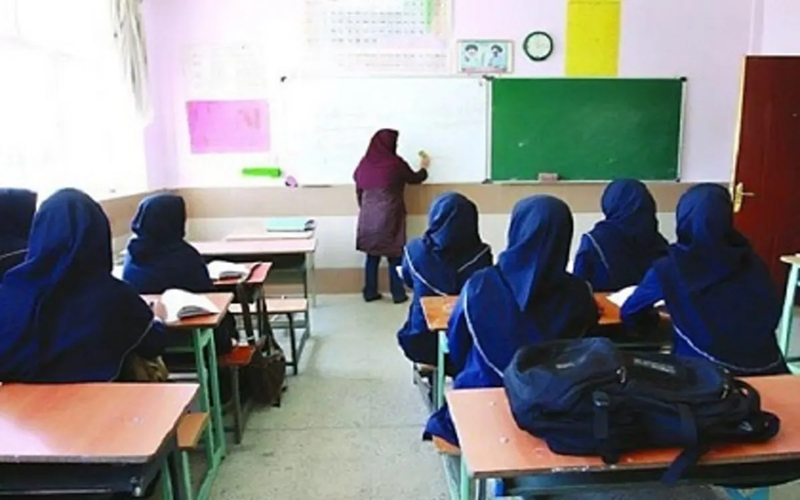
Some public-school classrooms reportedly accommodate around 40 students, a level of overcrowding that creates additional pressure on both teachers and students. Beyond its impact on the quality of education, high classroom density can contribute to physical strain on teachers, including recurring voice and throat problems among those who spend hours teaching large groups.
The consequences extend beyond the teachers themselves.
Declining morale, deteriorating teaching quality, dissatisfaction among families with public schools, and the departure of experienced educators are among the concerns associated with the deterioration of working conditions. Early retirement, resignation, and declining willingness to remain in the profession could further weaken the capacity of already strained public schools.
A profession with no effective collective voice
Teachers occupy a particularly important position in Iranian society. They are government employees, but they also maintain direct daily contact with millions of students and families.
That position gives economic and social pressures within the teaching profession consequences that can reach well beyond individual schools.
Yet teachers’ grievances have repeatedly been raised in an environment where they lack a broad, independent professional organization with sufficient capacity to represent their interests. As a result, protests often emerge individually, locally, or through social media rather than through a unified national structure.
This fragmentation can make individual actions appear disconnected even when the underlying demands are remarkably similar.
The summer closure of schools also temporarily limits opportunities for teachers to organize visible protests within educational settings. With the beginning of the new academic year, however, daily interaction among teachers, students, and families resumes at the same time that household expenses and inflation continue to put pressure on salaried workers.
From individual complaints to accumulated discontent
The significance of the current teacher protests therefore cannot be measured simply by counting demonstrations or social-media videos.
The more important issue is the accumulation of unresolved grievances.
Repeated demands over wages, purchasing power, insurance, employment security, and working conditions indicate that economic pressure has become a persistent problem for a significant section of Iran’s education workforce.
If such grievances remain unresolved for extended periods, dissatisfaction can deepen and potentially spread beyond the immediate group affected. Teachers’ close connections with students and families also mean that problems within the profession are easily transmitted into the wider community.
What is visible today may therefore be more than a collection of individual complaints. The recurring protests and increasingly public accounts of financial hardship point to a teaching profession under sustained economic and institutional pressure.
For teachers struggling to make ends meet while carrying increasingly demanding workloads, the question is no longer simply how much they earn. It is whether the education system can continue to retain experienced educators and provide adequate public education while those responsible for teaching are themselves struggling to afford a basic standard of living.